Tom let me go through thirteen boxes of 45s that he was getting ready to put out on the floor. About half were from his own collection. He told me he would bring stuff home and put it on the shelves but he had never taken the time to organize them. When he did he realized he had duplicates and triplicates of all sorts of stuff. Very little jazz in there but a very enjoyable few hours thumbing through.
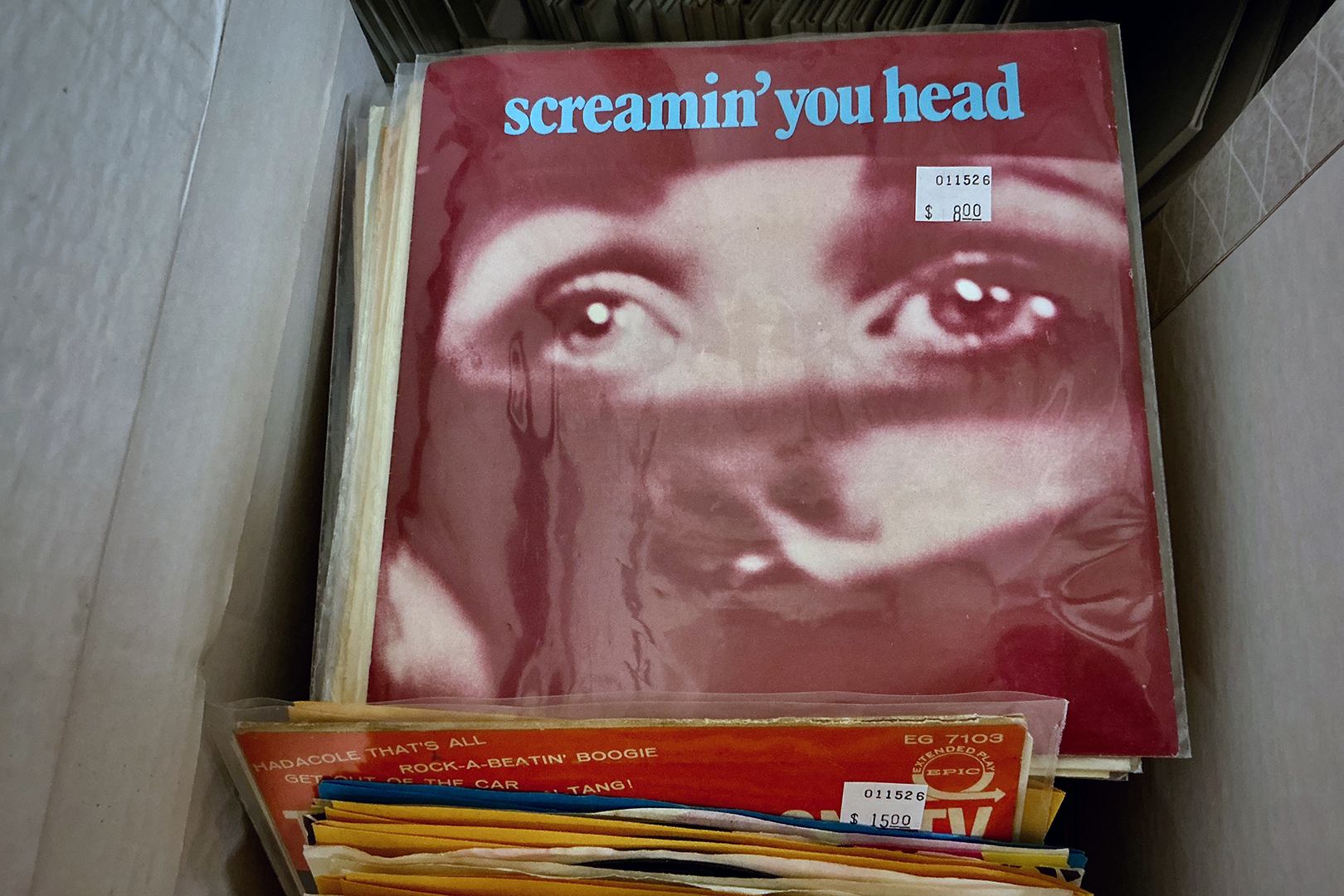
Hi Techs “Screamin’ You Head” 45 at Bop Shop Records.
I came home with six gems. Two Sun Ra 45s, “Plutonium Nights” and “The Sky Is A Sea of Darkness,” a Lightning Hopkins single from 1965, one of Jack White’s Chess reissues, Muddy Waters “Manish Boy,” Otis Redding double A, “Hard to Handle” and “Amen,” a clean copy of Wreckless Eric’s “Whole Wide World” Captain Beefheart’s “Abba Abba.”
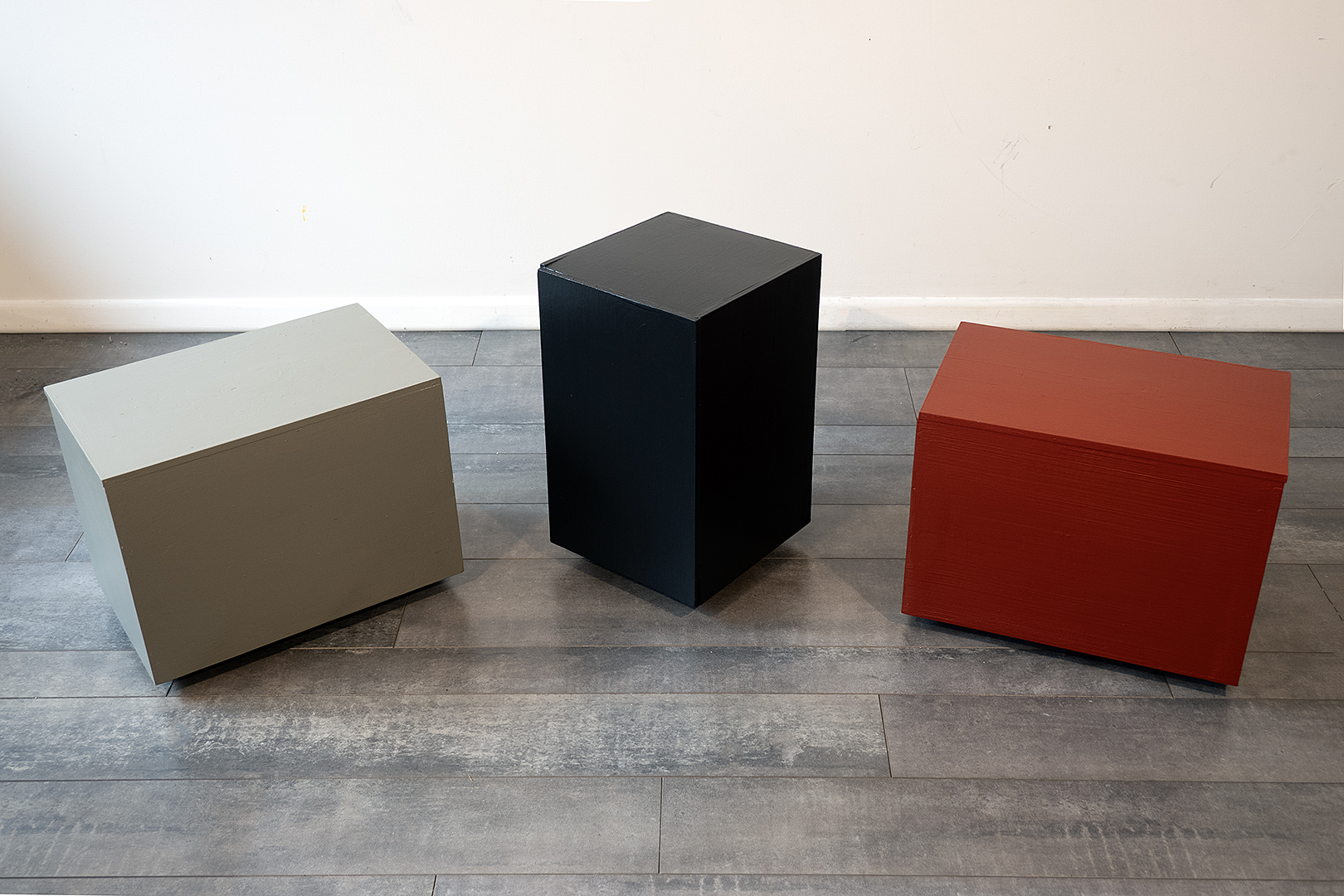
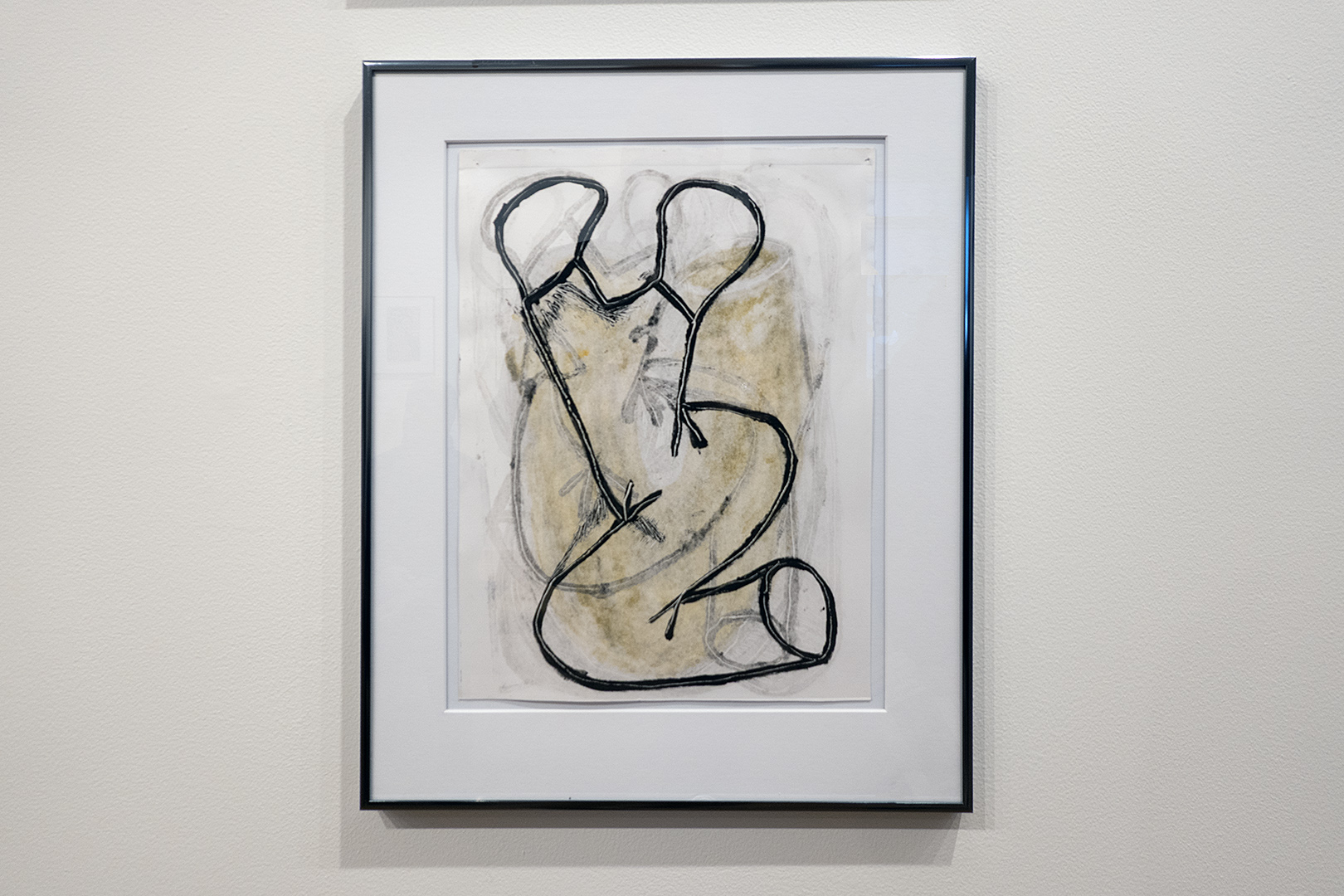
“Untitled” Three painted wooden boxes, 17″h 60″w 20″d 2026
Tim McGrain had a local band called “Three Boxes” back in the 80s. When we were talking with Pete the other day about his band, he reminded me of “The House,” a local band in the 60s. That is a great name. I’m still thinking about this one and may just go with “Untitled.” “Government Secrets” is a possibility. The boxes are glued shut.
I had all these paint colors pre-mixed. The box on the left is the color of the outside of our house, something called “Burnished Pewter.” I like it because it looks like a dull Army green. I always have flat black on hand—my favorite color—and the orange-red is as close as I could come to matching the main color in our living room rug. I bought a pint of it during the pandemic when I was playing with the motifs in our carpet, something I was calling “Carpet Gaze,” but it will just remain in sketch form.
Dreary is a quality. Yesterday was about as dreary as it gets. We planned to visit two friends in two different hospitals, and we brought both of them some cookies from Rubino’s. We left our car in Rubino’s parking lot and walked to Rochester General to visit John. I still think of it as “Northside,” but that’s left over from when Charlie Coco‘s mom worked there and we used to pick her up after work. She couldn’t smoke at work so she chain-smoked Marlboros on the way home.
I was struck by this house on Ridge Road. I didn’t think there were any houses left there. Rubino’s and Pasta Villa are still standing, but East Ridge Road is mostly chain restaurants that we have never set foot in, like Moe’s Southwest Grill, Jersey Mike’s Subs, and Dave’s Hot Chicken. I went to Kearney for two years, and there used to be a house on the corner of Goodman and Ridge that we stood in front of while we waited for the bus. When it rained we stood on their porch. Golden Point was just across the street, where Starbucks is now.
Up at Highland, Pete got going on the many bands he played in. He inherited his uncle’s Slingerland set and was in a working band in 1962. Rock and roll at that time required both a sax player and a guitarist. Pete was the lead singer from behind the kit for the first couple of years. They played clubs in all the small towns between Rochester and Buffalo, including bars frequented by migrant workers who at that time all came from the South. In Olcott, the doorman, a Black guy, sang along with the band while they were on stage. He sang so well that they asked him to join their band.
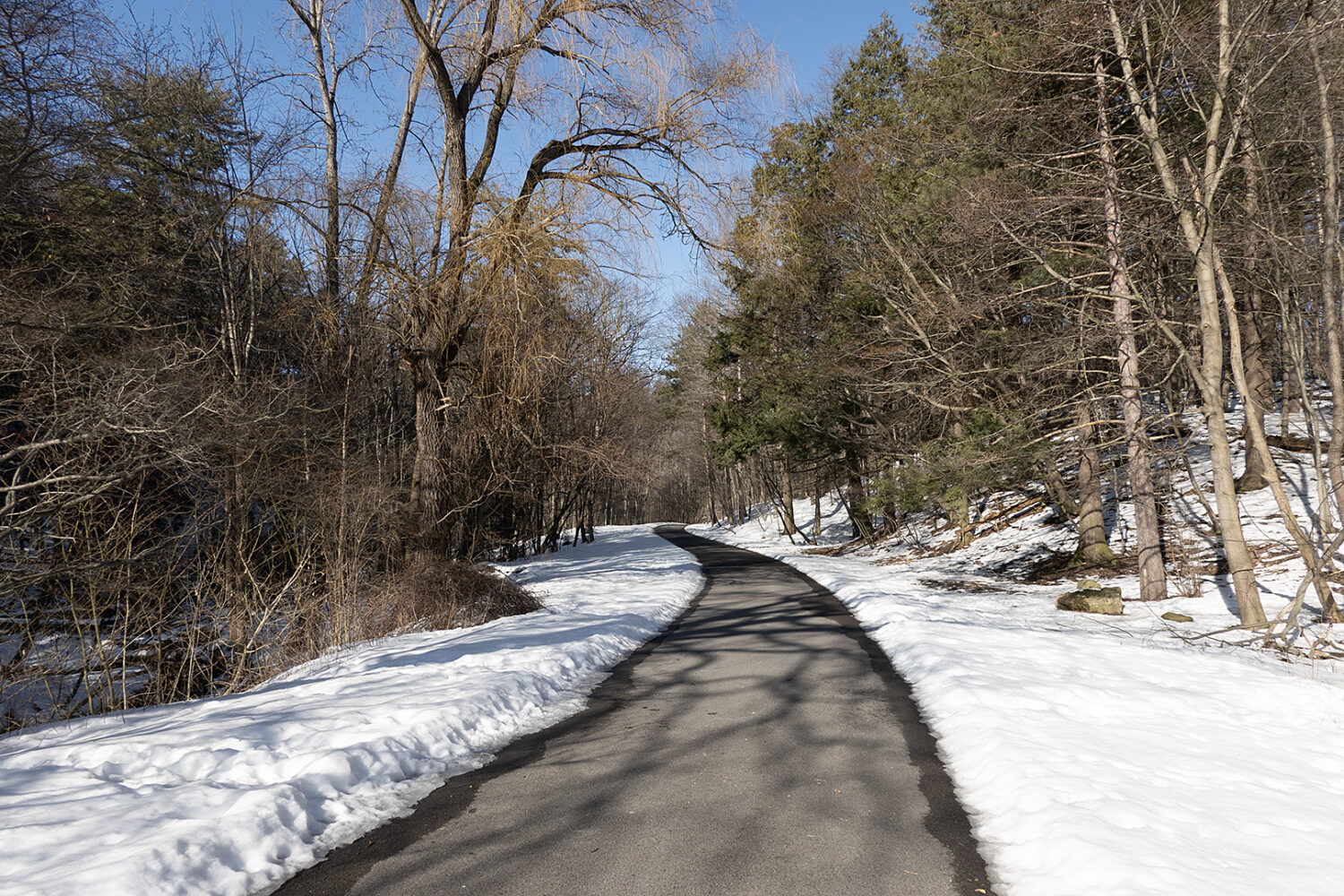
Despite the recent thaw, the level of Lake Ontario is about a half a foot below its long-term average. I read somewhere that more snow evaporates than melts, and we saw evidence of that yesterday as we walked through the park. Snow piles in shady areas were surrounded by puddles, and the ones in the sun were not. Trust but verify. There was, however, enough water running out of Durand Lake and under Lakeshore Boulevard that we were unable to walk along the beach without wading into the stream as it cut across the beach.
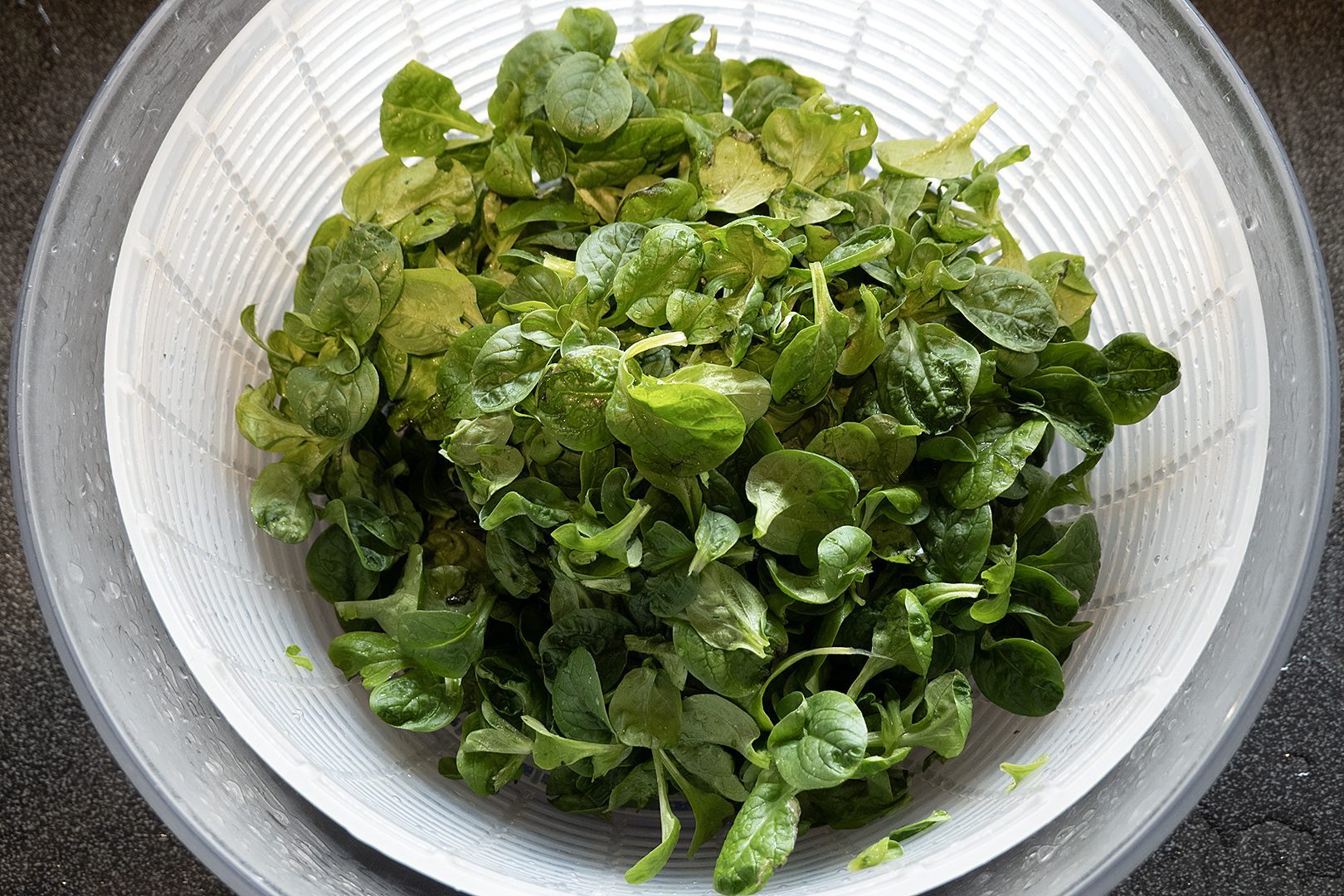
Bowl of mache lettuce in March
There are two kinds of witch hazel in bloom in the park. The tree at the top of the hill on Zoo Road is so fragrant you smell it before you see it. The yellow winter aconite is wide open. The pussy willow buds are in their prime. Spring unfolds so quickly. Someone has to keep track of it. We listened to red-winged blackbirds singing in the marsh and saw a pair of pileated woodpeckers making a racket overhead. And we stopped at the garden on the way back to pick our second batch of wintered-over mache.
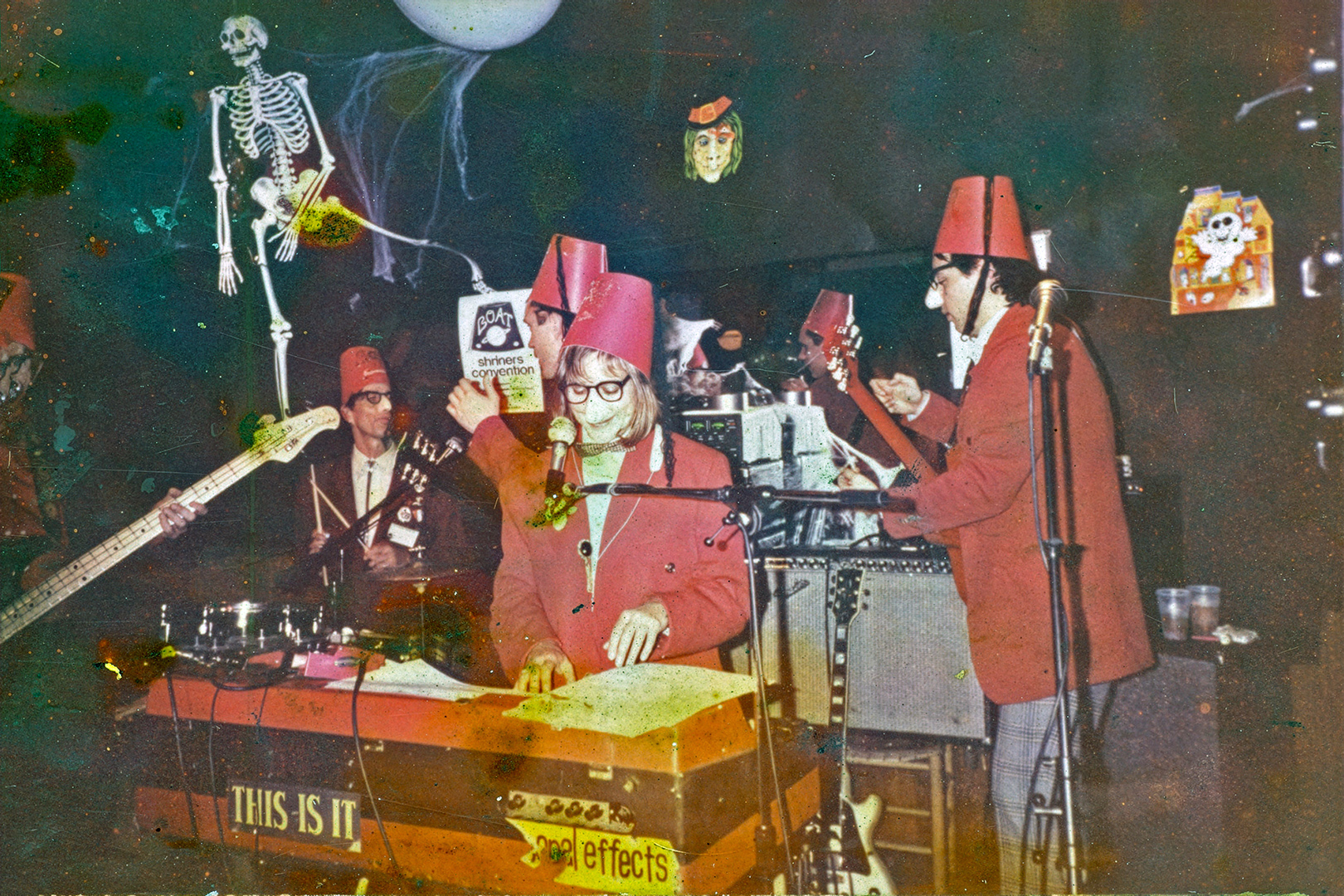
Boat performing at Snake Sisters 1984 (now Lux) in Rochester, New York
Every week it seems we read about another musician from the 1960s that has passed away. Today it was Country Joe. Steve Hoy, had the first Fish album when we were roommates. I loved their first single, “Not So Sweet Martha Lorraine.”
Because we all grew up with that music it was always a reference point when we were performing as Personal Effects. At least three times during that period we played out as “Boat”. They were odd ball dates like Halloween (above) or a Pyramid Art Gallery event. That one was in a cavernous upstairs space connected to the old Visual Studies Workshop.
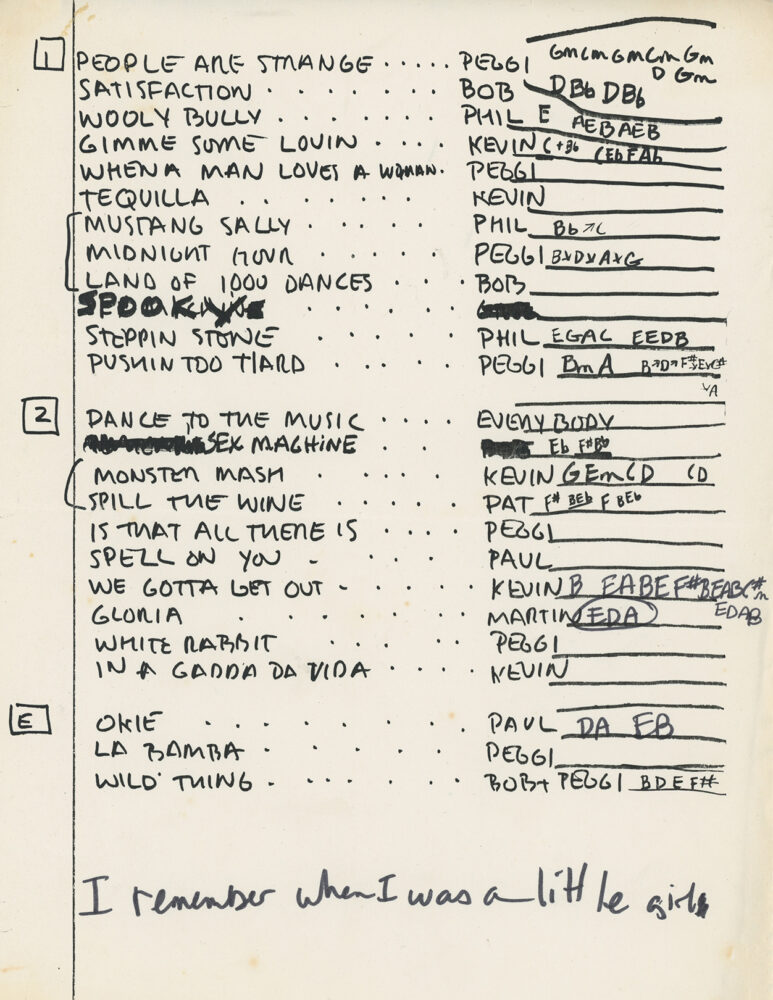
Boat setlist from Snake Sisters 1984 (now Lux) in Rochester, New York
Kevin, who did sound for Personal Effects and eventually played bass with us, was in bands in the sixties that performed a lot of the songs we did as Boat. Phil Marshall, from Colorblind James Experience at that time, played guitar. They helped transform Personal Effects into Boat. Peggi recently came across one of our setlists. Looks like we all sang and we had guest aoppearences from Martin Edic and Pat Mosciano.
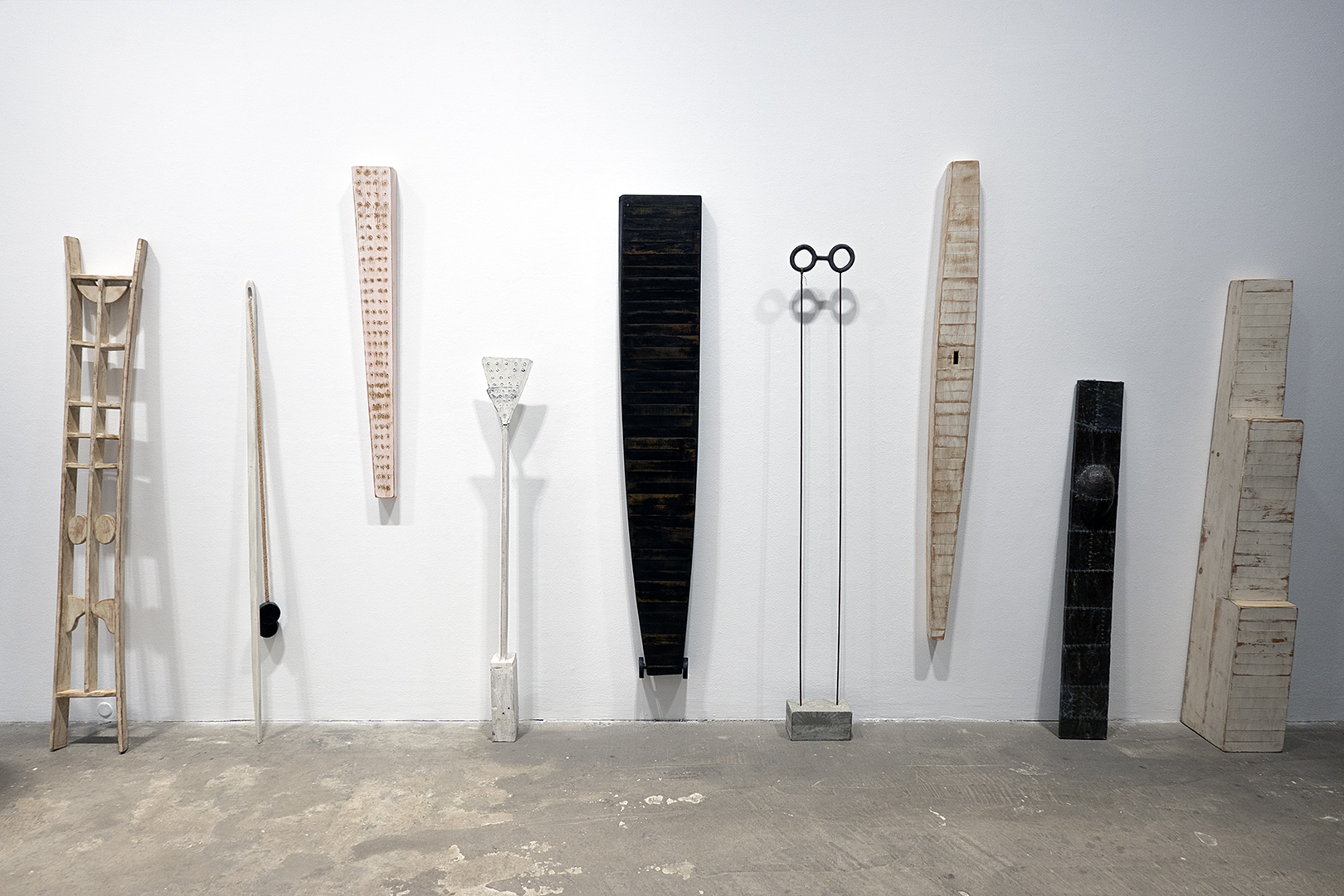
Anne Havens sculptures at Rochester Contemporary show “Anne Havens | Sue Havens”
We started the evening at Rella in the triangularly shaped space where the original Pyramid Arts Center was on the corner of Marshall and Monroe across the street from where Miles Davis debuted songs from what would become “Bitches Brew.” We sat at the counter and split an order of the Seafood Salad (calamari, scallops and shrimp) with lemon vinaigrette and an order of Shrimp Sliders. They reminded us of the roasted salmon sandwiches we had in Sausalito last year. Spanish is spoken in the open kitchen and Reggaeton music is on the sound system. We each had a glass of Primitivo wine.
The front wall at RoCo has never looked better. “Anne Havens | Sue Havens,” a mother-daughter show, opens with a bang with this collection of Anne Havens sculptures. Anne’s palette is represented, and her playfulness is on full display. We found it hard to move on from here but eventually left to congratulate Annie, who was holding court at the far end of the gallery.
I showed Anne this photo on my camera and she asked if I got the titles. “The titles are important,” she said. I could not fit the first one in my photo so I’ll list that as “not shown.” From left to right — “Climb The Bones” (not shown), “The Artist’s Life,” “Holy One,” “Sieves,” “Chariot,” “Spectacle,” “Barque,” “Lead Belly,” and “Steps.”
Anne Havens’ artist book, “Early Sculpture 1992–1997,” is available as a free ePub download: Download “Early Sculpture”
We knew we would see more people in the park than we have seen all year. It was 70 as we walked along the beach. It felt so good to see people in mostly black T-shirts with such pale skin. And on our way back we stopped at the garden to pick a bag of over-wintered mâche, our first harvest of the new year.
The first thing I remember after my colonoscopy was a nurse asking me if I preferred Lorna Doones or Fig Newtons, two brands from my childhood that I never imagined were still available. I mulled the two over long enough for her to say, “I’ll bring you both.” And they were both delicious.
Thinking of Peggi’s father and mine, who were born ten years and two days apart in early March. Both were early risers, and this week provides daylight at 6 AM. We’ll spring forward on Sunday. Before the upcoming “False Spring” 70-degree weekend, we woke up in a crystal palace with ice clinging to every branch. It sounds like it is raining now, but it’s only the ice on the trees melting and dripping on our metal roof.
We visited Pete up at the Highland Hotel and learned this bit of local trivia. Alec Wilder wrote “I’ll Be Around” for Marian McPartland in the Sheridan Hotel on 111 East Avenue. Peggi plays the song on piano. It was first recorded by Rochester-born Cab Calloway in 1942. Here’s Marian’s version.
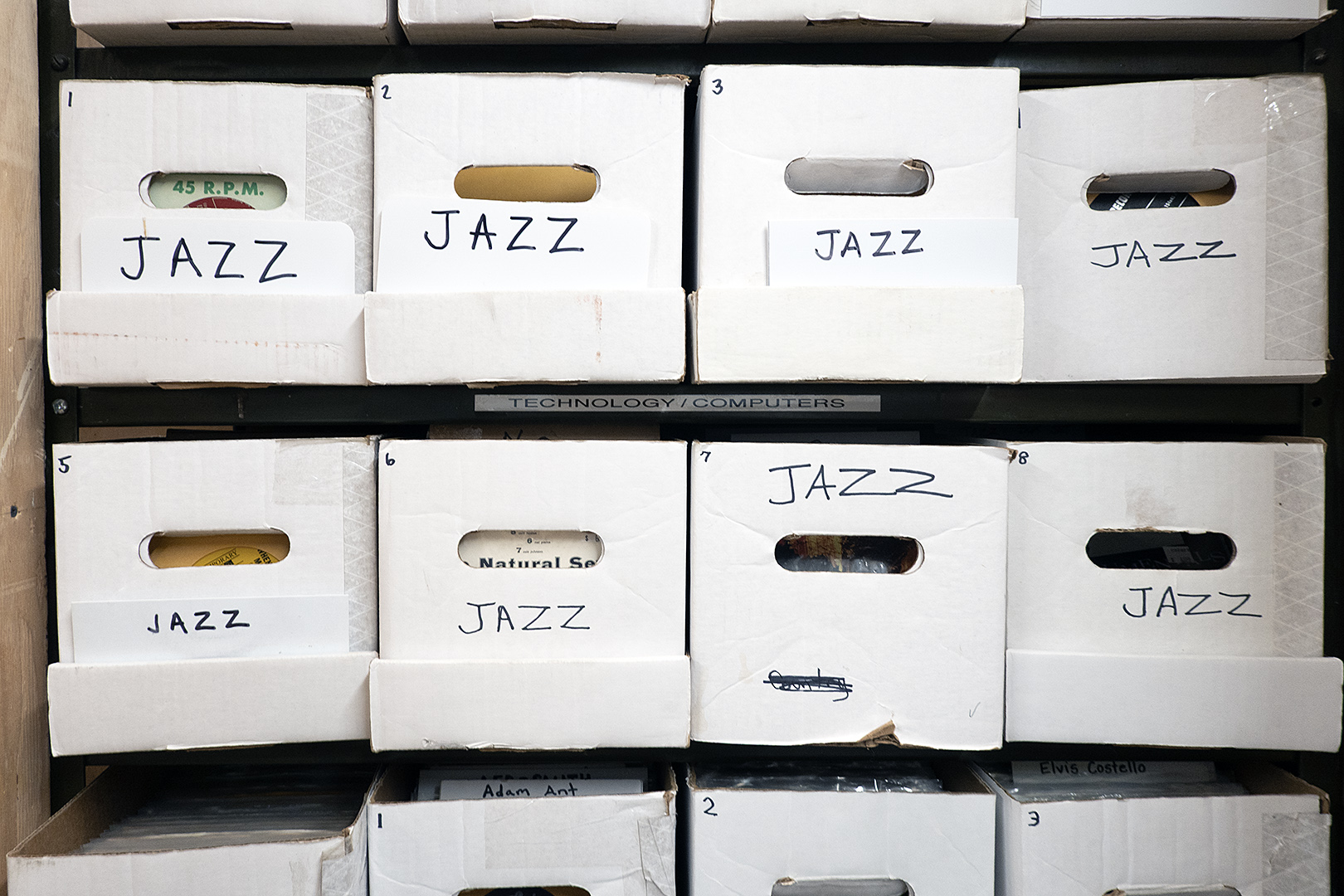
I have picked over these boxes many times. I let a few months go by and then revisit them. There were only six boxes marked “Jazz” when I first came across them, so I guess it is a good sign that there are now nine. The ninth, out of view in this photo, is all boxed EPs. I found a couple of Bud Powell beauties in there. I didn’t see any new ones yesterday — well, all of them are old; I mean newly added. And I worry that the old-timers who had these items in their collections have already moved on. The selection is certainly drying up.
I listened to a short stack and came home with five. “Bacchanal” by Gabor Szabo is a winner. The Hungarian guitarist fell in love with jazz listening to Voice of America and wound up playing in Chico Hamilton’s chamber jazz combo. I picked up a Coleman Hawkins track on the Impulse label, a crazy version of “Little Liza Jane,” a song written so long ago (1917) that Hawkins could put his name on it.
I grabbed another Gerry Mulligan disc, another of those four-song 45s on the Pacific Jazz label (think cool jazz). I have four now. I wish they hadn’t done that. 7-inch records were designed to carry one song on a side. A or B. You like it or you don’t play it. Nobody wants to have to cue up the one song on a side that you like. And it certainly wouldn’t work in a jukebox setting.
For me, I can’t get enough of the slow, moody Mulligan. He plays baritone sax. There is no piano player in his band, and Chet Baker plays trumpet with him. (Nobody wants to hear an upbeat Chet Baker.) The two horns on the late-night, “Darn That Dream,” “The Nearness of You,” and “My Funny Valentine” sound like heaven.
Ray Brown has got to be the greatest bass player who has ever lived. No, that can’t be right. Charlie Mingus, Richard Davis and Charlie Haden could all be that guy. But Ray really shines on “Song of the Volga Boatmen.” I found a copy of his version of the Russian folk song in a trio setting with Hank Jones and Buddy Rich. Here you get to savor the attack, the swing, and the shape of every note.
Anne Havens “Echoes and Variations” MCC Mercer Gallery 2026
We stopped up to visit Pete. He has been through a lot but we found him holding court and as cheery as ever. He calls his room on the seventh floor of the new wing on Highland Hospital “The Highland Hilton.” While we were there he let two calls go to voicemail, from friends of his who Pete told us require a certain amount of cheering up. The irony of someone in Pete’s condition providing inspiration to others was not lost on us.
Pete was born on the same day in the same year as Anne Havens. Anne too has had a few health setbacks but she has two art shows on the docket. The opening of “Echos and Variations” was last night at MCC’s Mercer Gallery. We cut our visit with Pete short and drove out there in hopes of seeing Anne at the opening. We were richly rewarded.
The brochure for the show had the following description of Anne’s process and I don’t think she would mind if a shared her secrets.
“For the most part, I am an intuitive artist, finding rather than ordering up, always looking around the bend. I search for shapes or situations that reverberate in me, following the pull of my motivation and energy.
I work in many media, and enjoy letting them bounce off of one another. Found materials, or objects, are often a source of inspiration, or triggers for action.
Much of my work on paper is an offshoot of my sculptural work, or continues my interest in materials in some way.
Ideas are often the jumping-off point for work, but hopefully the end-result will transcend them and reveal something significant, or surprising. I am interested in discerning what I have really been up to, rather than what I think I had in mind, and that is what keeps me fascinated with the whole enterprise.
My art-making is my way of dealing with life. It lets me act out, exorcise, focus, resist disintegration, and, most of all, be surprised. I can only hope that the metaphors that I find in the process will have echoes for others as well.”
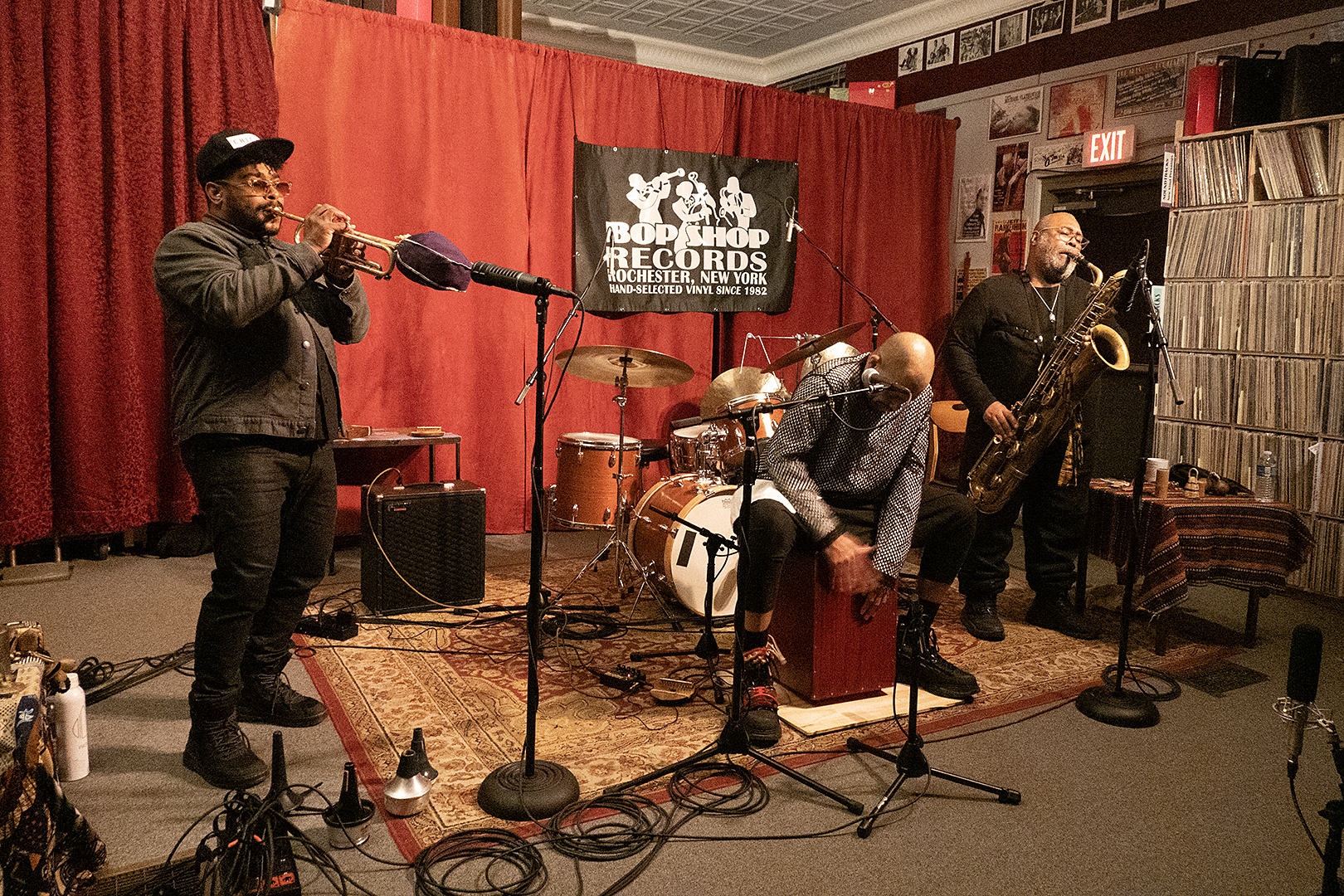
Kahil El Zabar, Corey Wilkes and Alex Harding at Bop Shop 02.23.26
The Ethnic Heritage Ensemble opened last night’s sold-out show at the Bop Shop with Wayne Shorter’s “Footprints.” Kahil played a hypnotic pattern on his drums with mallets while Corey Wilke and Alex Harding added precision and then the enchanting melody. We’ve seen them over twenty times, and it is always a treat. We’ve heard Kahil in other settings as well, with David Murray and Billy Bang, and the lineup never includes a bass player. They have a uniquely sophisticated, primal sound. It is from the heart.
Kahil wrote “Great Black Music” for the Art Ensemble of Chicago, and they played a version of that with different lyrics last night. “Keep on Marching” was the refrain. Kahil reminded us that Mother Nature is much stronger than the crazy man in the White House. He did a spot-on impression of Ornette Coleman when he told the crowd how Ornette called him after he heard Kahil’s song “Ornette” on a New York radio station. The band played “Ornette” and then one of Ornette’s, “Lonely Woman,” to cap a perfect night.
Our neighbors at the end of the street brought two freshly made, still-warm cinnamon rolls down to us. We were already making dinner, so we thanked them and said we would have them for breakfast. On the way out, they wanted to know what our secret was. “How do you keep your driveway so clean?” They speculated that the pavement may be heated. “We shovel,” we told them. Pretty simple. We’re home most of the time, and when it snows, we shovel. It’s a great excuse to get outdoors. Most of our other neighbors either have a plow contract or a snowblower, and we hardly see them in the winter.
CalZone gave us a heads up about PBS’s American Masters show on Friday, and we built our day around the broadcast. “Sun Ra: Do the Impossible” is available to stream now, and I would call it required viewing for human beings. The producers did a great job touching on all facets of the poet, philosopher, and music visionary’s life, but the section on Sun Ra cranking out LPs with custom covers on his own label was mind-blowing. Those original Saturn LPs sell for thousands today as the world is catching up with Sun Ra.
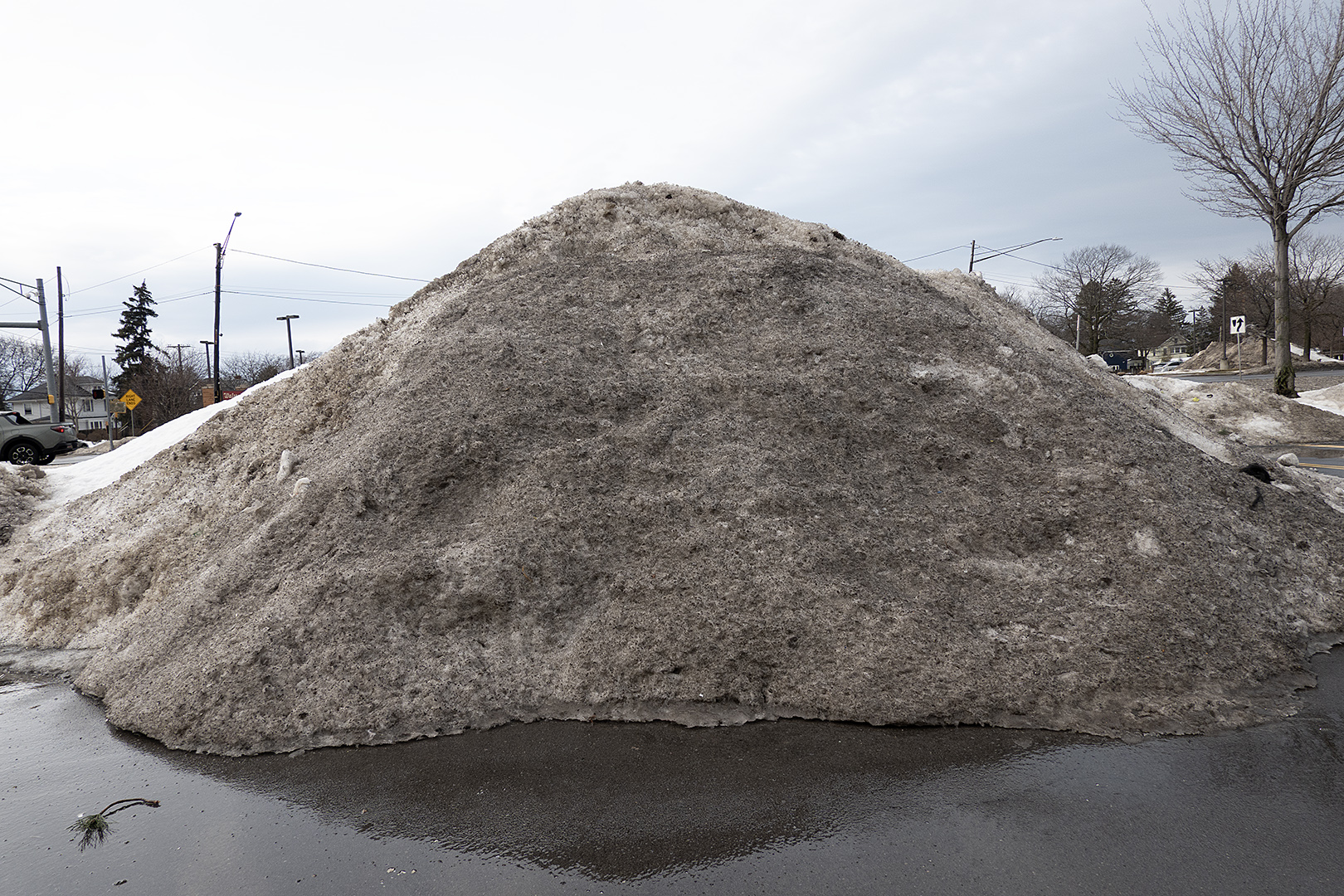
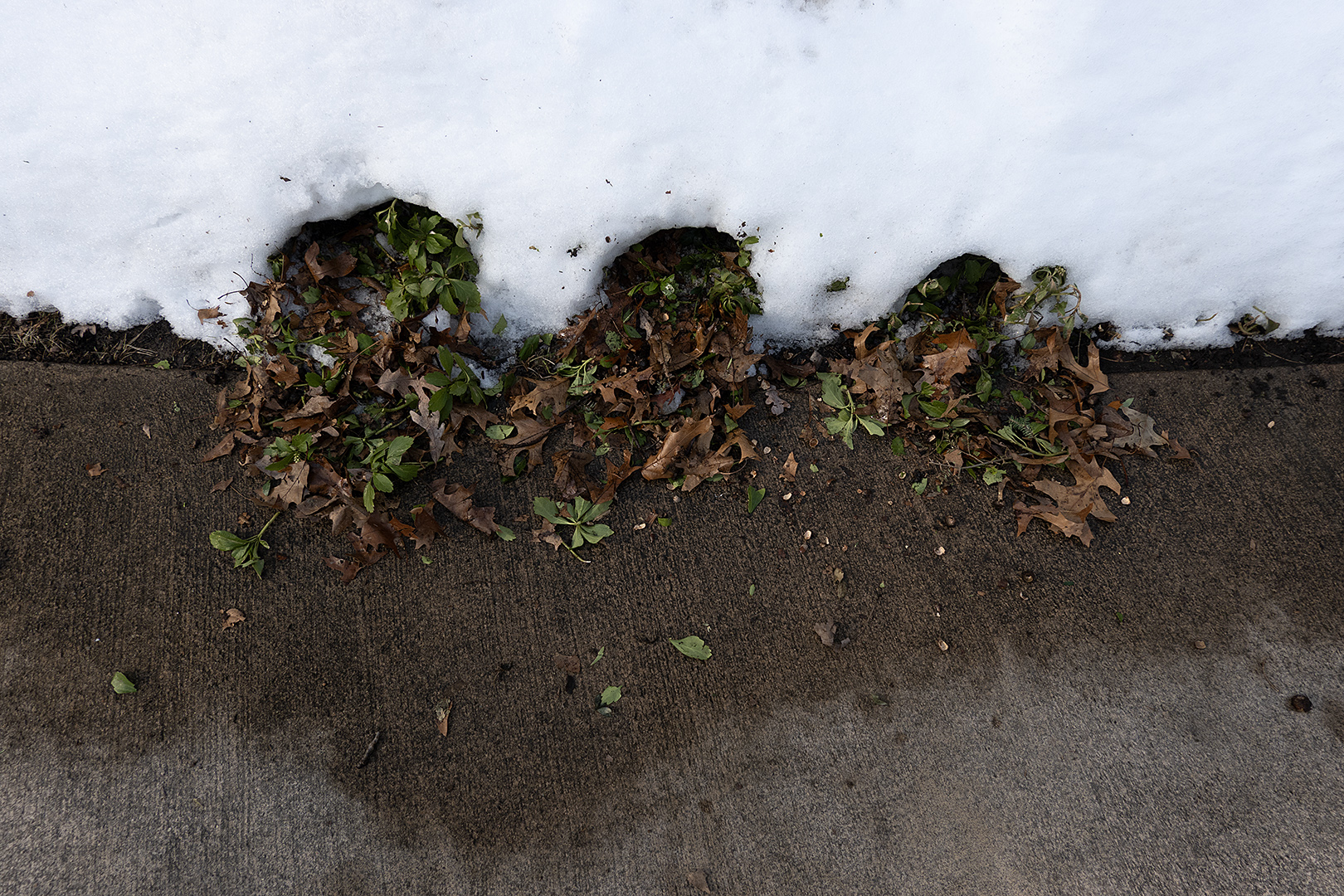
Like the chipmunk above, we really don’t know what to do with ourselves as the snow melts other than watch the ice slide off the roof. We walked through the neighborhood yesterday and found the mail truck (with a substitute driver) wedged up against a band of four mailboxes. A woman from one of those four houses was out there with a small throw rug that she had put under one of the wheels, and she had a bucket filled with white pellets of some sort. We offered to push and gave it three or four good tries, but the one wheel that was engaged just kept spinning on the ice. The mail truck passed us about a half hour later, and he stopped to thank us. He told us his boss had pulled him out, but in the process they wrecked all four of the mailboxes.
While we were still reading the paper, we noticed our neighbor Jared shoveling his driveway. He injured his shoulder playing tennis and normally clears his driveway with his tractor, so something was up. We offered to help. He told us his wife was having her coffee group (“the gals”) over and the battery on his tractor was dead. This was heart-attack snow, with heavy water and ice content.
We took a short break, and I asked if he would have some time later in the day to help me with a project I had been meaning to get to since we moved in. One of the copper pipes from our radiant heat setup was visible in a corner of our living room. It came out of a brick ledge below our window and went down through an opening in the floorboards — a small visual irritant that took endless speculation before we came up with a solution.
I hollowed out a white PVC board, leaving only an eighth of an inch to hide the pipe, and used that as floor molding. I had never used a router. Jared had one, and he guided me. A retired chemical engineer, he likes to think projects out completely before going ahead — just the opposite of my approach. And because this piece went around a corner, I needed to use his radial arm saw to cut the forty-fives. He has one of those. The plastic shavings went everywhere in his garage, and the tiny pieces had enough static electricity to stick to every object in sight. The longest part of this project was spent with his shop-vac roaring away.
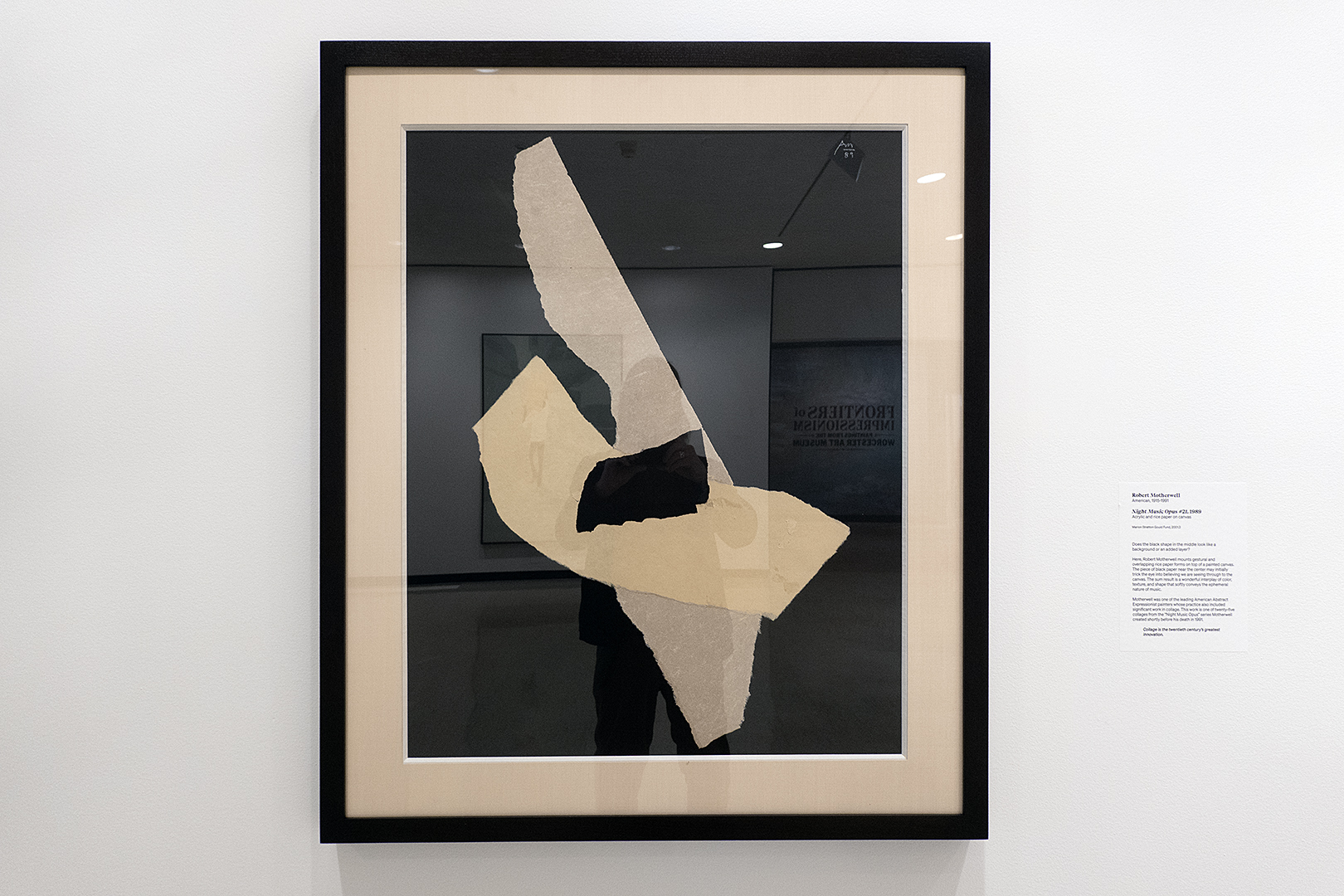
“Night Music Opus 21” collage by by Robert Motherwell 1989 at Memorial Art Gallery in Rochester
There is an unwritten rule in museums that says if you put a work-on-paper from your collection on display for six months you have to put it back in storage for at least five years. UV damage, fluctuations in humidity etc. We learned this little tidbit at an “Open Mic” session with Lauren Tagliaferro at the MAG of Friday. You’ll have to hurry over there to see this Robert Motherwell collage before it goes back undercover.
I played all four of our “My Funny Valentine” 45s yesterday (for my valentine.) Miles Davis, Bud Powell, Chico Hamilton and Jerry Mulligan. When I was done Peggi said, “And didn’t Chet Baker do that song?” In small print on the Mulligan record it listed Chet Baker on trumpet.
All four versions are in my Jazz45s playlists below. The song is a marvel.
He’s not funny anymore. The ones who thought he was and now feel otherwise may just be enough to turn this thing around. I do get the sense the tide is beginning to turn. Our flirtation with fascism may have run its course. The “I alone can fix it” guy has enriched himself, his family, the tech oligarchs, the oil tycoons and the Middle East Sheikhs. He is gleefully destroying the progress we were making toward generating the green energy we’ll need for all these future endeavors. Rochester is a sanctuary city so we are probably one of the next targets. I would like to help protect what is left of our democracy.
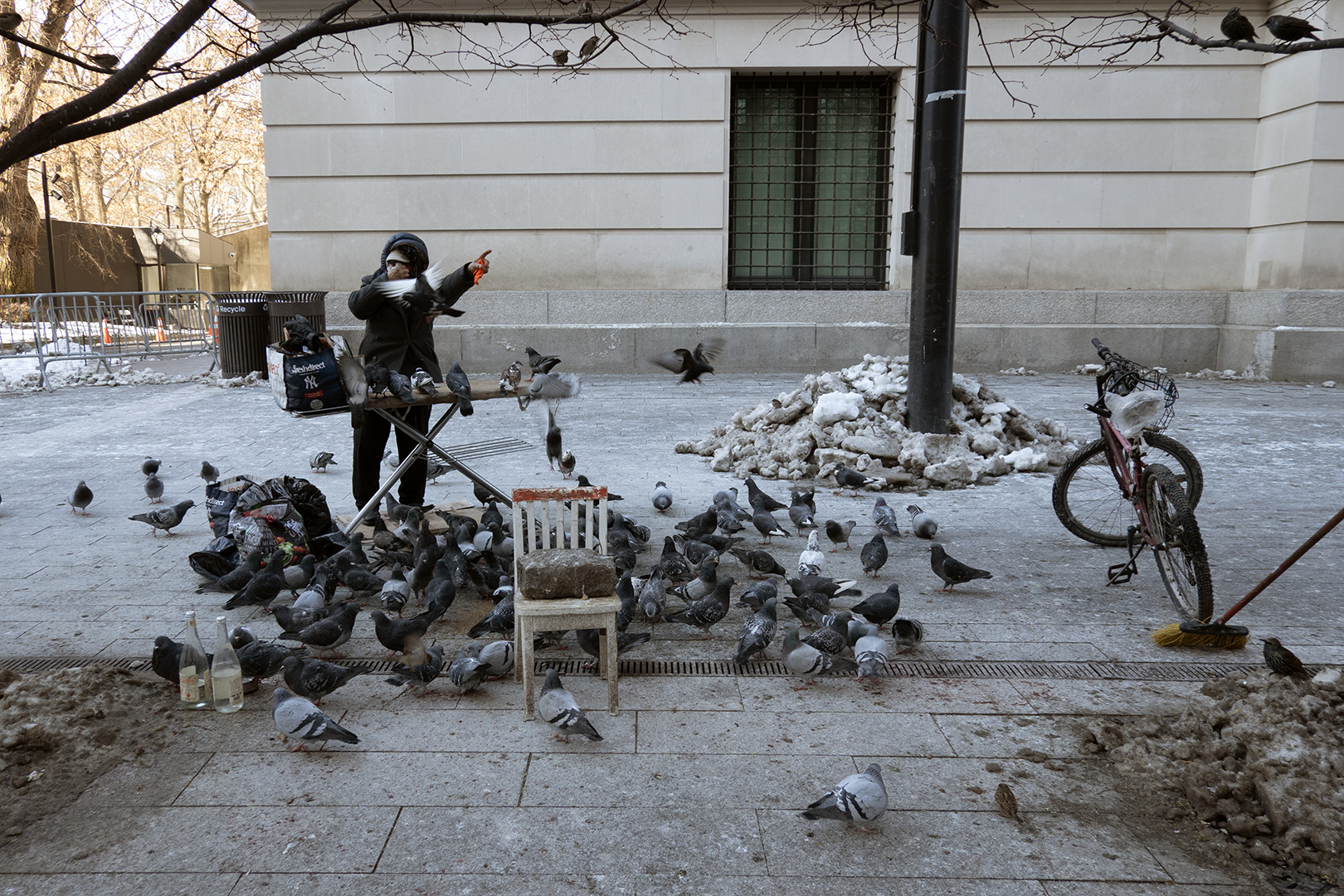
I had a whole other idea for a post and I was going to use this photo with it but I found myself staring at the photo for so long it became the subject.
I took the photo in December just before Christmas. We were in the city for a few days and the newly re-opened Rockefeller Wing of the Metropolitan was the centerpiece of our visit. This woman was standing outside as we walked by. As I moved closer to take the photo she pointed and yelled something. I had the feeling she might have been yelling at me. I didn’t even see the ironing board she was standing behind.
I put my caption under the photo and then googled “Pigeon woman Metropolitan“ NYC. “I found a recent story from the New Yorker by Ian Frazier with this description:
“She has a folding table; an ironing board; a cart with handles at both ends that contains a dozen or more orange-and-green Fresh Direct shopping bags; a broom; some pet-size water bowls; a pair of hockey sticks; and various bread knives. She has told me that she comes from Poland and now lives in her car, which is parked nearby. Her conversation can devolve into a kind of radio-static recitation of terrible things that happened in Poland in the previous century.”
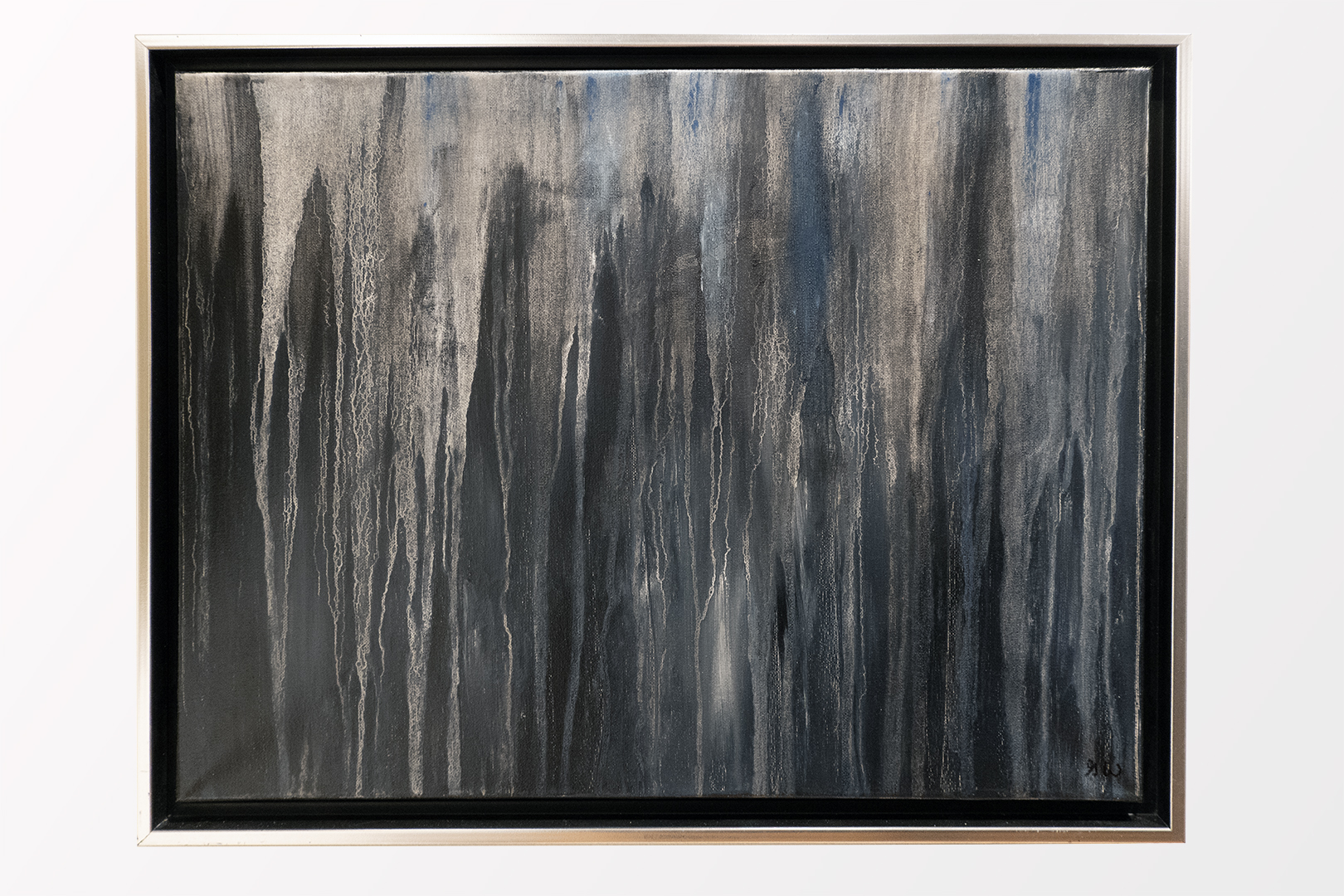
George Wegman painting from Tears series at Richard Margolis’s Studio
By coincidence the George Wegman painting we have hanging in our bedroom slipped down in its frame this morning. I found some linen hanging tape and hung it back in place. In George’s artist statement, on view at Richard Margolis’s space this month, George says he asked himself what it would it be like if my paintings could cry. He says he laughed tearfully and cried sadly during the project. His crying paintings are exceptionally beautiful.
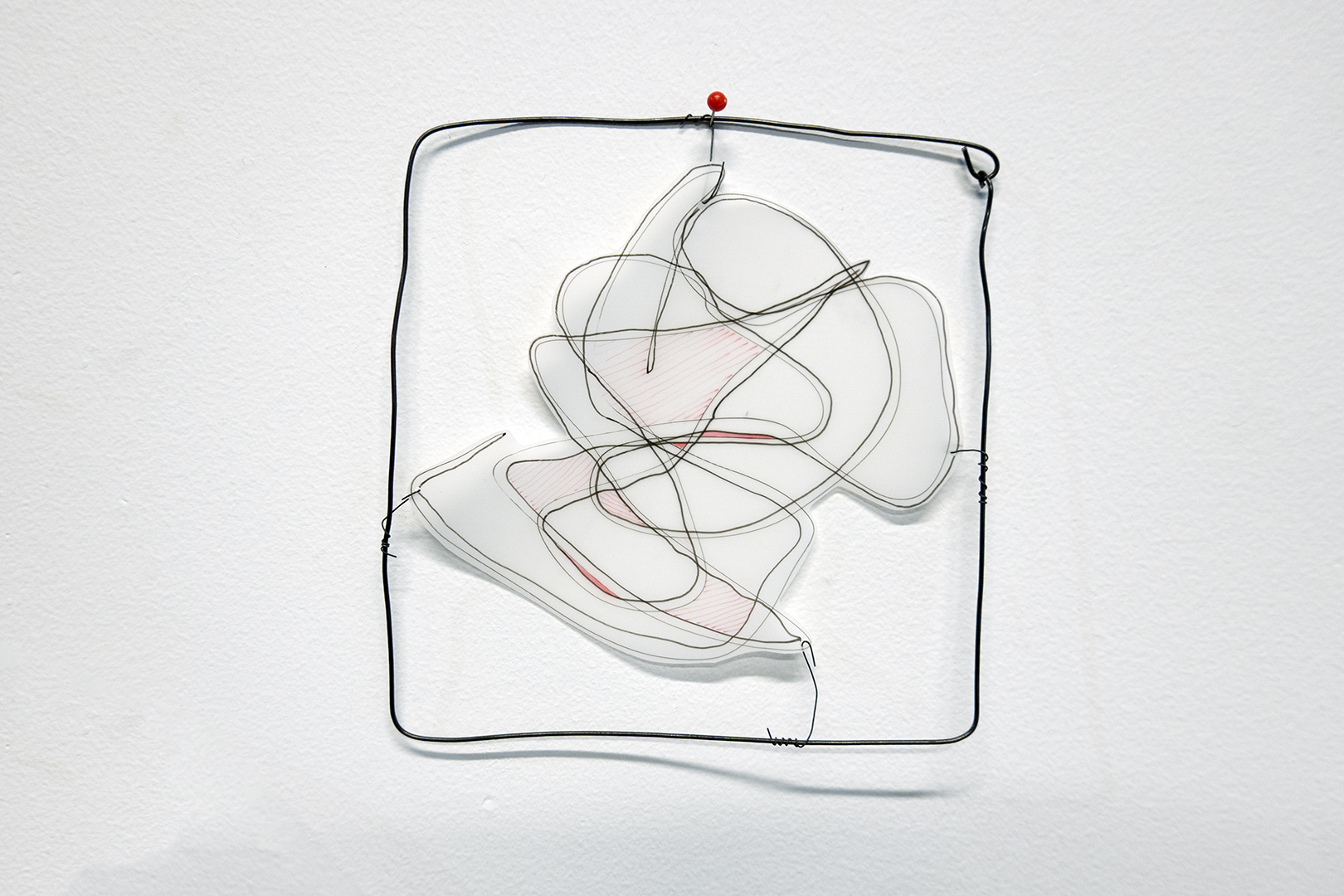
Colleen Buzzard art on wall in studio 02.06.26
There is so much to look at (and think about) in Colleen Buzzard’s studio. The walls are forever in flux with work in progress and I never fail to fixate on a jewel like the piece above.
Group photo by Richard Margolis on First Friday February 2026
Peter Monacelli’s fan club packed the fourth floor of the Anderson Arts building. Richard Margolis grabbed this cluster. Pete has been dealing with some health issues but he never lets that get his spirits down. His artist statement included this quote from Robert Henri.“Art is the true province of every human being. Art is simply a question of doing things, anything, well. It is not an outside extra.” Pete says, “In my artistic life I have attempted to put the thought of all that I love in all the things that i have made.”
Steve Black texted us just before 4:30 the other day. His text read: “Here’s hoping you have the best 4:30 PM ever!” It was indeed at least one of the best 4:30 PMs ever. We were listening to a couple of Peggy Lee 45s, “One More Ride on the Merry-go-Round” and “Sans Souci” and I told him so. Steve must have gone to YouTube to listen to the songs because he texted us back a comment that someone had left under the video of Sans Souci (above).
“Thank you, You Tube…..Purchased a 45 record of this song when I was 11 years old for 49 cents. left it on a bus and never got to play it.. Now I can hear it any time I want……Brady; Buffalo, NY. Purchased at Sattlers “998”” @wloriganbrady
Steve thought these ingredients, with a little fleshing out, would make a great movie. The song, with lyrics by Peggy Lee, came out in 1952 and Brady says he bought it at Sattler’s in nearby Buffalo. Sattlers was a department store in the very center of the Polonia section of Buffalo.
My copy is pretty clean. I might have William Brady’s record. Rob Weinert-Kendt has a post on this song, a tribute to its brilliance, and he includes a demo version that really knocked me out. Would have made a killer b side and would certainly be featured in the movie.
Irondequoit canceled this weekend’s Winterfest due to extreme cold. Kathy called us to warn us that you can get frostbite in single digits. We stopped out to see my brother, Fran, who had just had a shoulder operation. His pain blockers hadn’t worn off yet so he was in good spirits. He used to work outside year round and he said, “I tell people there is no such thing as bad weather, just bad clothing.” It is Peggi’s birthday today and we went skiing.
This is good weather for diagramming sentences. Not sure how we got off on that tangent but we did. I wonder if they still teach diagraming. I loved how it made sentence structure concrete and fun.
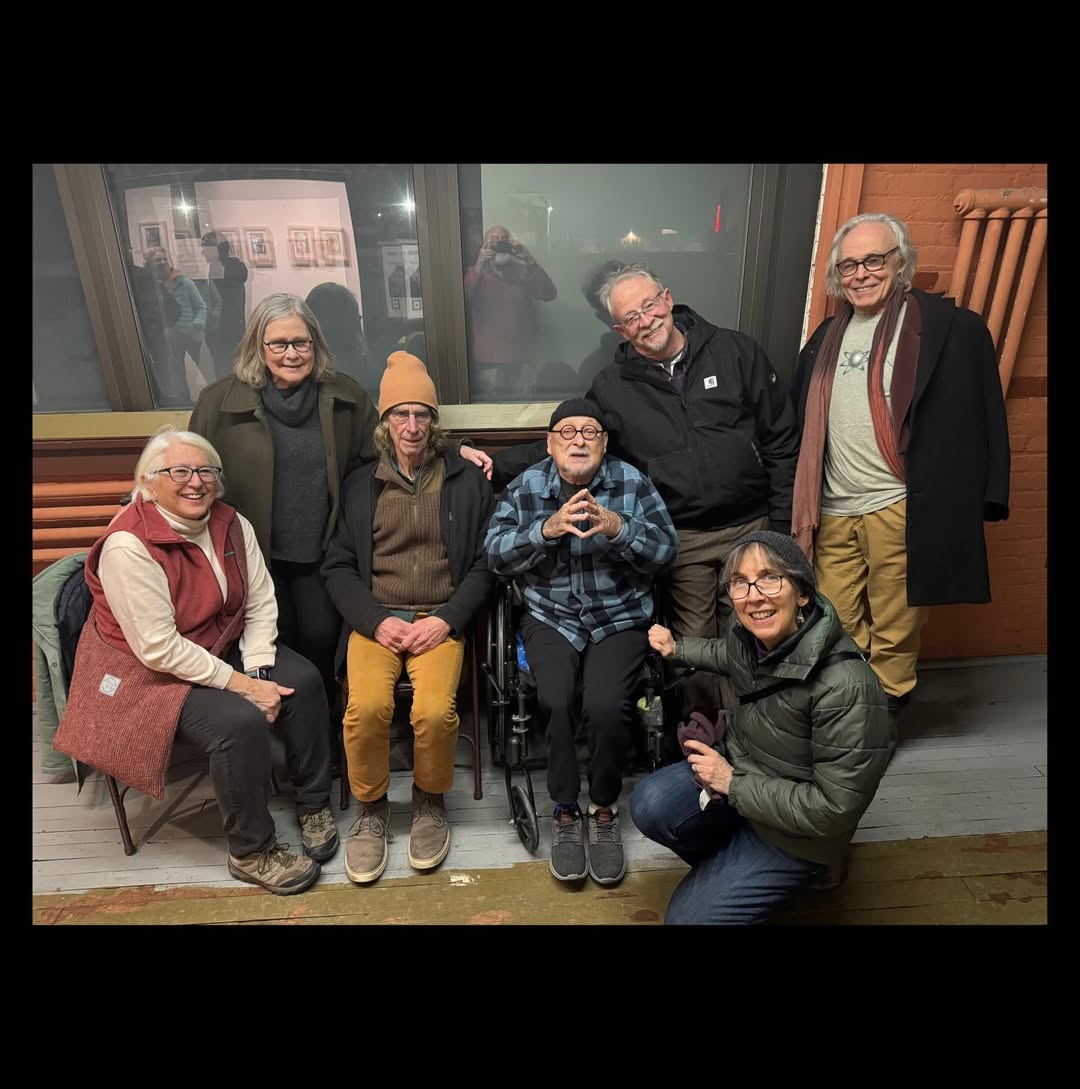
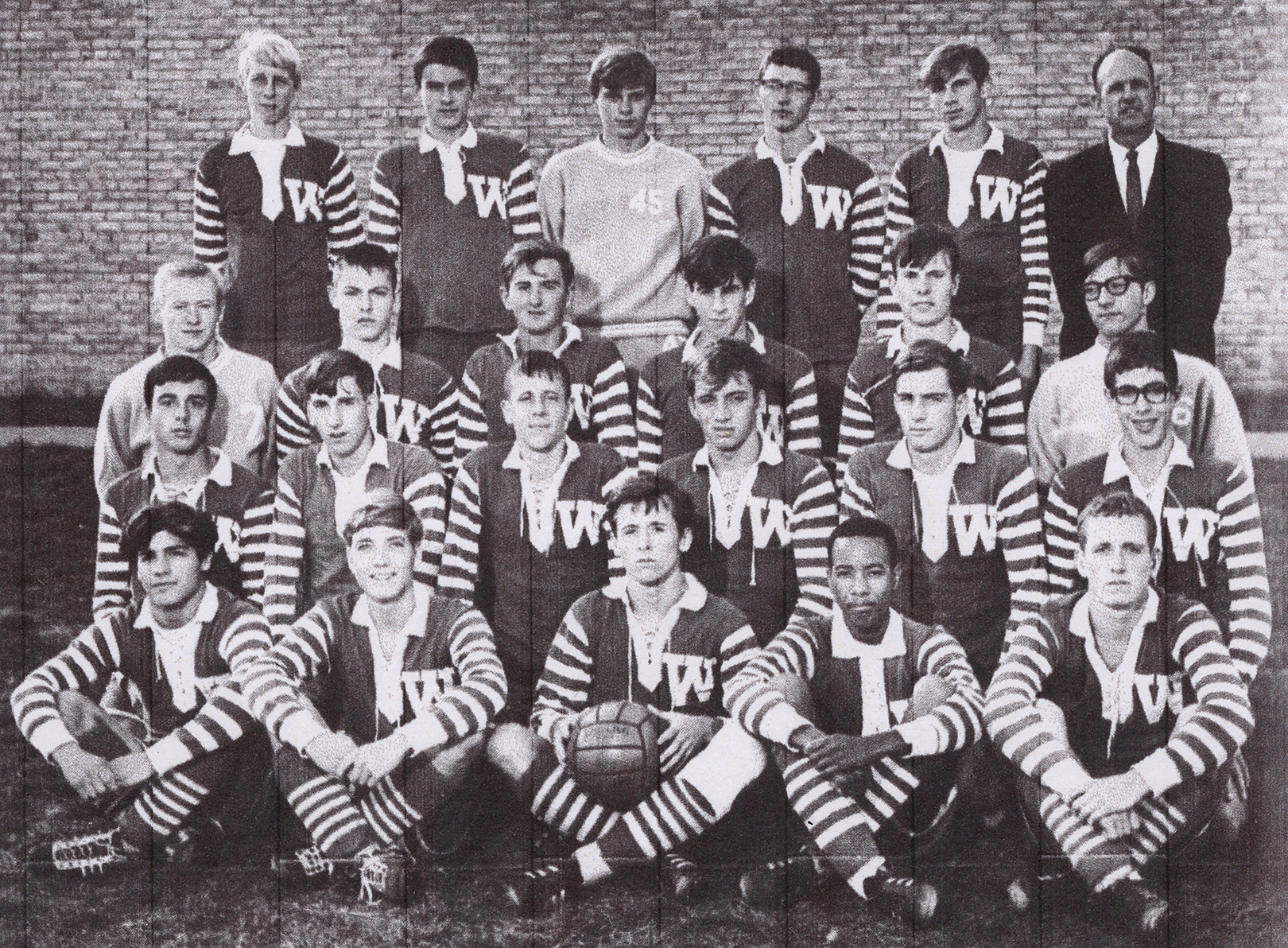
One woman bought six Margaret Explosion cds after our gig on Thursday. She paid with PayPal. Someone who I used to play soccer with came to the gig with his wife and he gave me this picture. He is shown kneeling in front of me in the center of the photo. He was a year ahead of me and I hadn’t seen him since junior year. I reminded him we used to sled on the tiny hill in his backyard and my brother Tim got his tongue stuck to the front of his sled and he walked all the way home with it stuck. Since I have mentioned both my brother Tim and my brother Fran I’ll post a link to my first Super 8 movie. They star in it along with my brother, John.
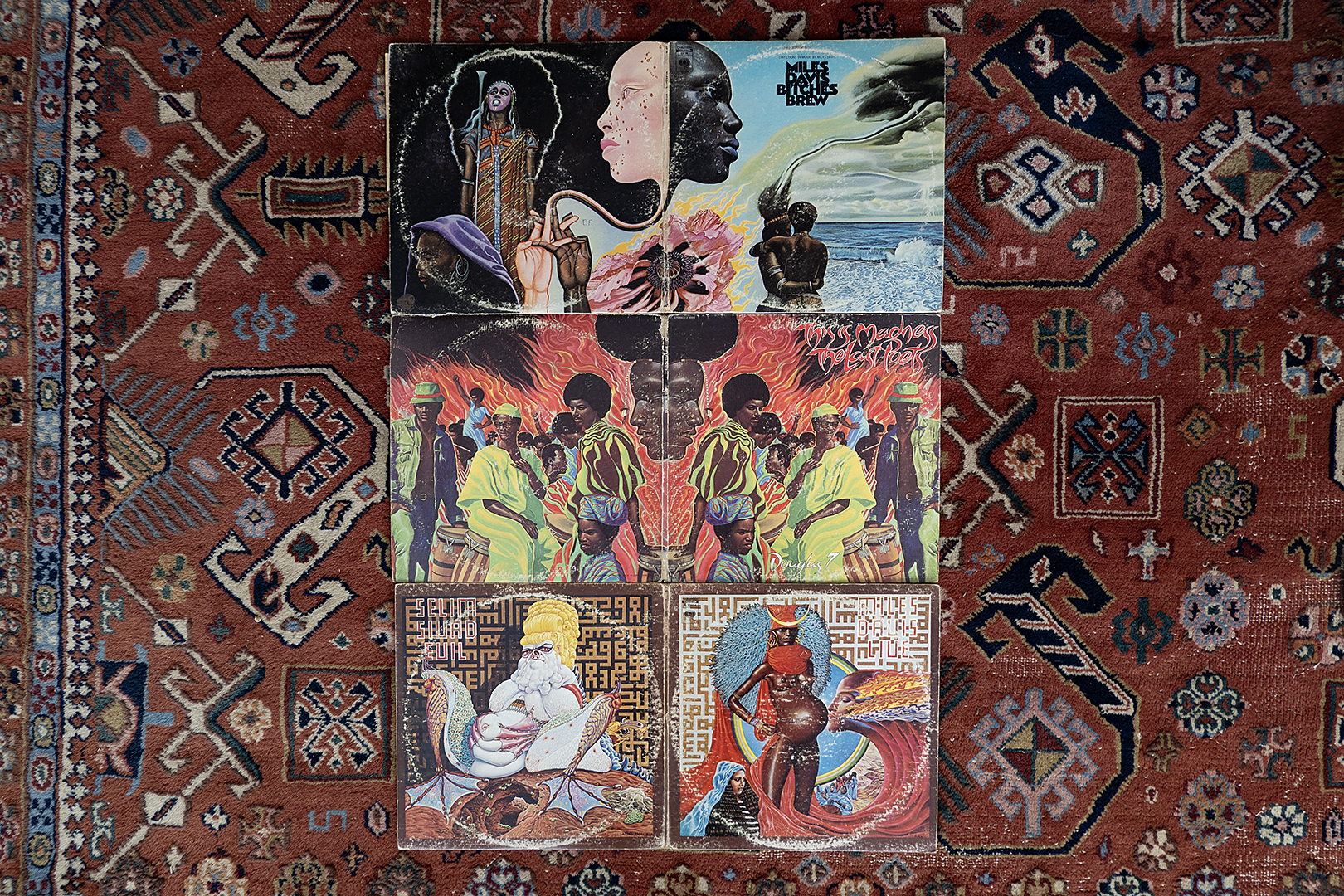
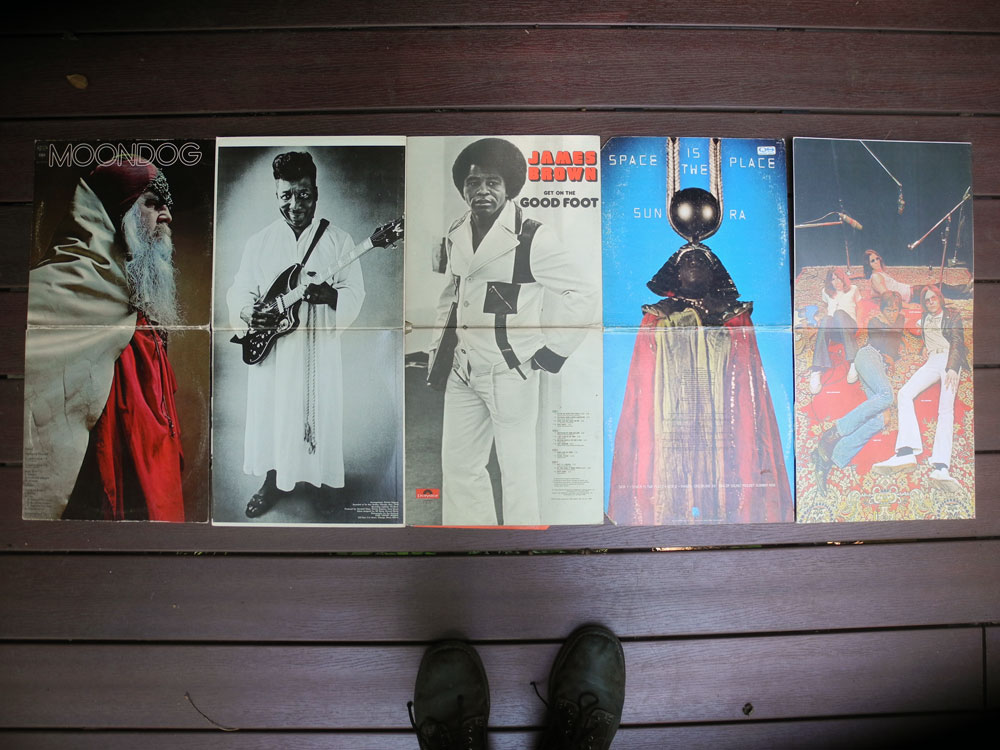
I love gatefold album covers especially ones that utilize the spread and span the gutter. I photographed the spreads of a few of my favoites back in 2011 and today, after listening to a Last Poets single, I went down a Mati Klarwein rabbit hole.
Klarein hung out with Jimi Hendrix and Salvador Dali. He created album covers for Carlos Santana, Buddy Miles, Jackie McLean and Earth Wind & Fire as well but the three above are gems. I noticed the initials, “BF,” on the back of Bitches Brew. I’ll have to get that back to Brad one of these days.
Margaret Explosion plays Little Theatre Café Thursday February 5, 7-9pm