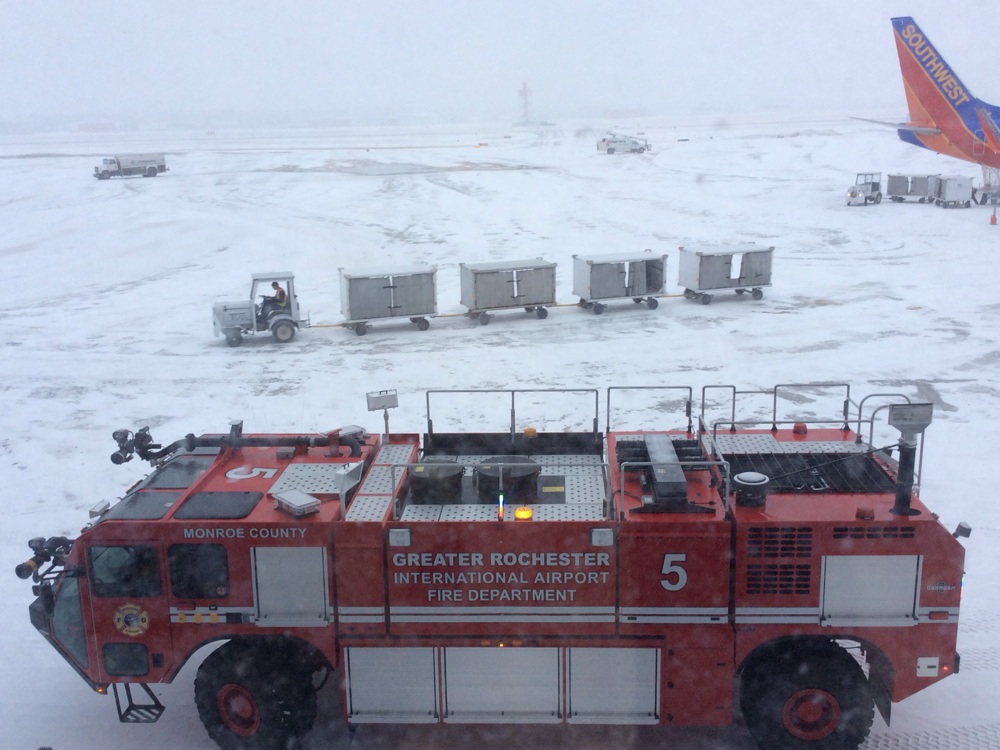
OK. We’re back but we want to go back. I have a few photos to sort through first. During the Viet Nam war, when I was hitchhiking back and forth to to Indiana, the truck stops in Ohio always carried these hats with the unofficial Marine motto, “Shoot ‘Em All. Let God Sort ‘Em Out.” I keep about half.
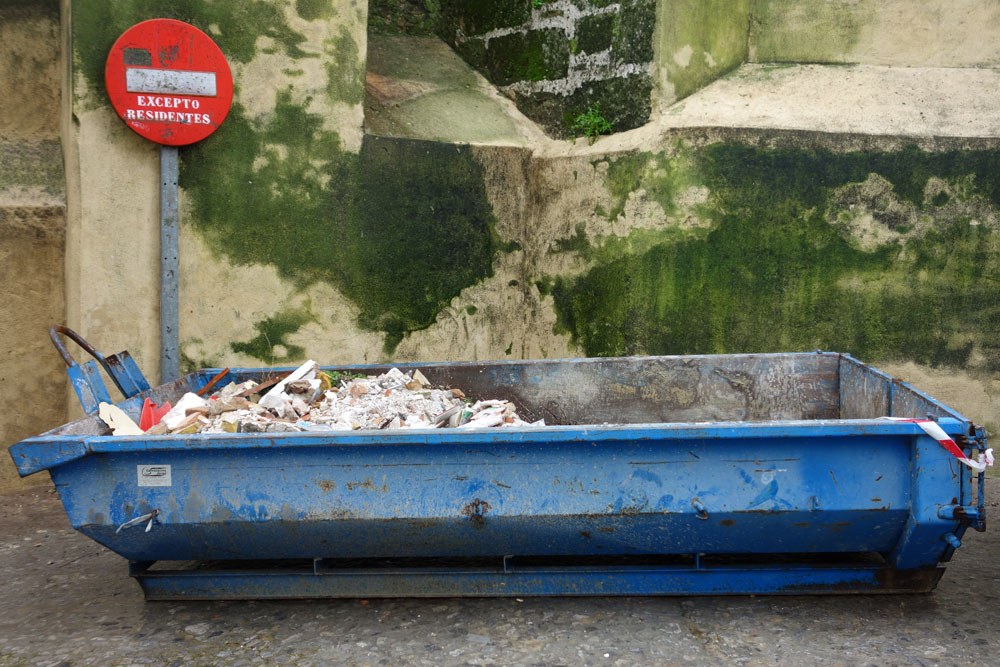
I have been photographing dumpsters for a few years now, not exclusively of course, just when I come across an interesting one. Our neighbors have one out in front of their house right now. We’re guessing they’re redoing their kitchen. It’s been out there for a few weeks and it is nothing but ugly.
In Spain they are always reworking buildings. Some of them have been around for five hundred years so there are many layers of crudely cut stone, brick, tile and old wooden beams. Exterior doors can be twelve or twenty foot high and maybe five or six inches thick. Living with all this old stuff, Spaniards have developed both a proud appreciation for it and an intense drive toward modernism.
The sound of grinders and jackhammers is everywhere. Dust spewing out of open windows is sometimes so thick you are forced to take an alternate route. And then there are the beautiful dumpsters left out on the street until the project is done.
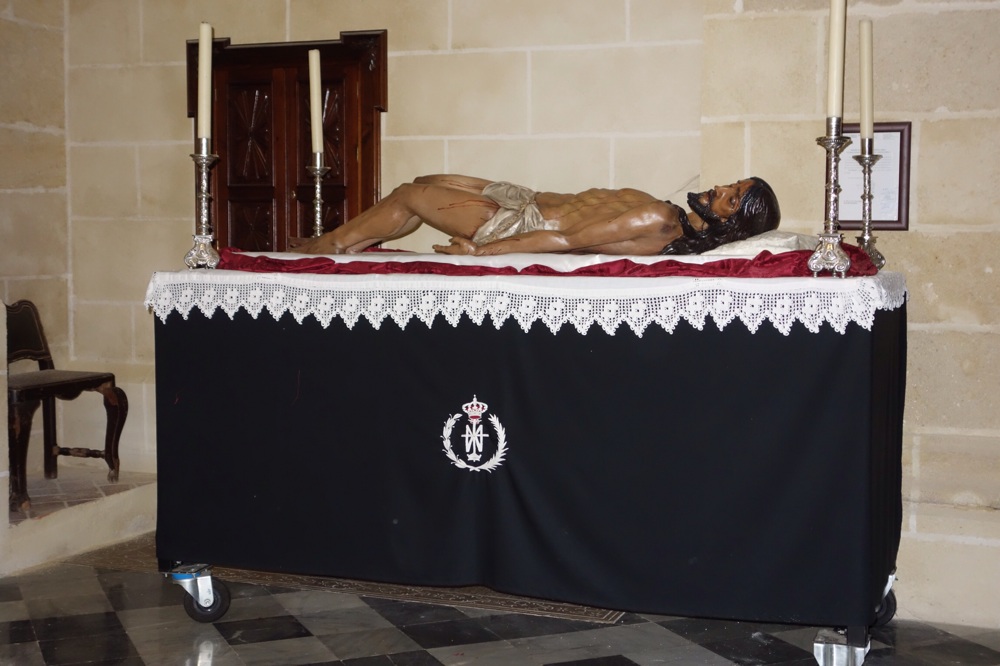
Statue of Christ taken down from the cross and ready for burial
Spain is a Catholic country. Has been since Fernando and Isabela, Los Reyes Católicos, took the country back from the Moors in 1492. Streets, towns and whole cities are named after saints. In the old sections there are churches on every block. Some of them were Moorish temples before the Moors were given the boot and some were even Byzantine churches before the Moors took over so they are very old and always a treat for the eyes.
The country, cities and towns each have a patron saint and they do it up on the respective feast days. In most churches you’ll find a statue of the Virgin Mary (who is revered more than the Christ himself) and a statue of Christ in some sort of Passion-related torment. These two statues stand apart from the many others because they are the ones that are trotted out and lugged through the streets on floats during Holy Week, the last week of Lent and week immediately before Easter.
These arcane customs and the idolization of the saints were always my favorite parts of church when I was growing up. I collected holy cards like baseball cards and pick up a short stack each time we visit Spain. I still love this stuff and am happy to get reacquainted with the religion I left behind so long ago.
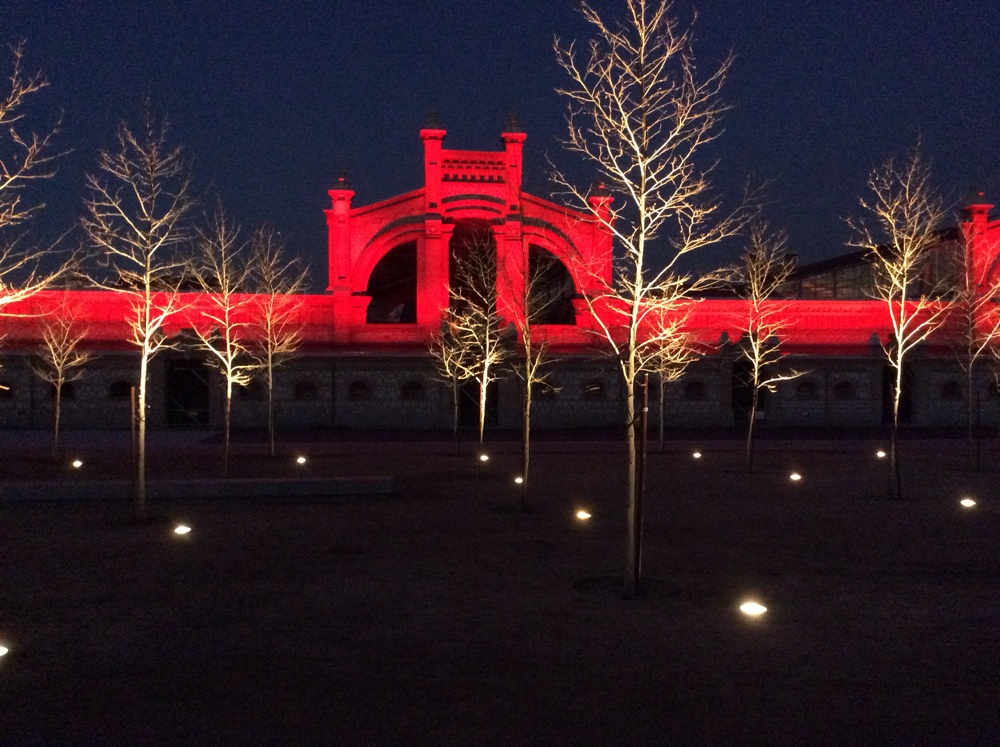
Spain was a special place for Hemingway. Many bars in the old section of Madrid claim that he hung out there. El Matadero, the former slaughterhouse where the bullfighting-obsessed Hemingway liked to watch matadors practice killing bulls and the old women drink the blood of the freshly slaughtered cattle, has been transformed into a Dia Beacon/Mass MoCA like space for art installations, theater, dining or just strolling. Free admission. The government here does things like that. They have a Minister of Culture.
It was dark before we left and of course the lights came on, but with some simple thought the red brick slaughterhouse was bathed in red flood lights and the bare trees in front were lit with white. A display worthy of Duane Sherwood’s work with New Math and Personal Effects.
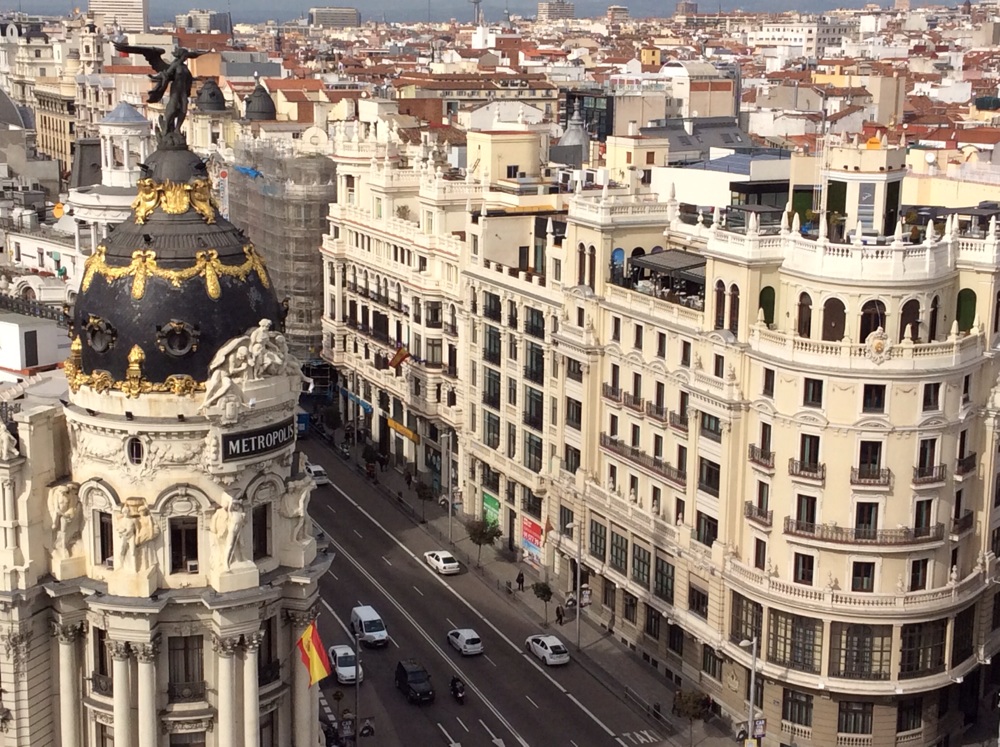
View of Gran Via from Círculo de Bellas Arte building in Madrid
At the end of every Breaking Bad episode they showed a quick shot of Gran Via in Madrid, the namesake of the show’s production company. The dramatic, round Metropolis and Rolex buildings look fantastic from the street but for three Euros you can take take an elevator to the top of the nearby Círculo de Bellas Arte building and get a sensational 360 of Madrid with the white snow capped mountains in the distance. Best tres Euros you’ll ever spend.
Lorca performers in a Madrid bookshop near Plaza Santa Ana
As sub culture/high culture hops go this is as deep as it gets. Thank God Federico Garcia Lorca is still revered by some. A cool bookstore near Plaza Santa Ana called Sin Tarima Libros (with a choice selection of vinyl record reissues including Bill Evans “Waltz for Debby”) that we had stopped into twice already was having a performance of Lorca poetry accompanied by a flamenco guitarist.
We reserved a spot and showed up as prompted fifteen minutes before 20:00. We were the only Americanos in the crowd of eighteen or so and were introduced as such at the conclusion of the performance. I didn’t understand a word of it but it was unbelievable.
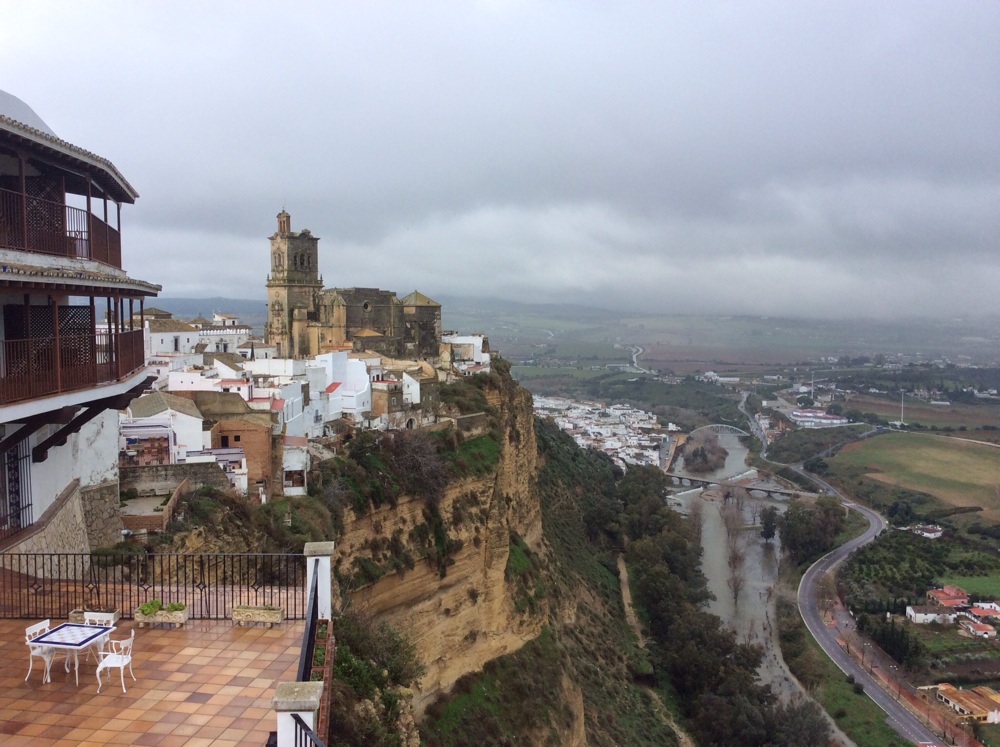
I’m quite certain not even the locals of Arcos de la Frontera can believe how beautiful their place is. The old section is a narrow white village that runs up a mountain and offers spectacular views from both sides. We spent the better part of a day trying to walk around their mountain but were forced to take a bus when the road got too dangerous. We spotted an intriguing sign for a place called Boabdil and followed it down a path on the side of the mountain.
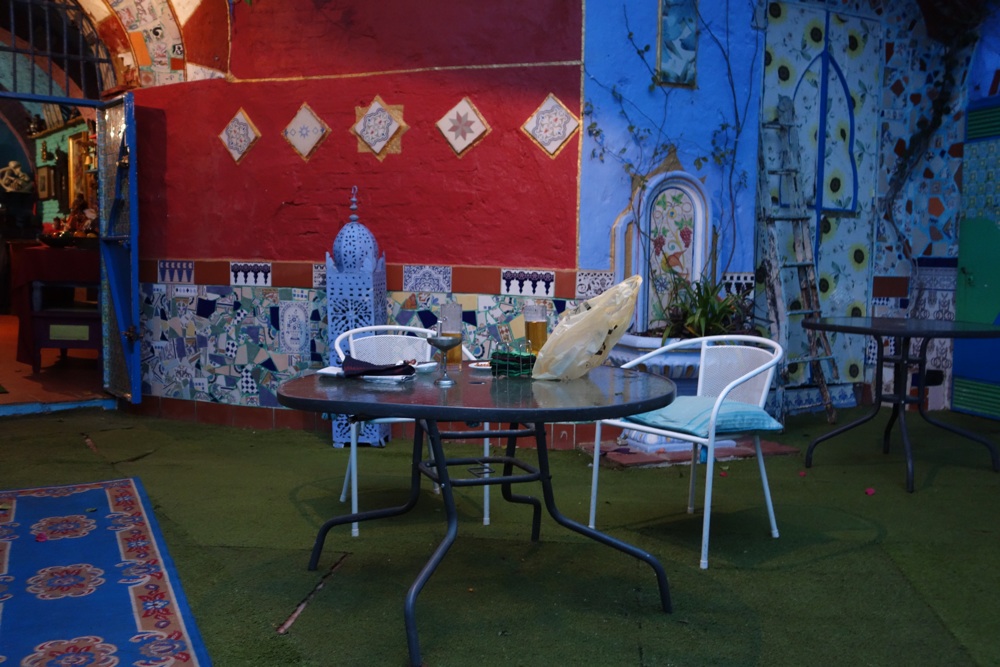
A sign out front claimed the place was about three thousand years old. There was no one around and the tiles on the walls looked like they had been done by a madman. We entered cautiously and a man came out from the back room. “Pasa, Pasa,” he said, encouraging us to enter a cave that went straight into the hillside from his bar. We looked inside and came out quickly. He seemed friendly but we both felt paranoid like we were being set up.
We ordered a beer and I noticed he poured them from cans. I looked at his Cruzcampo tap and detected it had not been used in years. We sat out front at the only table in the place and both felt like we were being drugged. But the music got better and then sounded great. Peggi asked who it was and jotted down the flamenco artist’s name. A local stopped by and ordered a beer. He was all smiles. The drugs were good.
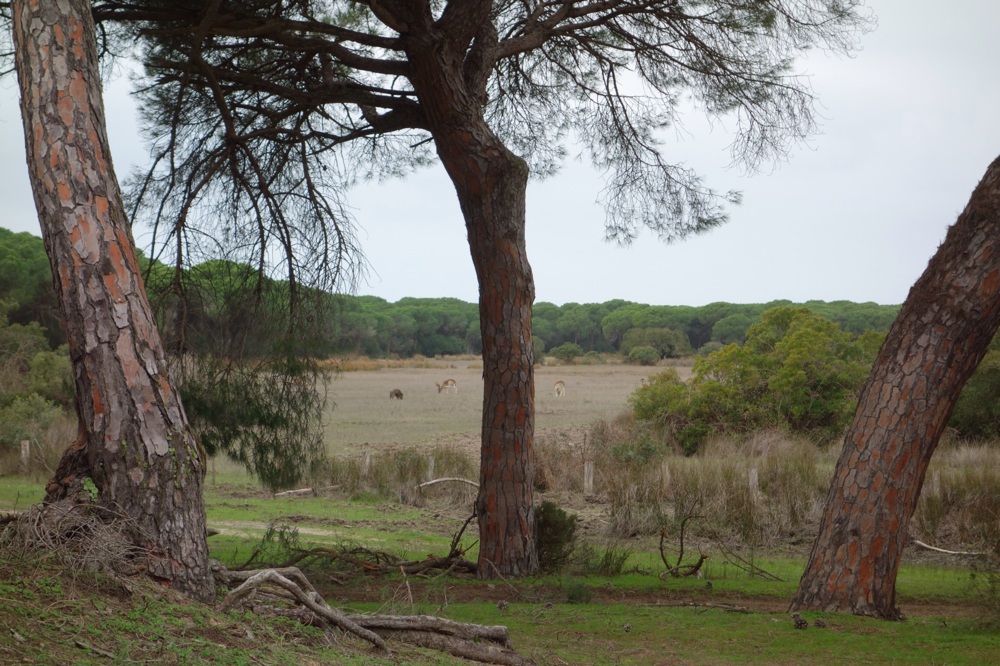
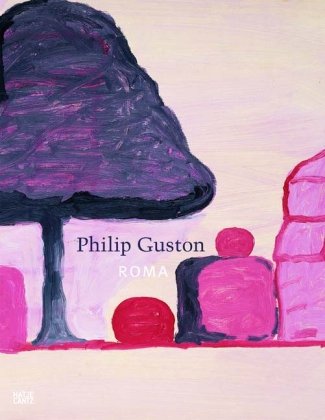
Philip Guston was really taken by the shapes of the trees in Rome. He was invited to teach there and did a series of paintings generally referred to as the Roma Series. These trees, also in Spain and in Doñana National Park, are seductively shaped. They contrast perfectly with the tall pointed cypress trees that are everywhere.
The public service workers trim the trees that line the streets in a severe manner. At this time of year, before most of the trees have bloomed, you wonder if they could ever bloom again. The orange trees in the south, which are already blooming, look like lollipops but are cut flat on the bottom at about my height.
We came to Spain without a solid agenda. We thought it might be nice to go to the south where it is quite a bit warmer and off season as well. We talked of crossing the border into Portugal but every time we checked the weather in Tavira it was raining and we talked of renting a car but we never got around to that. So we took an autobús out into the country and up into the hills where we have pretty much sat and walked in circles, enjoying the ambiance immensely. Roosters are crowing outside and the view from the top of Arcos de la Frontera is not bad at all.
We weren’t sure what sherry was so we did a wiki search for it and found that it is a drink developed by the Phoenicians in 800 BC, fortified new wine, and it is a anglicized mispronunciation of “Jerez,” the town we were in. Jerez de la Frontera is in the southwestern part of Spain near Portugal where they make their proprietary “port,” which is pretty much the same thing as sherry, I think.
Jerez is strangely hard to pronounce. The “J” is like an “h” and the accent is on the second syllable and the “z” at the end sounds more like a soft “th” and trails off as soon as it starts. From here we took a half hour bus ride to Sanlucar de Barrameda on the Atantic shore. We wanted to see the national forest and nature preserve down here called Doñana. We spotted a wild boar and deer with great big web-like racks. I took this photo of them but they looked more spectacular through our guide’s binoculars.
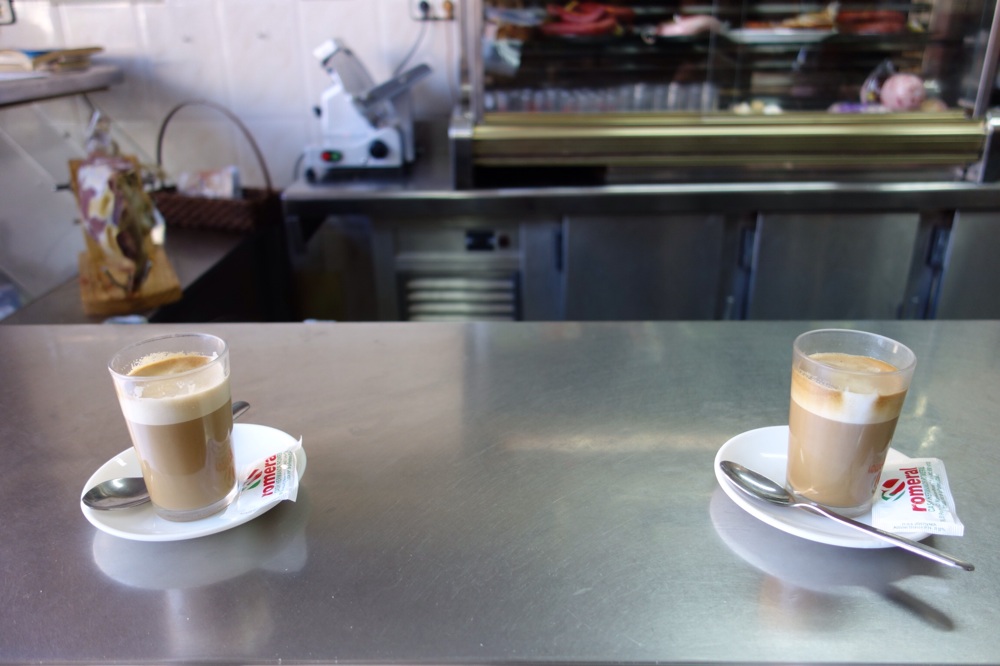
After quite a few trips to España we finally came around to ordering coffee without using the word “café,” the way the locals do. You walk into a cafe where the doors are usually open to the street, you say Buenos Días or at least Hola upon entering to the barkeep and the nearby patrons. To skip this stage is very rude. This was pointed out to us in a good natured way many years ago and it seems so right.
Today, we said, “Hola. Dos con leches por favor” and it did the trick. You typically stand at the bar and the coffee is made to order as you watch. While the coffee is being pressed, the server will set a saucer with a small spoon and sugar packet on it onto the the bar in front of you. He or she will pour the coffee into the cup, or glass in the funkier places, and then they will steam the milk and add it to coffee. We like this routine so much we do it at at least two times each day in Spain.
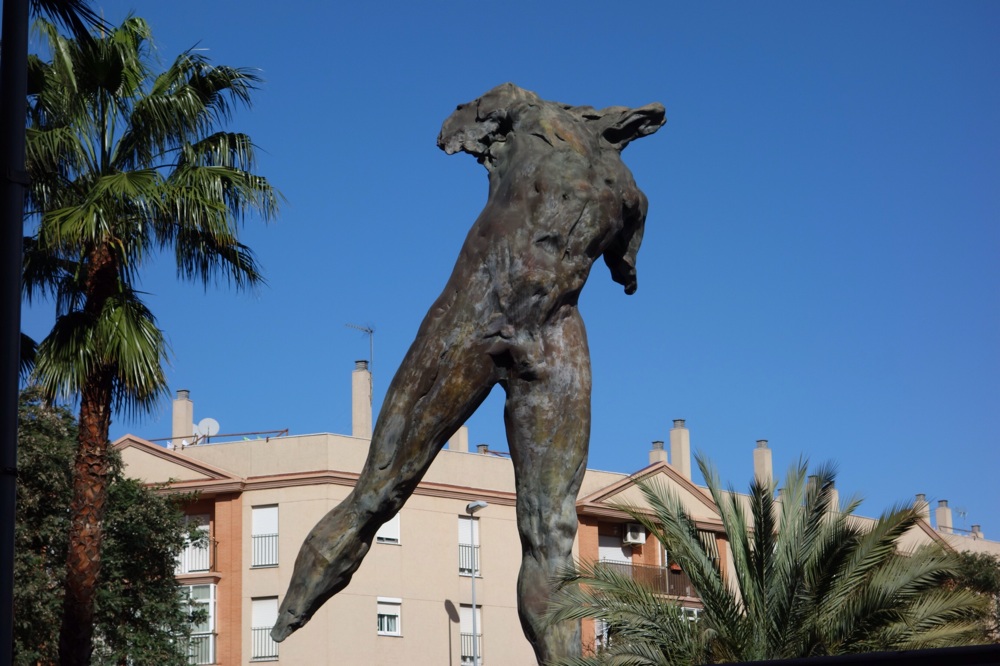
Mythological sculpture near train station in Jerez de la Frontera
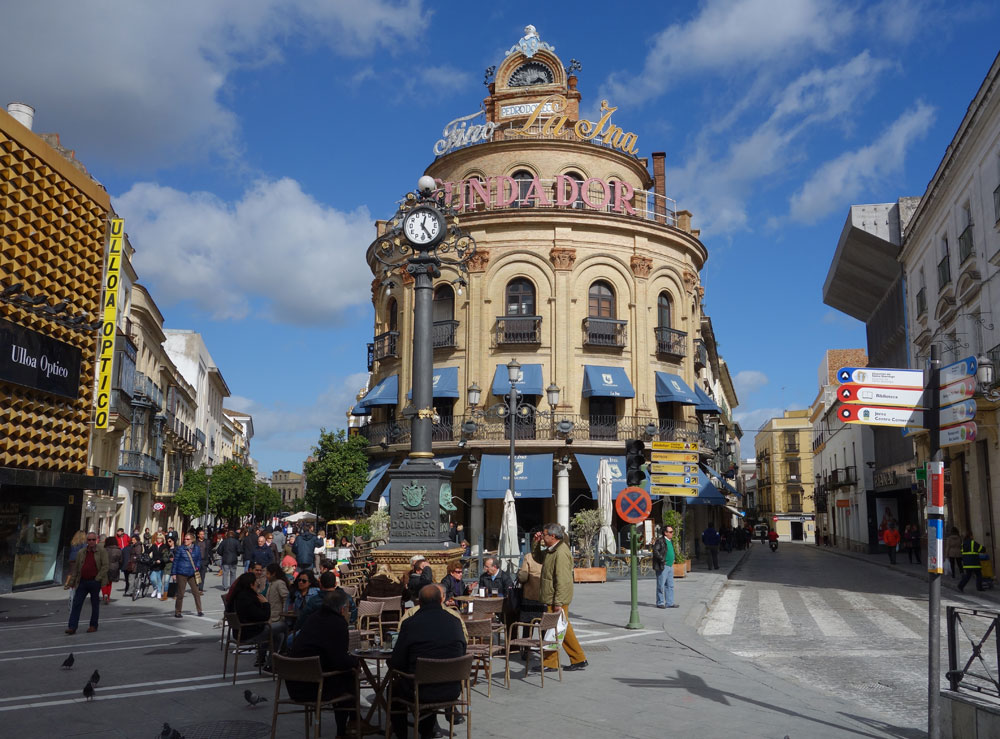
Spain has a way to knock you out when you least expect it. We stepped off the train in Jerez de la Frontera and entered a traffic circle with this giant sculpture by Victor Ochoc in the center. The Minotaur from Greek mythology has come to represent all bull headed creatures like me, a classic Taurus. The Minotaur eventually got a bull’s head. Picasso worked with this character extensively. Elsewhere in Jerez we came across this.
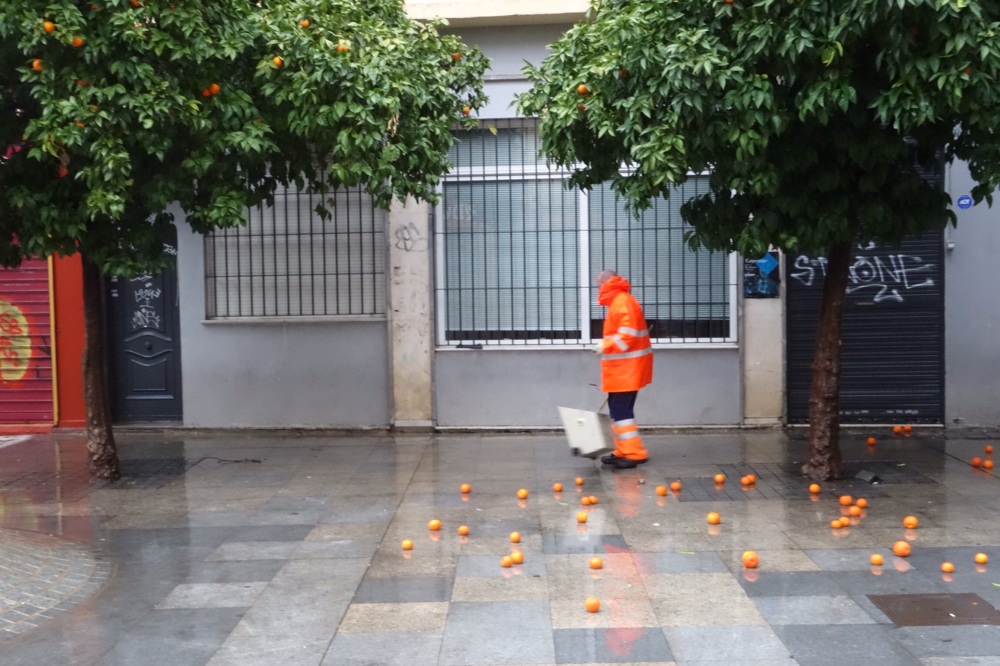
Municipal workers sweep up fallen oranges on the streets of Sevilla
It was raining when we stopped in Sevilla. The locals were acting like this was a big deal because it had been raining for a few days. It was ten degrees where we came from so we couldn’t take them seriously. The streets are lined with orange trees down here and the rain dropped the ripe fruit everywhere. The municipal workers had their hands full cleaning them up.
At the cafe where we had coffee we watched the woman behind the counter throw oranges into the Zumex machine like she was playing basketball. We couldn’t resist and ordered dos zumos de naranja.
We stood outside a Vodaphone shop in Puerta del Sol trying to decide if we wanted to buy a SIM card for our iPad. Do we really need to be connected all the time? It seems the rest of the world is but we have resisted. Of course we have a high speed connection in our home and we couldn’t live without that even though we managed to do so for many years.
Phone calls can feel like an intrusion and I would rather not get one at all in the woods or at Wegmans. We find wifi connections when we travel and check in a few times a day, but in those moments when I know we could call up a map to avoid walking exactly 180 degrees the wrong way out of the center of Parque de Retiro I feel like we are living some sort of performance art piece by going without a cellular connection.
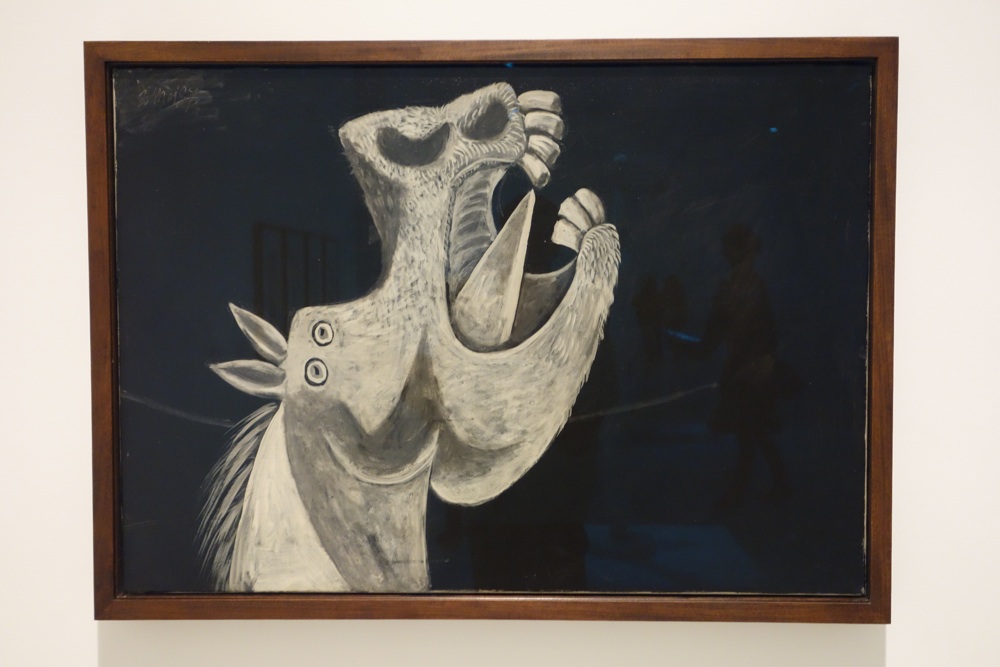
Picasso study for Guernica at Reina Sophia in Madrid
The Reina Sophia, Madrid’s contemporary art museum has a world class collection so it is a must stop. We wandered through the place in a methodical fashion so as to see it all in one day. We gorged ourselves on Richard Serra, Edvard Munch and Paul Klee as well as younger artists we had never heard of. My jaw dropped when I saw two big Philip Guston paintings and five or six drawings as part of a provocative show called, “Elements: The Space of Crisis.”
A display of graphics, photos and art from the Spanish Cival War wound us up for the killer piece in this museum’s collection, Picasso’s Guernica, a monumental painting he did for the Spanish pavilion at the 1937 World’s Fair in Paris in response to the fascist bombing of the Basque town. A total knockout!
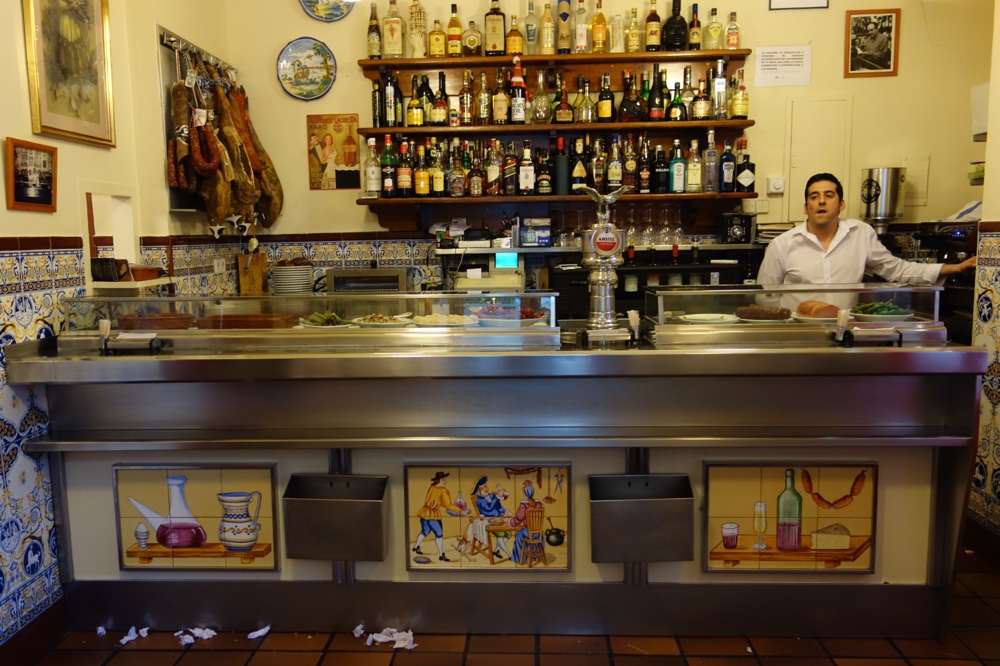
With only a couple of hours of sleep we walked in a daze around the old section of Madrid stopping for cafe con leche a few times before checking into a hotel. Instead of crashing, we went for it and headed back out. We found the quintessential Spanish cafe slash bar slash restaurant. I love how the Europeans seamlessly meld these three essential environments. We were in the literary section of Madrid near Plaza Santa Ana with its statutes of Calderón de la Barca and Federico García Lorca, near Cervantes’ home on Calle Lope de Vega.
People were eating in a back room with long tables and tiled walls but we sat in the bar and ordered Pimientos de Padrón, cerveza, vino tinto, aceitunas marinated in onions, manchego y pan. We believe we have found civilization.
My new camera offers a lot of advice that I am choosing to ignore like the “Basic techniques for shooting” screen where Sony says, “Position a subject off center.” And “Movie Basics: Continuous shooting can produce a monotonous movie.” Those are my favorite movies.
I’m taking Steve Hoy’s recommendation and going with the 2×3 aspect ratio setting. It’s actually a higher res photo which is counterintuitive unless you’re a math major. The display screen on the back of the camera is 4×3 so the default 2×3 looks smaller back there. It looks like the top and bottom were cropped off but it is actually showing me the same height with more width so if I want 4×3 I’ll just crop the 2x3s.
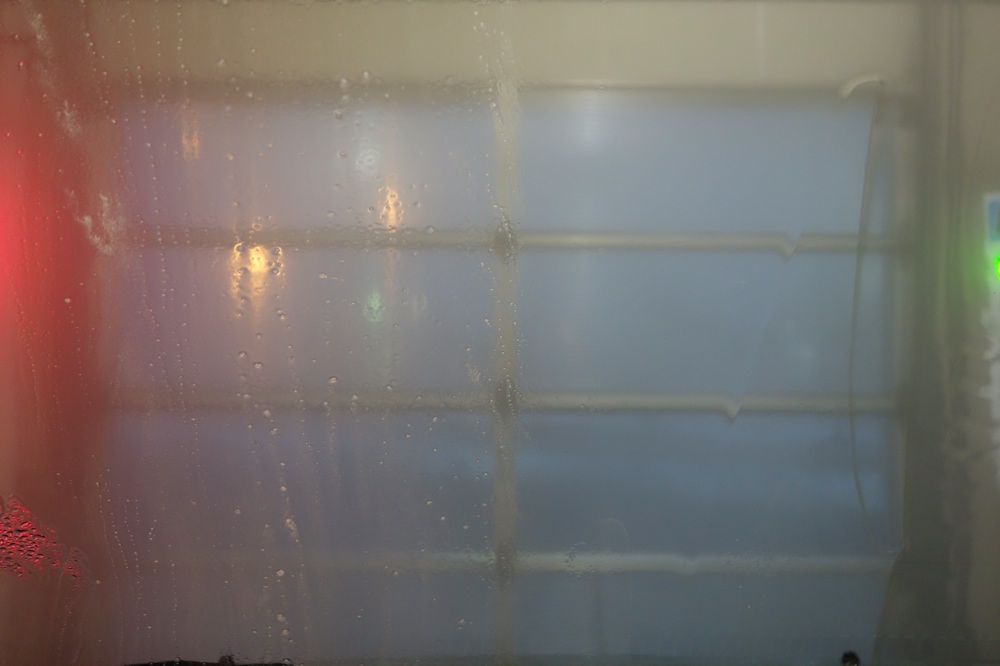
Inside Classy Chassy Carwash on East Ridge Road in Rochester, NY
Painting class at the Creative Workshop is over crowded this session, so much so that Maureen dropped out. But, as usually happens, some new people drop out because the whole experience is not what they expected. A visitor to the class could spot the newcomers in a flash. They’re the ones with their earbuds in as they work away. Veterans quickly learn that Fred Lipp offers the same advice to every person in the room as he wanders from student to student. And this advice needs to be heard or overheard over and over because it is always relevant to whatever it is that you’re working on. Students work in all mediums on abstracts, portraits, still lifes, landscapes or a Corn Hill cityscape in my father’s case, and all can take advantage of this advice. It is all rather Zen.
Last night a new student, a painter with an art school background, was butting heads with Fred. The spirited discussion between those two was another golden opportunity for all of us to refresh the fundamentals. Fred was pointing out two intense dark spots on her painting that were calling way too much attention to themselves. “I’m only just beginning,” she protested, “Those are my darks. This is my process.”
For Fred any process should include an orderly direction. You don’t get out ahead of yourself by throwing up obstacles and if you have created an obstacle you deal with it now. The obstacle is your next move. You proceed in a fashion that allows the work to tell you when it is done. Painting and art or life, for that matter, is an adventure not some preplanned execution of a plan.
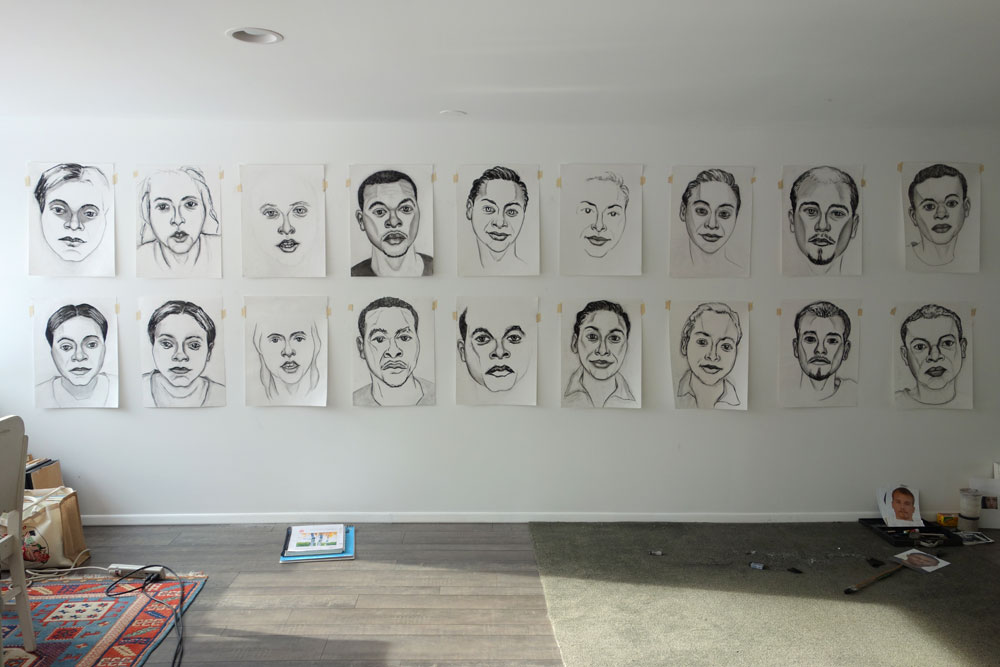
Paul Dodd “Homeless Kids” group shot in basement studio
I took photos of these local homeless kids a few years ago. One of them was sixteen and pregnant. I’ve painted them in oil and I painted them again in opaque watercolor. And then I drew them in charcoal on craft paper. The ones shown above are charcoal on drawing paper, multiple versions of six kids. I’m still working on a few but am preparing to move on to another project. Then I’ll photograph these drawings properly and put them in a drawer.
I’ve carried my Nikon 7000 in my left front pocket for four years now. I can barely get the lens cover open now. Lint takes a toll. I bought a smaller Sony pocket camera, an RX100, and by default it is set up to shoot photos in the traditional 3×2 aspect ratio. My first digital camera, a Kodak DC210 used that format, same as the old 35mm film cameras, and I thought I missed that but I am having a hard time adjusting. I’m thinking the 2×3 format might be the way they designed the sensor and therefore it might be the optimum ratio. Does one fit mobile platforms better? I don’t really care about that. I’m just on the fence as to which ratio works best for me. I’ve been using the 4×3 for so long I kind of frame shots that way before I shoot. I’m gonna have to think about this for a while.
The blow up above is 4×3 and the this link is 3×2.