Oranges litter the streets in Sevilla. It is the warmest city in Europe. Our hotel room has an outdoor shower on the patio. I took one this morning. We took one last walk across the bridge over the Rio Guadalquivir and then got on a high speed train to Madrid where it is ten degrees cooler. We had roasted asparagus and a mixed mushroom dish at a restaurant around the corner from our hotel. And then we wandered.
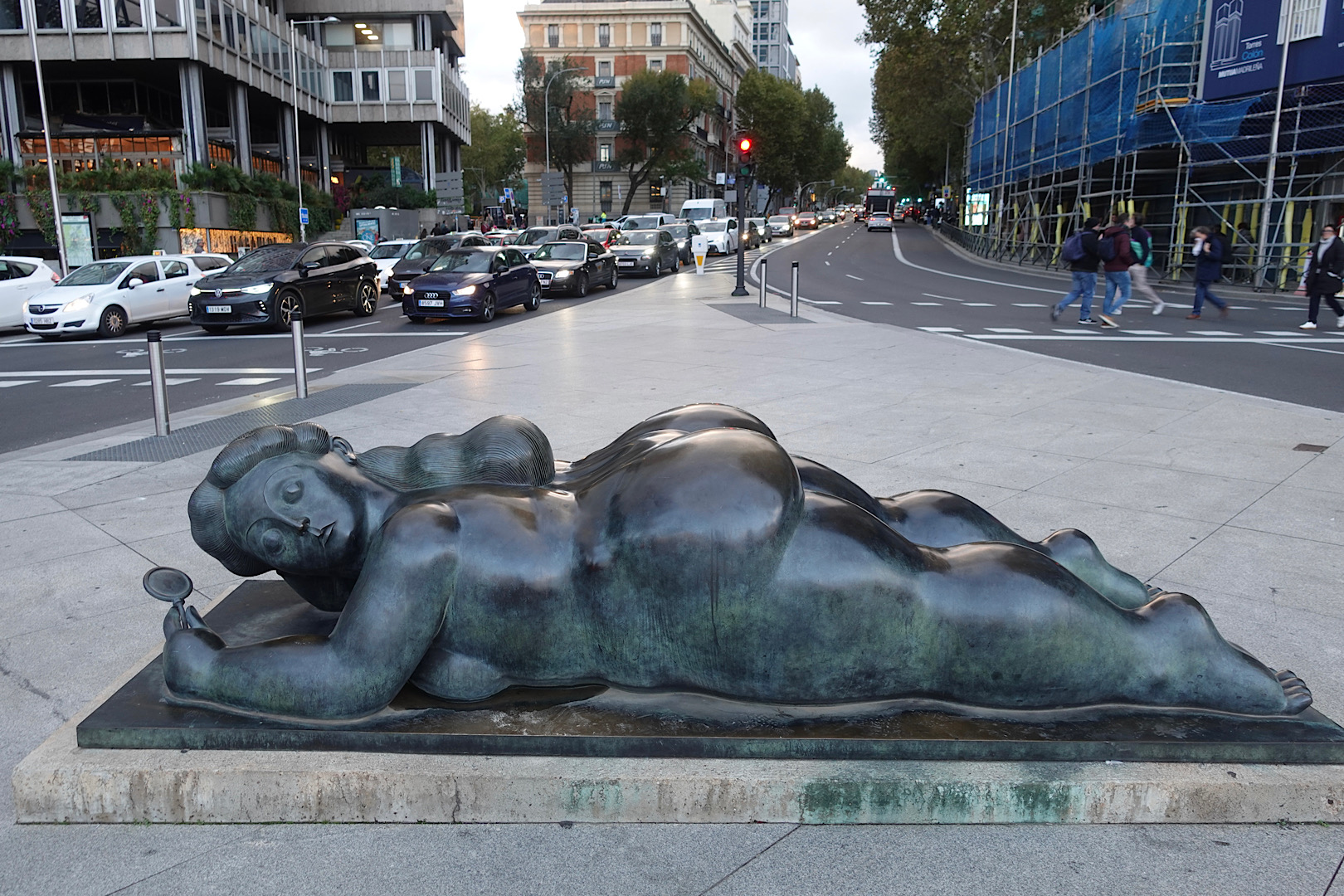
We found a gallery on the next block with some intriguing paintings, abstracts painted on a mesh over abstracts on board. The attendant there told us about a show, “Before America,”at Foundation Juan March so we walked over there into Salamanca, a neighborhood we had not yet explored. This isn’t a corporate sponsored foundation. Juan March was the richest man in Spain, “the Rockefeller of Spain,” “the last pirate of the Mediterranean.” With the richest of sources the show illustrated the influence of indigenous civilizations on what is now called the Americas, on art from Man Ray to Joseph and Annie Albers. There were no photos allowed but the foundation is offering a poster of my favorite piece.
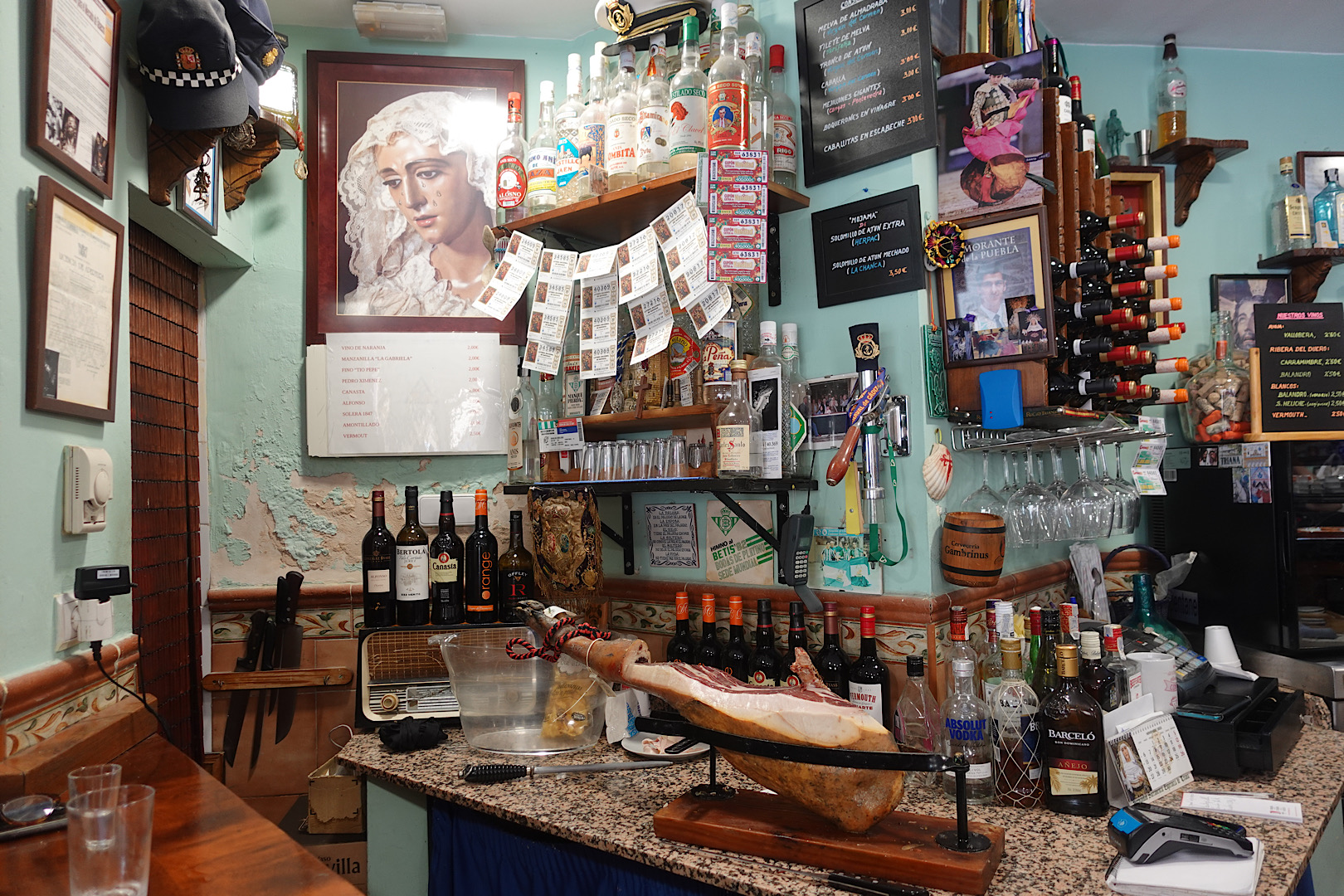
La Virgen, licor, jamón y lotería en Bar La Candelaria, Sevilla
It can only be our good luck that brought us back to this café this morning. We had stopped in here two days ago for a beer. We were the only ones in the bar and the owner was busy carving jamon so we got to study all the pictures on the walls, pictures of Semana Santa celebrations over the years. Each of the picture frames had holy cards stuffed in the bottom of the frames. We surmised the owner carried one of the floats, either the Virgin or Christ in a scene from the Passion, for his parish, the Virgin of Candelaria. Amid the pomp she is depicted with an anchor as she protects the men on the ships that work out of Sevilla.
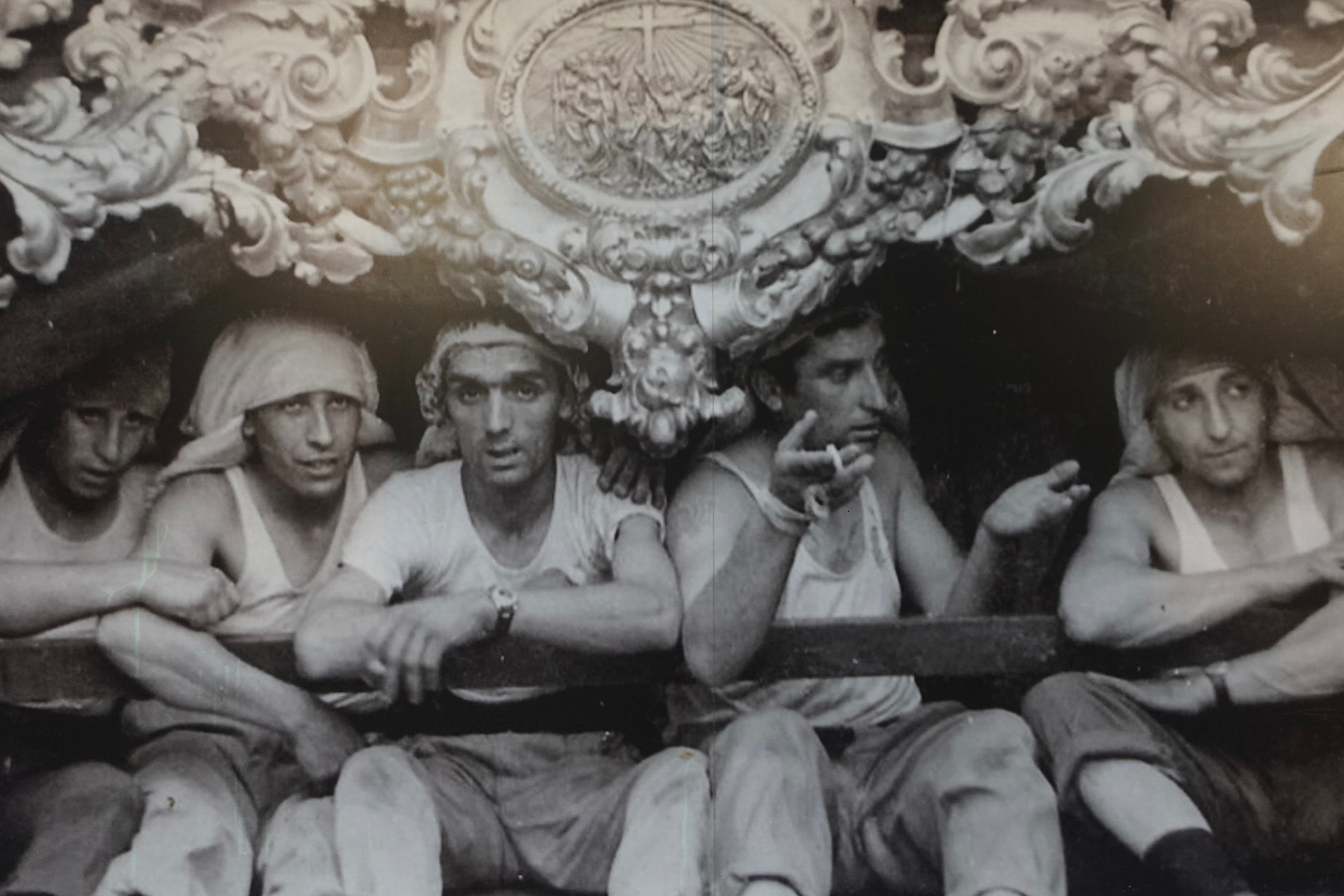
The owner gave us two holy cards of the Virgin and we asked him where we could go to buy some more “estampas” (the word they use for what we used to call holy cards). He thought for a while and then suggested a shop about fifteen minutes away. We found it and waited to talk to the clerk while he helped some teenagers who appeared to be buying school uniforms. The store was filled with religious items but also hernia belts and trusses. We put it together that this is where the guys who carry the floats in the annual Semana Santa processions get their gear. A costalero shop!
Semana Santa costaleros
This morning we headed out in what we thought was a new area of the city. We had café y tostada con tomate y aciete in a place that was completely obsessed with bullfighting. And as is our usual pattern, we wandered some more and stopped for a second cup. We look for tipico places, the ones that are popular with locals, not tourists. They serve their coffee in small glasses rather than cups and you often stand at the bar. We were coming from a new direction when we spotted this crowded café. We had already ordered dos con leche when we put it together that we were in the same café, Bar La Candelaria.
Up to the eighth century All Saints Day was celebrated in May. Pope Gregory III moved the holy day, the feast day of all the saints at once, to November 1st in order to dampen the popular pagan celebrations surrounding Halloween. It is a major holiday in Spain. Families fill the streets and pay respects to their dead relatives. The restaurants are packed and the diners lining the sidewalks make the streets look like a great big dining hall.
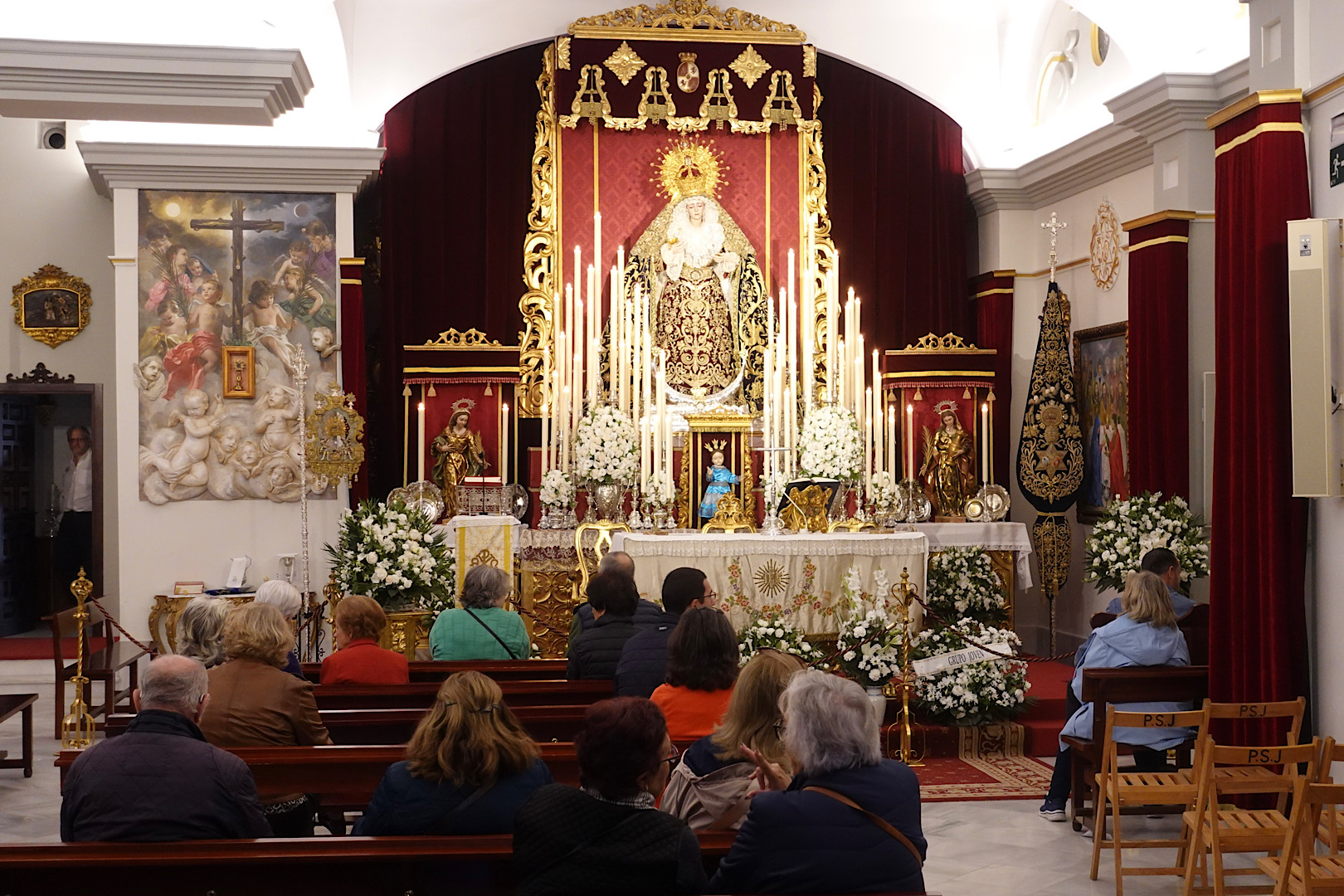
We strolled by the Palace of San Telmo, built in 1682 on property belonging to the Tribunal of the Holy Office, the institution responsible for the Spanish Inquisition. Across the bridge in Triana we walked through the old Jewish Quarter, down Callejón de La Inquisición where they converted or died. We looked for a pastelería to buy one of the almond pastries they make just for All Saints Day. We found a shop and Peggi asked the woman if she had any of those. She explained that we were in an Arabic bakery so we bought a Moorish pastry. This is a holy day of obligation so there were masses going on in the churches but we noticed a lot of people were just stopping in. We did the same.
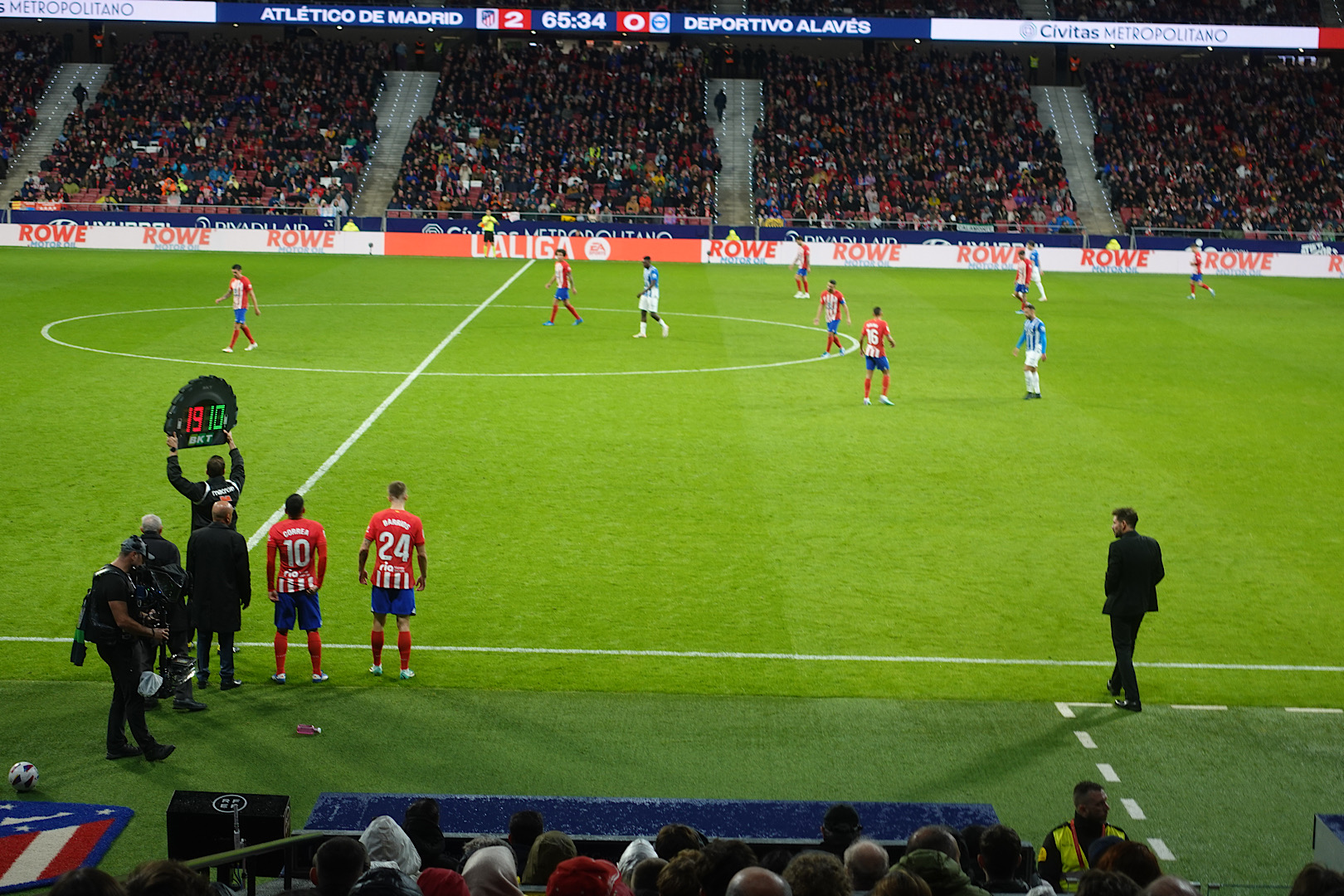
Angel Corea is substituted for Álvaro Morata in the 64th minute
We have packed so many adventures into this trip I forgot to catalog the Atleti/Alaves contest. The Metro ride to the stadium was too easy. We arrived more than an hour before the match with plenty of time for a big glass of beer and a visit to the Atlético store. Peggi picked out a red cotton t shirt and I put it on over my sweater.
Our seats were better than we imagined, just over the tunnel, between the two benches. My watch alerted me to dangerous sound levels before the match had even started. Our first impression was how much faster the game seemed in person and rough. We could hear the up close collisions. It was indeed a fast paced opening, a wide open match with lots of turnovers. I got a great shot of El Cholo well outside his box, both feet on the playing field, animated as ever in all black. But I’m posting this one of one our favorite players, Angel Corea, getting subbed in for Morata in the 64th minute.
Atleti won despite giving up a careless goal in overtime. We fans were happy.
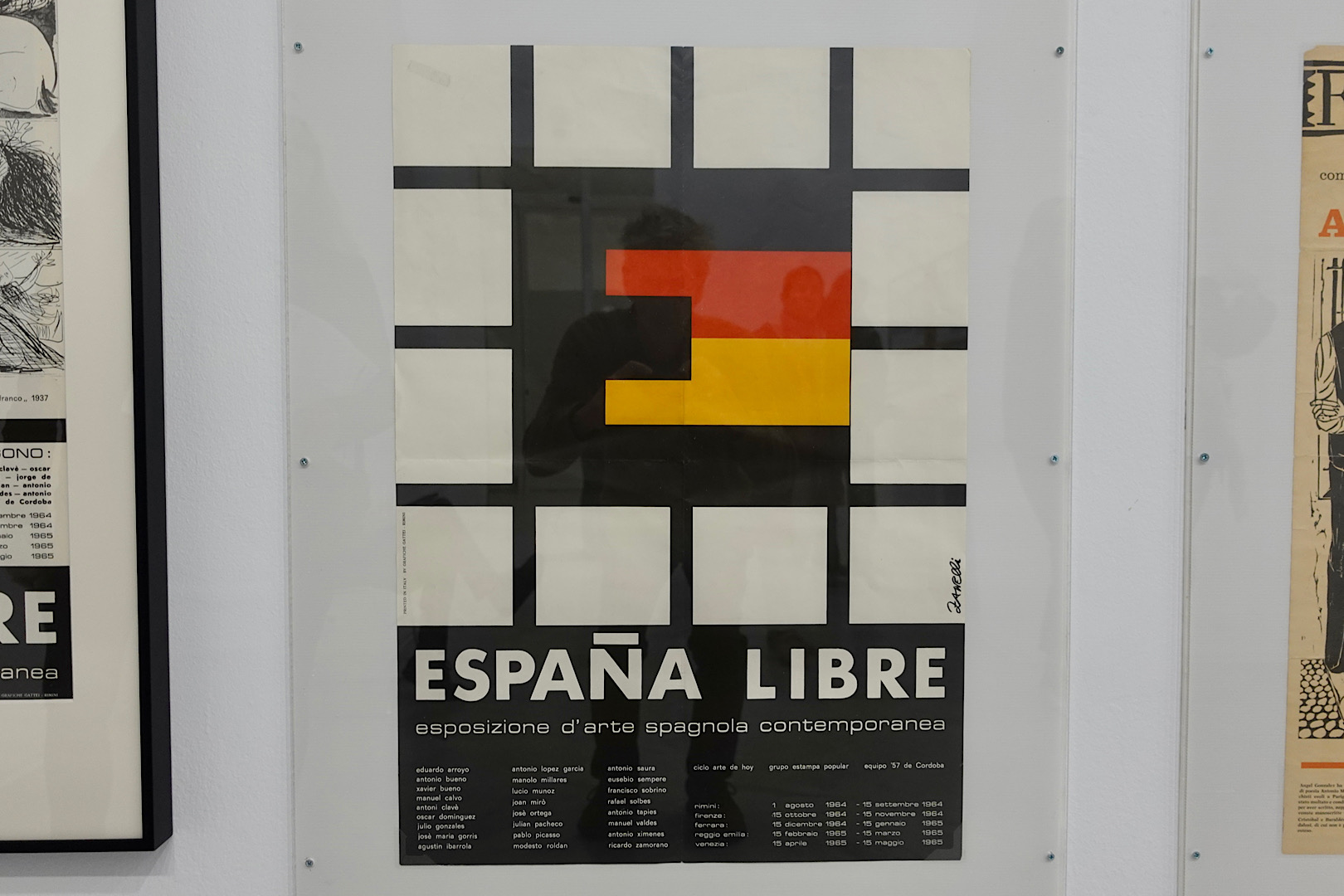
“Estampa Popular Sur” Artists against Franco 1958-1976 at Centro Andaluz de Arte Contemporáneo
The woman behind the desk at our hotel, Alegría (“Happiness”), told us we would want to call a cab to get out to Centro Andaluz de Arte Contemporáneo. We had been there before several years ago and we just let that suggestion go. We knew it was a nice walk along the canal that comes off the Rio Guadalquivir, through the Triana neighborhood so we headed out there first thing this morning. We stopped for coffee three different times. The museum is located in the Cartuja de Santa María de las Cuevas Monastery, where Christopher Columbus’ remains were interred for thirty years. The monastery had middle life as a ceramics factory and it makes a stunning location for contemporary art.
The featured show was entitled “Estampa Popular Sur” Artists Against Franco 1958-1976. Franco had been in power for almost twenty years before the movement really gained steam and organized itself under the Estampa Popular banner. In the fifties and sixties it was mostly linoleum prints and by the early seventies silkscreen was the preferred medium. Some of the artists were in exile so they showed their work in their respective countries but the really brave dispersed their work under Franco’s nose.
It got me thinking again about why artists tend to align themselves with the left. We walked along the canal off the Rio Guadalquivir and stopped for something to eat in the Triana neighborhood. We walked in and the waiter told us “The restaurant is yours.” We had the house salad, ”Ensalada gascona,” hojas de temporada con queso de cabrales, manzana y nueces. We found raisins in there too.
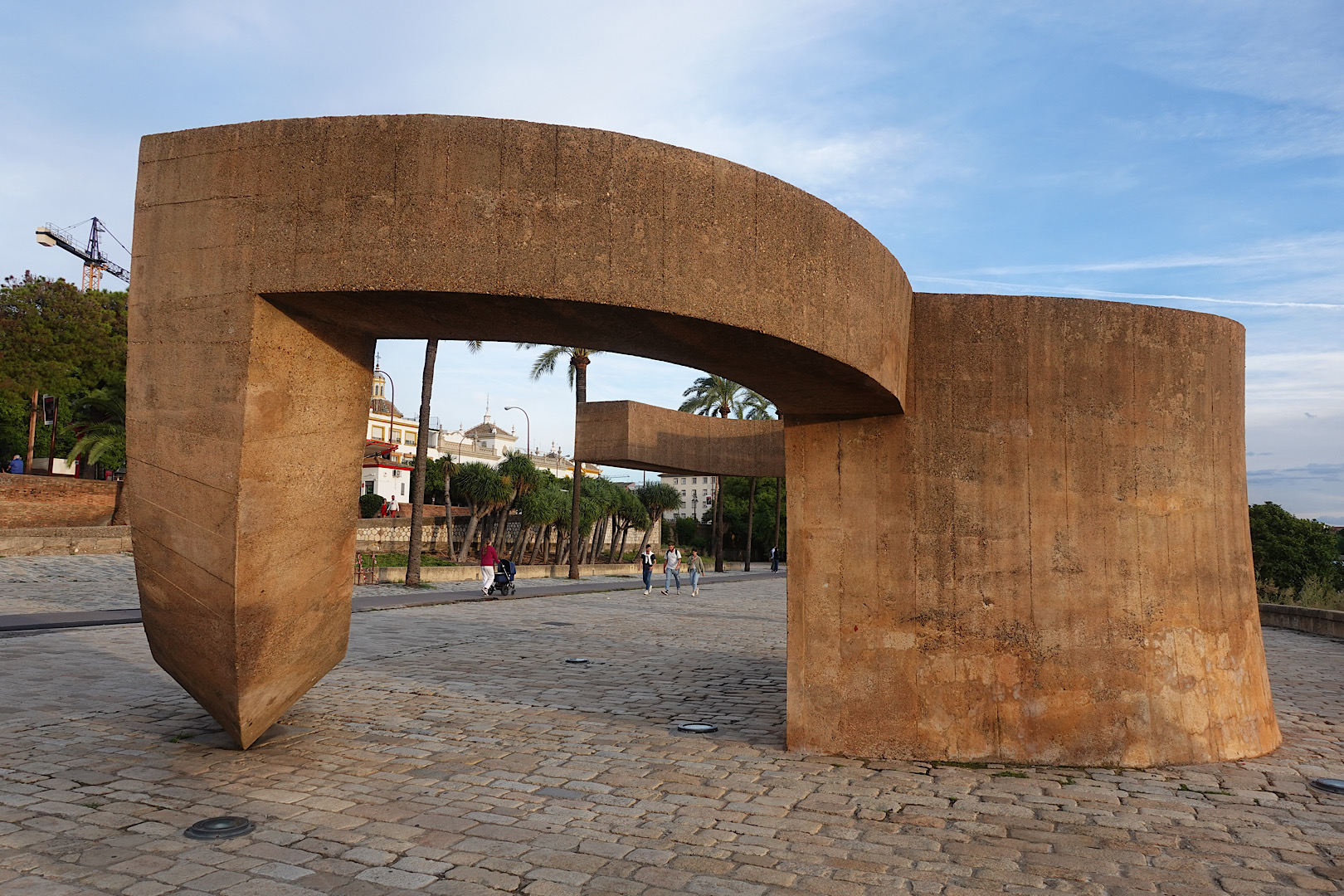
Eduardo Chillida’s “La Tolerancia“ along Rio Guadalquivir in Sevilla
When we walked across Spain five years ago we divided our trip in two, walking from France to León and taking a break to return to Rochester for a month of Margaret Explosion gigs. In León we visited Casa Botines, the Modernist building designed by Antoni Gaudí. There is a museum in the building now and I found a small Chillida book in their book store. The book was in Spanish but the illustrations went deeper than anything in the museum. I bought the book (google translated it) and ever since we have crossed paths, either by plan or serendipity.
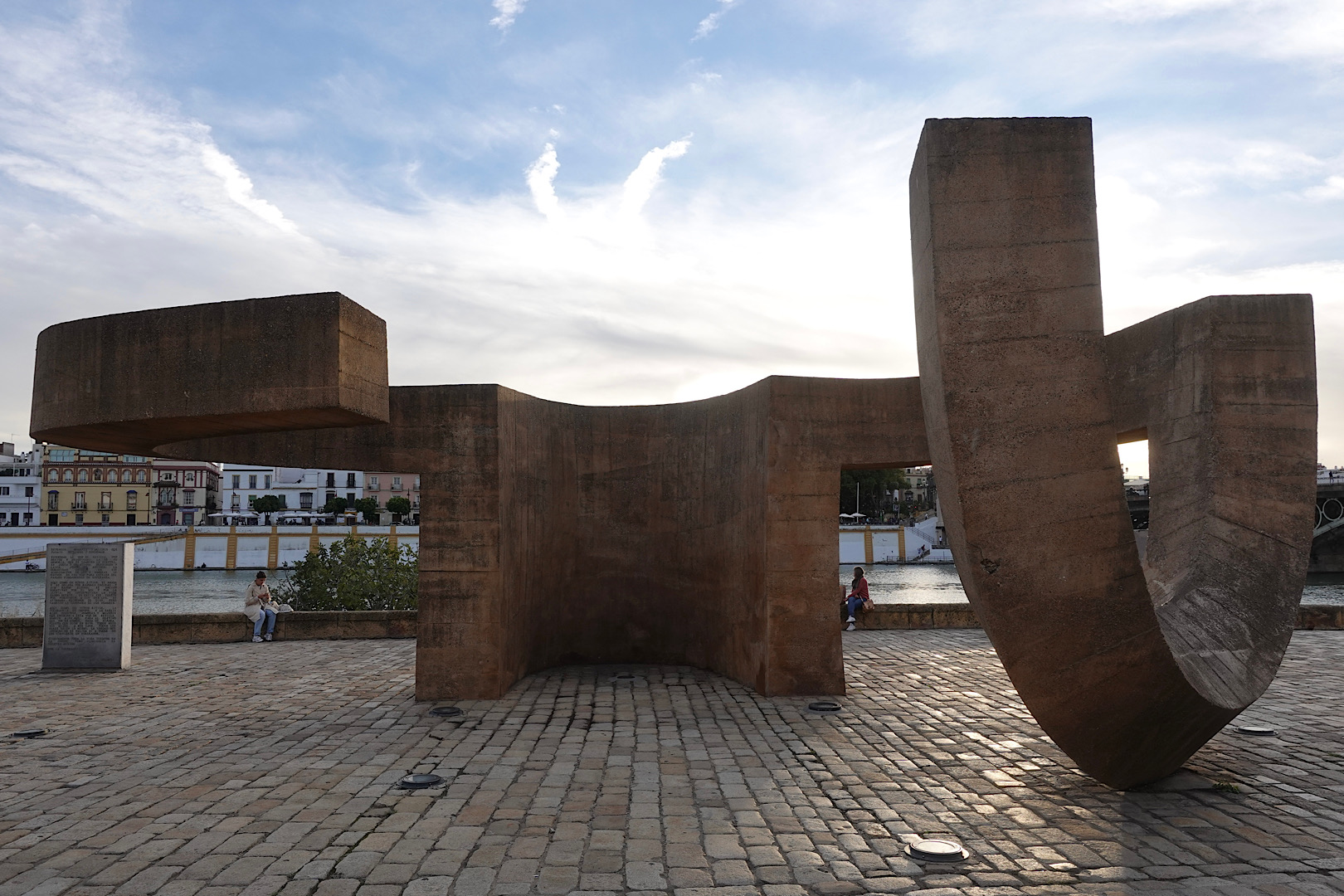
Eduardo Chillida’s “La Tolerancia“ along Rio Guadalquivir in Sevilla
We took a high speed train to Sevilla this afternoon where it is almost twenty degrees warmer. We walked across the Rio Guadalquivir river and along the bank on the other side, a neighborhood called Triana. We crossed back over on another bridge and came across this piece called “La Tolerancia.” I photographed it from all sides and couldn’t decide which to post. We bought a loaf of fresh bread, some cheese and a bottle of wine and returned to our room in the old section of this beautiful city.
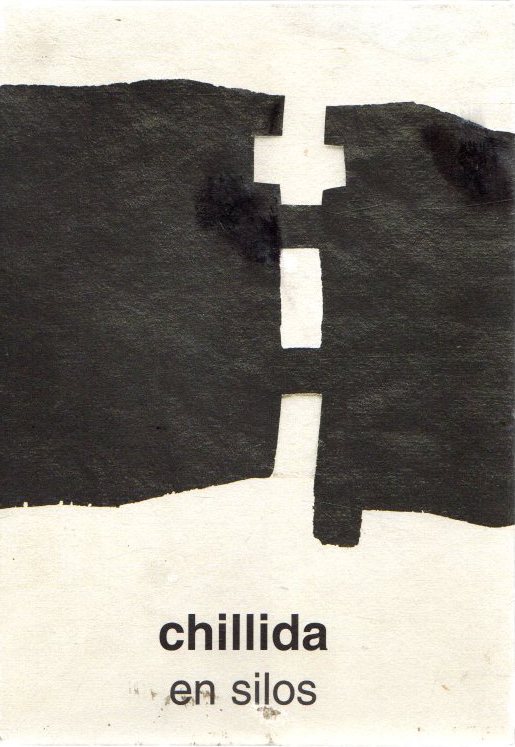
“I am a religious man. Questions of faith and my problems as an artist are closely linked. Naturally my conception of space has a spiritual dimension, just as it also has a philosophical dimension. My continued rebellion against the laws of gravity has a religious aspect.” – Eduardo Chillida (1988) from “En Silos”
Exhibit in “Fake News. La fábrica de mentiras” show at Espacio Fundación Telefónica Madrid
We tried to stay up as late possible last night (only made it to midnight) because today is an hour longer (daylight savings ends here) and the Atlético match we have tickets to doesn’t start til 9pm. The streets were unusually quiet when we got up. We walked a few blocks before we found a bakery for coffee and tostada. We walked across the street from that place and had anther coffee with a cookie dipped in chocolate.
We found two Fundaciones in the neighborhood with art exhibitions. Not exactly art but big, free exhibitions, sponsored by corporations, one on the Indian architect, Balkrishna Doshi, and the other called “Fake News. La fábrica de mentiras.” Both held our interest for hours. We had a leisurely meal and talked to the restaurant owners about the logistics of getting to the Atlético match tonight with 60,000 others. A couple of Metro lines and a short walk should do the trick.
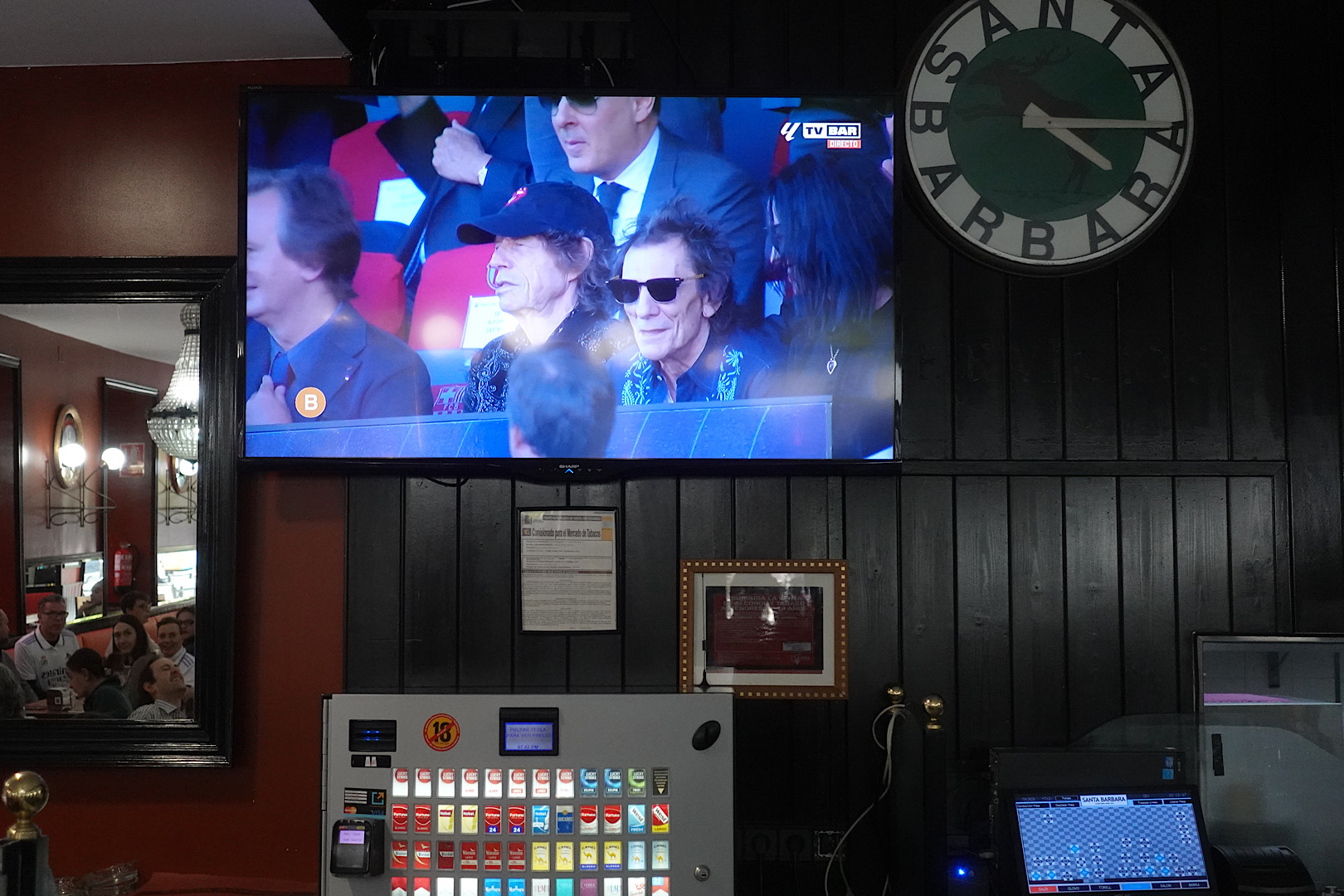
Two Rolling Stones at El Classico in Barcelona as seen from a bar in Madrid
We are in a bar across the street from Santa Barbara Church in Madrid watching El Classico, the twice yearly matchup of the two biggest teams in La Liga, Barcelona and Real Madrid. We love both these teams but when face each other we side with Barca. We are the only people in the bar rooting for Barca.
They scored early, just seven minutes in and we were elated. I screamed but quickly tried to disguise it as a shriek of horror. Barca held on and looked the better side until Modric and Camavinga were subbed on for Madrid. Bellingham scored in the 68th minute and then again in the second minute of stoppage. That bar erupted.
The match was being played in Barcelona. Barca’s main sponsor is Spotify and for this match they did a tie-in with The Rolling Stones in conjunction with their new album. Mick and Ronnie were in the stands. The tongue logo was on the front of the Barca jerseys for the day. It didn’t work out for the boys.
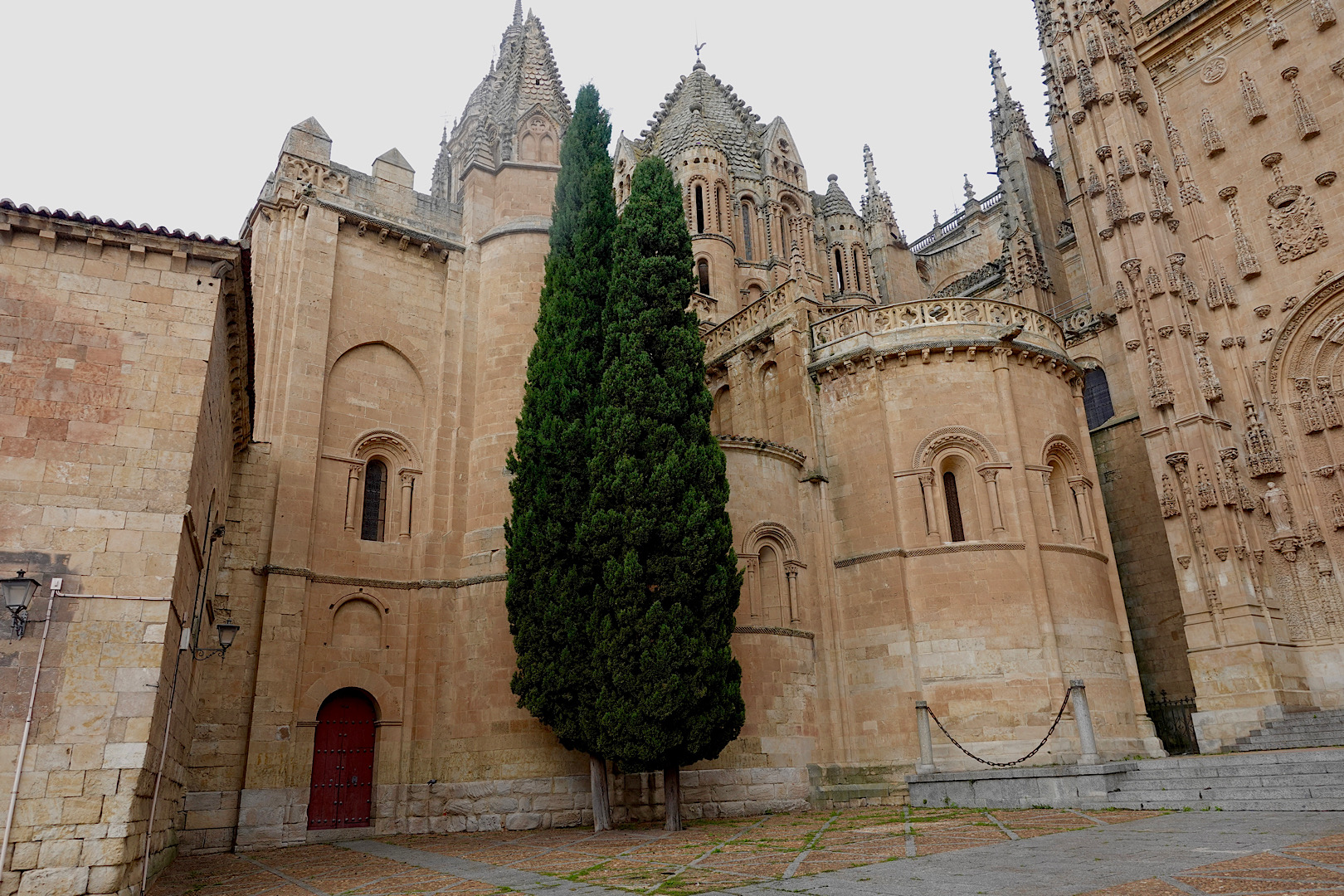
Salamanca is still a university town. In the sixteen century the university was attracting so many people the city outgrew its cathedral, originally built in the 1100’s. In 1509 King Ferdinand ordered the architects who had designed the cathedrals in Toledo and Seville to go to Salamanca to draw up plans for a bigger cathedral. They kept the old one open for the faithful and spent two centuries constructing a new one, one of the largest in Spain, and then decided to keep the old one standing. The two share a wall.
Portions of a Roman bridge still stand over the river and the old city sits like a sandstone fortress on a hill. We spent the day walking into the Plaza Mayor and out a different exit each time only to wander on the ancient streets and return to the Plaza. If I was going back to school I would do a year abroad here.
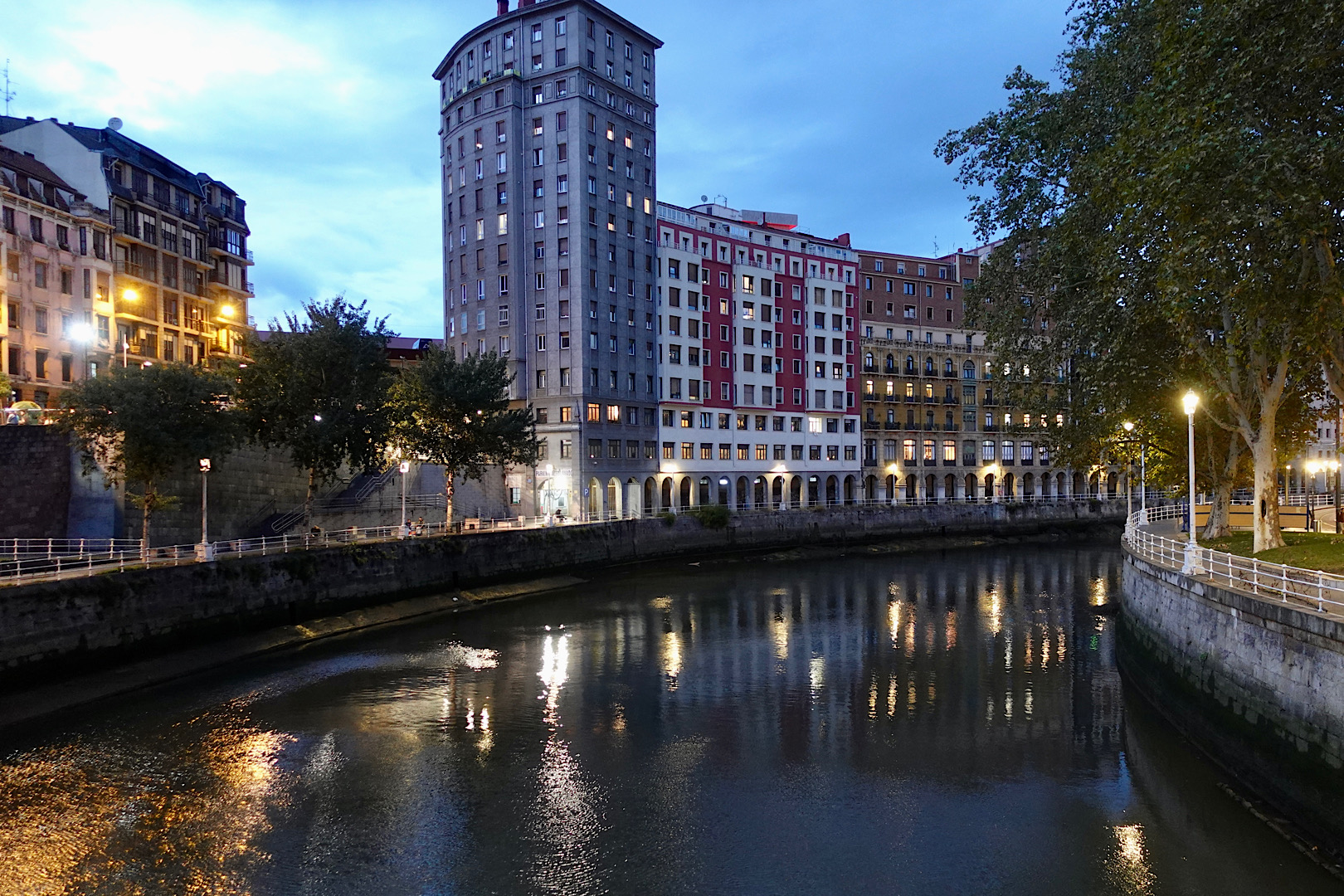
We are already missing the Basque region where we spent the last two weeks. San Sebastián, Pasaia, Hondarribia and Bilbao were all so comfortable. We walked back into the old section of Bilbao this morning and had breakfast in the Plaza Nueva. I wanted to stick around til lunch but we had train tickets for Salamanca.
They are so proud of their futbol team up here. The red and white stripes are everywhere. (Atletico Madrid copied their colors.) AthleticClub de Bilbao are known as Los Leones because their stadium was built near a church which was named after an early Christian thrown to the lions by the Romans. The Christian, Mammes, pacified the lions and was later made a saint. Back home we love it when one of our favorite La Liga teams play in Bilbao. They turn down the lights in the stadium and the band plays traditional wooden instruments (xalaparta) before the match. The Bilbao team is community owned and they only allow players born in the Basque region to play for the team.
We arrived in Salamanca in the evening and our preview of this ancient city was spectacular. Two cathedrals a stones throw from our hotel.
Our room here in Bilbao is almost too small to exercise in. In fact it is barely bigger than our bed. We’ve been averaging 8 or 9 miles a day of walking so we’ll let the morning exercises slip for a few days. We had a café near our place and then walked to Cafe Iruña, the oldest café in Bilbao according to something Peggi read, for more café, tortilla and fresh squeezed orange juice.
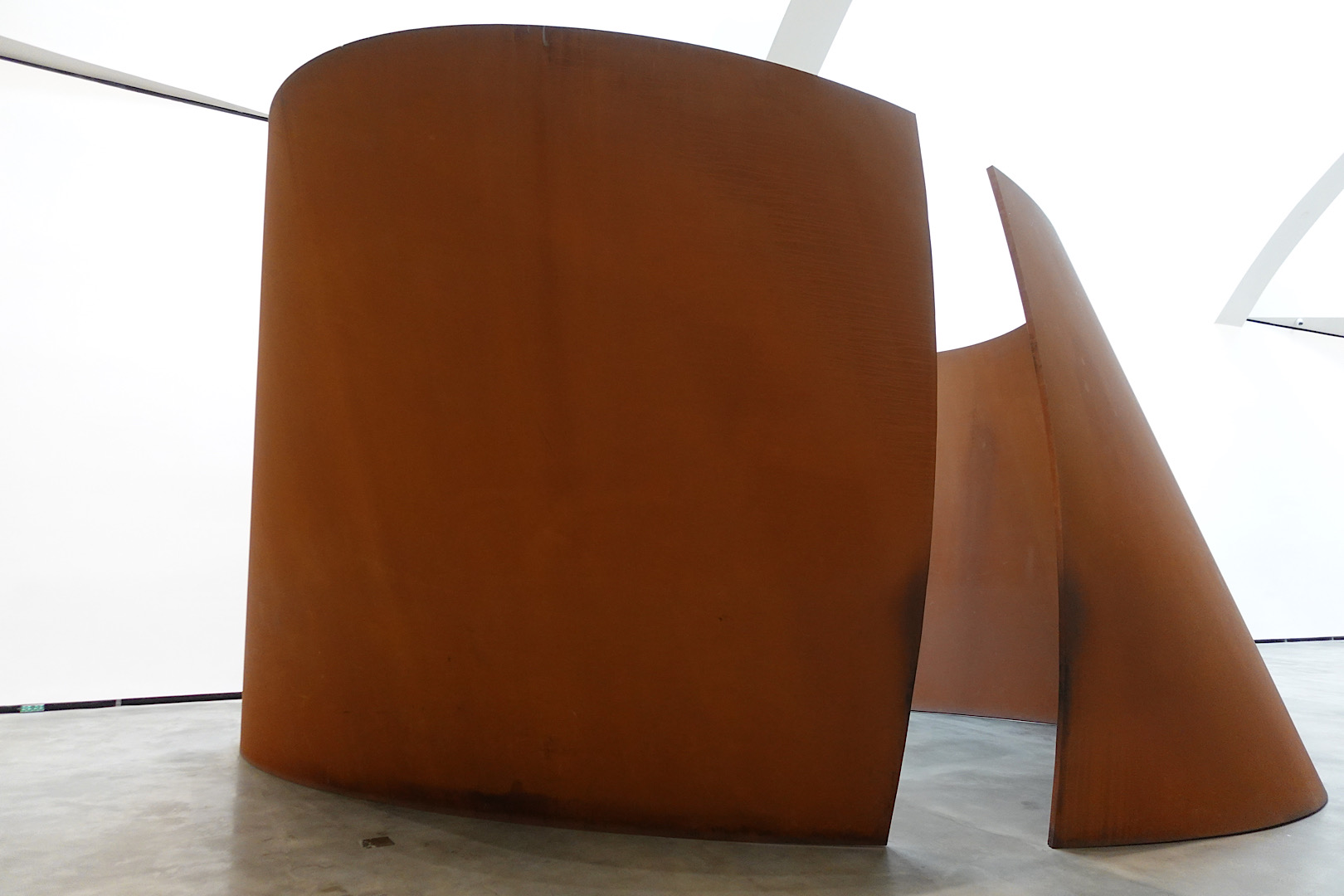
We bought tickets for the Guggenheim online and we started with the Richard Serra installation. He has his own wing here in Frank Gehry’s space age castle. I was reminded of my first encounter with Serra, an article in Art Forum about the controversy surrounding his “Titled Arc,” commissioned by the city of New York and eventually dismantled when people complained about having to walk around it on their way to work. The pieces here, all giant slabs of steel, gracefully shaped into forms that invited you in, reminded me of the fun house at Sea Breeze Amusement Park. I was a little bothered by the clash with Gehry’s organic setting, wondering if it was any better than a white cube, but that’s being way too picky. This was tour de force. Like every major museum in the world, the Guggenheim has a Picasso show timed with the fiftieth year since his passing. This one was all sculpture from all his periods and it was a sensation. The museum installed this show with a generous amount of space, allowing you to move freely around the work. Finally, someone here curated an absolutely beautiful show of the Museum’s collection, a Sol LeWitt installation, Motherwell, Tapies, Oteiza and more Chillida!
We had lunch/dinner at a seafood place nearby. We split una ensalada verde, gambas al ajillo and sea bass (the whole fish). We had walked by the Museo Bilbao yesterday and someone outside said the museum was closed for the installation of a new show. They told us to “Come back tomorrow,” so that was our next stop. The Museo paired centuries old artists like Morales, Ribera, Velazquez with artists from the last century. Some really nice Saura’s and Oteiza sculptures.
From the Museo we walked across the river into the Casco Viejo, the old section. We had a beer at an outdoor café, a “1906,” the especial cerveza from Estrella Galicia. When we were here in the nineties Bilbao was celebrating their big yearly festival and we watched a parade with gigantescas in this old section. We stopped at a bookstore and chatted with the. owner. He confirmed our assessment. Nearby San Sebastián is idyllic but Bilbao is for real. San Sebastián is aristocratic and Bilbao knows how to have fun.
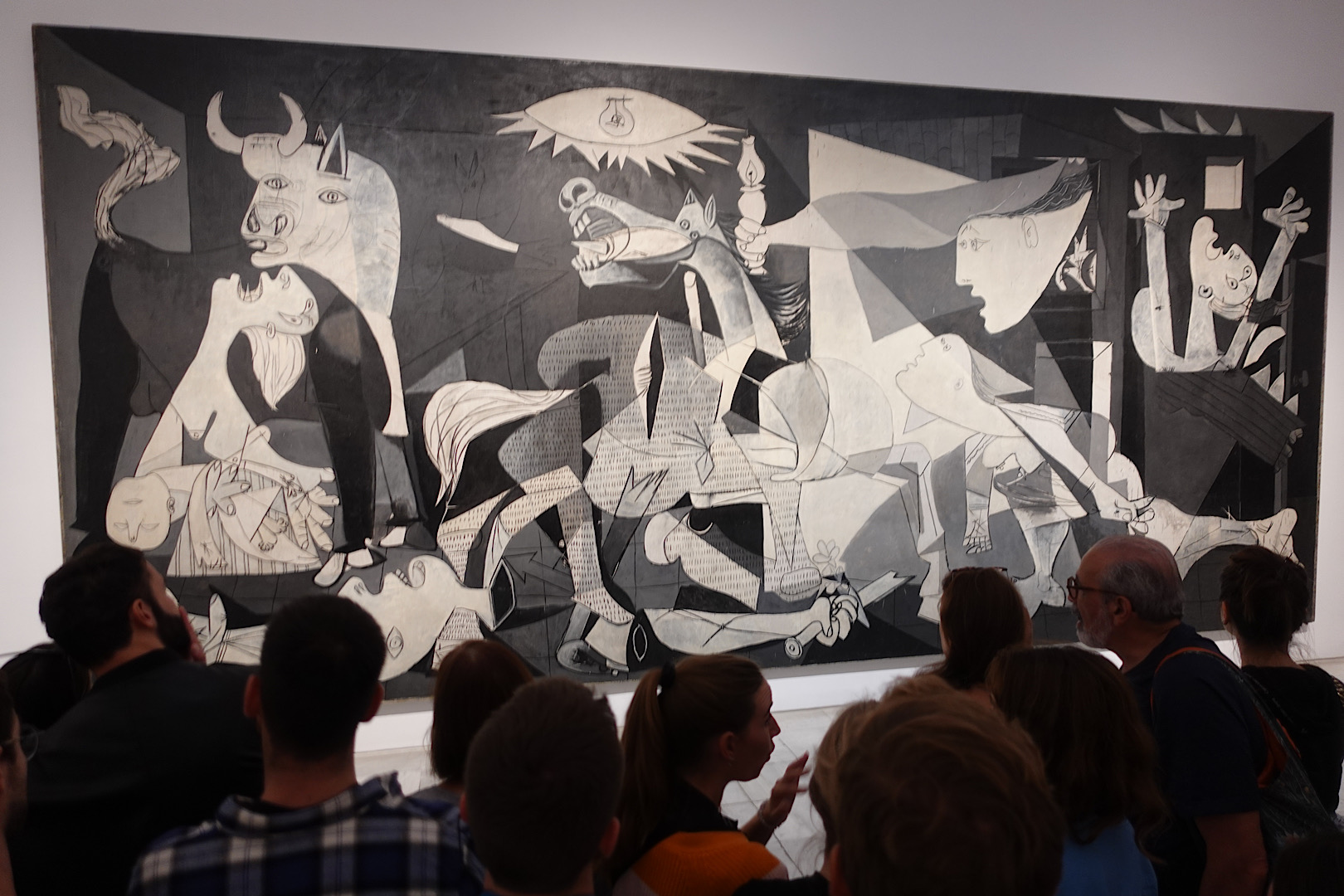
“Guernica” by Picasso at Museo de Reina Sofia in Madrid
We have been on somewhat of a news fast here. Our neighbor, Sue, is enjoying our newspaper subscription while we’re gone. We’ve gathered the Israel/Hamas war plays differently here in the Basque region. We watched a huge demonstration in support of Palestine, thousands of people in San Sebastián. Most of them were wearing the stickers that organizers were handing out. The sticker used imagery from Picasso’s Guernica along with a Basque slogan offering support for Palestine. Many were carrying the Palestinian flag and some were waving flags with the Star of David with a Nazi sign inside of it. We are in Bilbao now, only 34 miles from Guernica and we just saw Picasso’s masterpiece last week at Museo de Reina Sofia in Madrid.
Arranging our itinerary on the fly last night, Peggi booked a room in the Parador in Hondarribia, about a half hour to the east of San Sebastián, still on the coast, it is the last town in Spain before the French border. We are just north of St-Jean-Pied-de-Port, where we started the Camino de Santiago. The hotel was formerly the home of Carlos Quinto, the Holy Roman Emperor in 1500.
Our room overlooks the channel that separates Spain and France, the Bay of Bisque and the Pyrenees. This was the first first parador we stayed in thirty three years ago. We reread our trip notes from that year and noted that we played Gin in our room and Peggi won two out of three. So we asked at the desk if they had any playing cards but no luck.
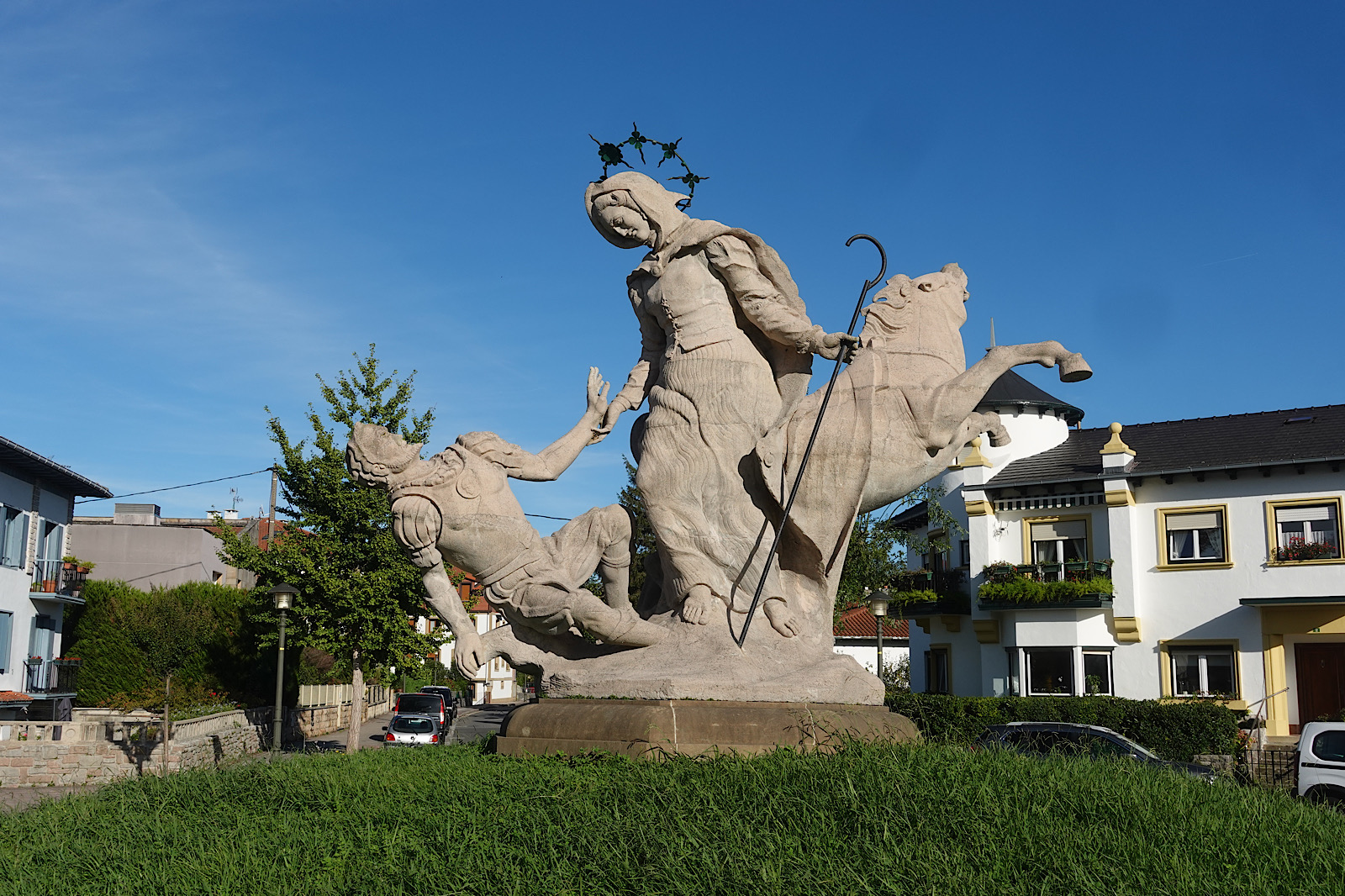
We had dinner at a restaurant called Zeria and sat outside on the patio of a small very Basque looking building that has been here since 1575. We had bream fish, the whole fish, baked with garlic and olive oil, ensalada and a glass of wine. After dinner we walked back to the statue we had seen from the bus on the way into town. It depicts San Juan de Dios who has apparently been knocked from his horse by the Archangel Gabriel. Maybe his conversion?
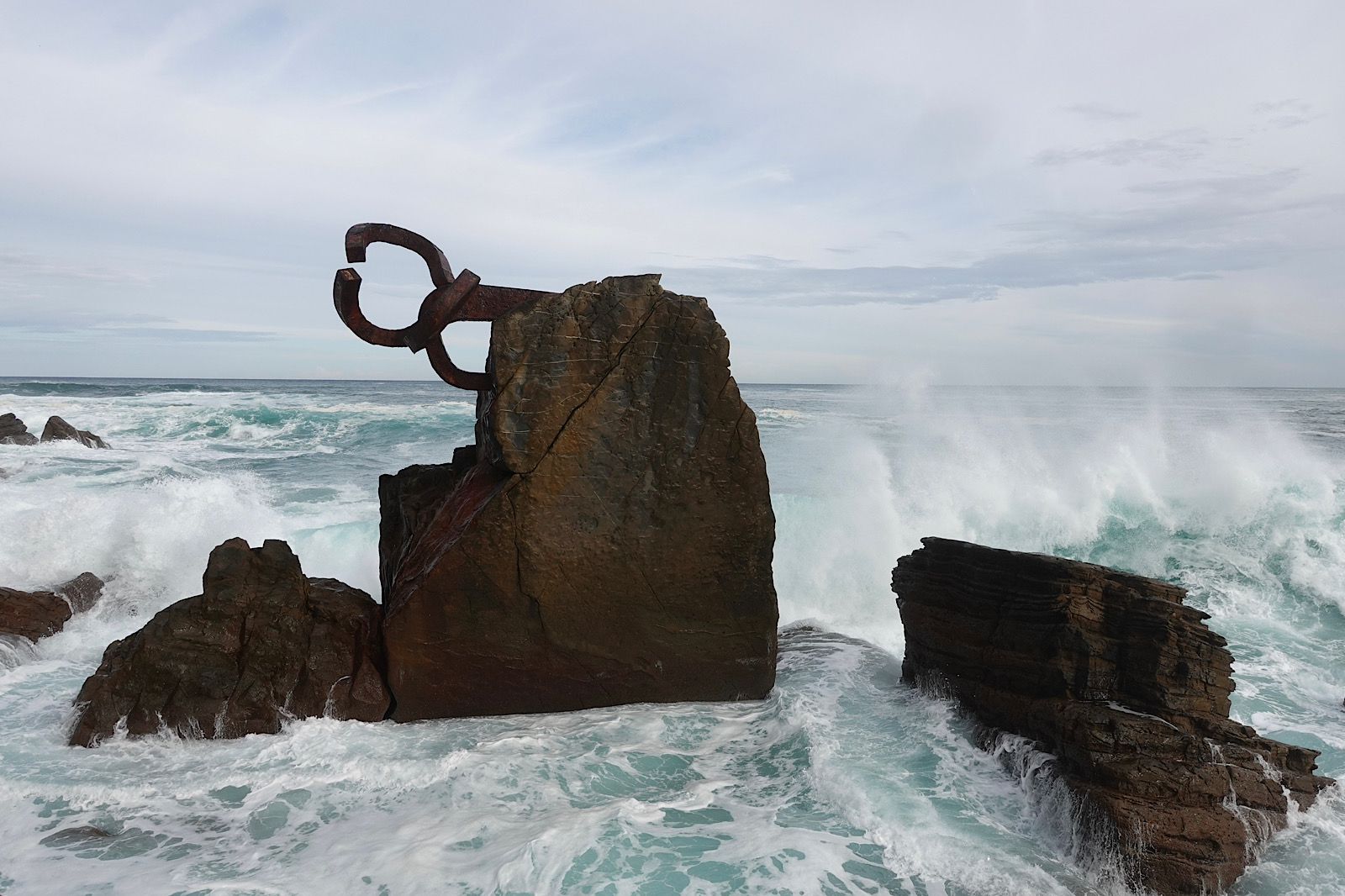
At the Chillida Museum we learned the number 3 had a special significance for the artist. Today we found that the third time is indeed a charm. We walked to the edge of town for the third time and finally found it safe to enter the plaza where Peines de Viento is installed. The wind had prevented us from entry for two days. We took at ton of photos like everybody else except we didn’t do any selfies. The three Chillida pieces installed here are a flat out masterpiece. This is how Chillida described it.
““My sculpture, The Comb of the Wind, is the solution of an equation that has elements instead of numbers: the sea, the wind, the cliffs, the horizon and the light. The steel shapes are mixed with the forces and aspects of nature, they speak to them, they are questions and answers.”
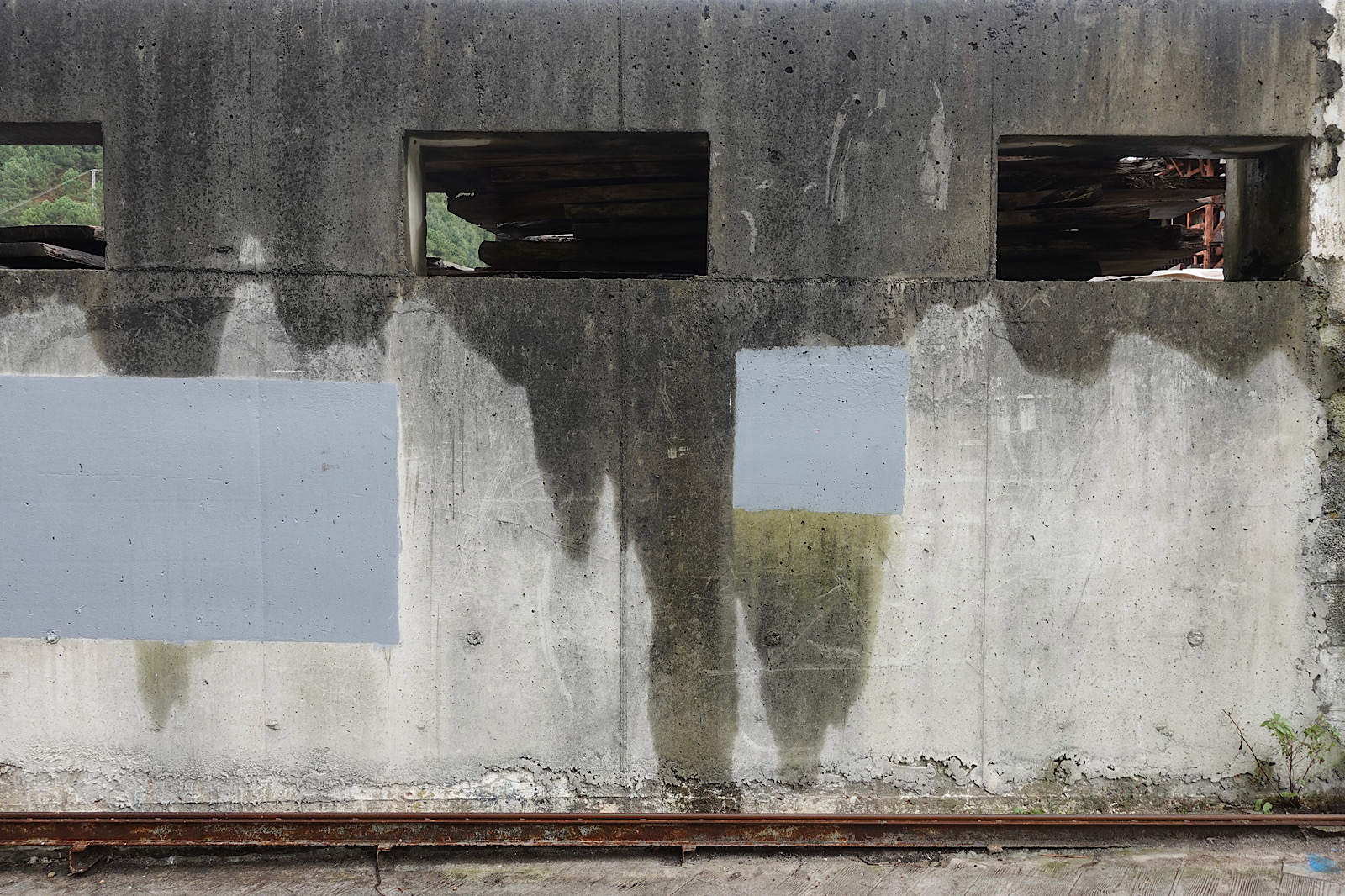
I took three shots of this wall in the fishing village of San Pedro before getting my in-camera cropping right.
We walked out near San Sebastian’s stadium, Reale Arena, this afternoon as their La Liga Primera Division team Real Sociedad was about to kick off for a home match against Mallorca. Blue and whites stripes were everywhere on young and old. The bars were packed all over the city since the match is not broadcast locally. We stopped to eat at a sidewalk restaurant and could tell immediately when The home team finally scored in the 84th minute. Back in the hotel we heard all these people chanting in Basque just a few blocks from our room. We assumed it was a victory parade of sorts but it was a huge, twenty or thirty blocks long demonstration in support of Palestine.
Peggi led a mini yoga class in the room this morning and we walked a couple of blocks down the street to the Bar Restaurant we had walked past a few times. It looked like a comfortable old fashioned place and it turned out to be exactly that. We had cortados and tortilla Espanola. The tortilla had caramelized onions on top and it was delicious.
The plan for today was to visit Peines de Viento, the Chillida sculpture installation at the eastern edge of San Sebastián, where the city meets the sea. It was raining, we had our raincoats on, and when we got to the spot at the end of the La Concha we found that the site where the sculptures are was closed because it was too windy. This Chillida quote at the entrance stuck with me. “The Peine del Viento (Wind Comb) is a query about the future; a tribute to the wind, which I admire a lot, and to my home San Sebastián.” The wind that prevented us from seeing it!
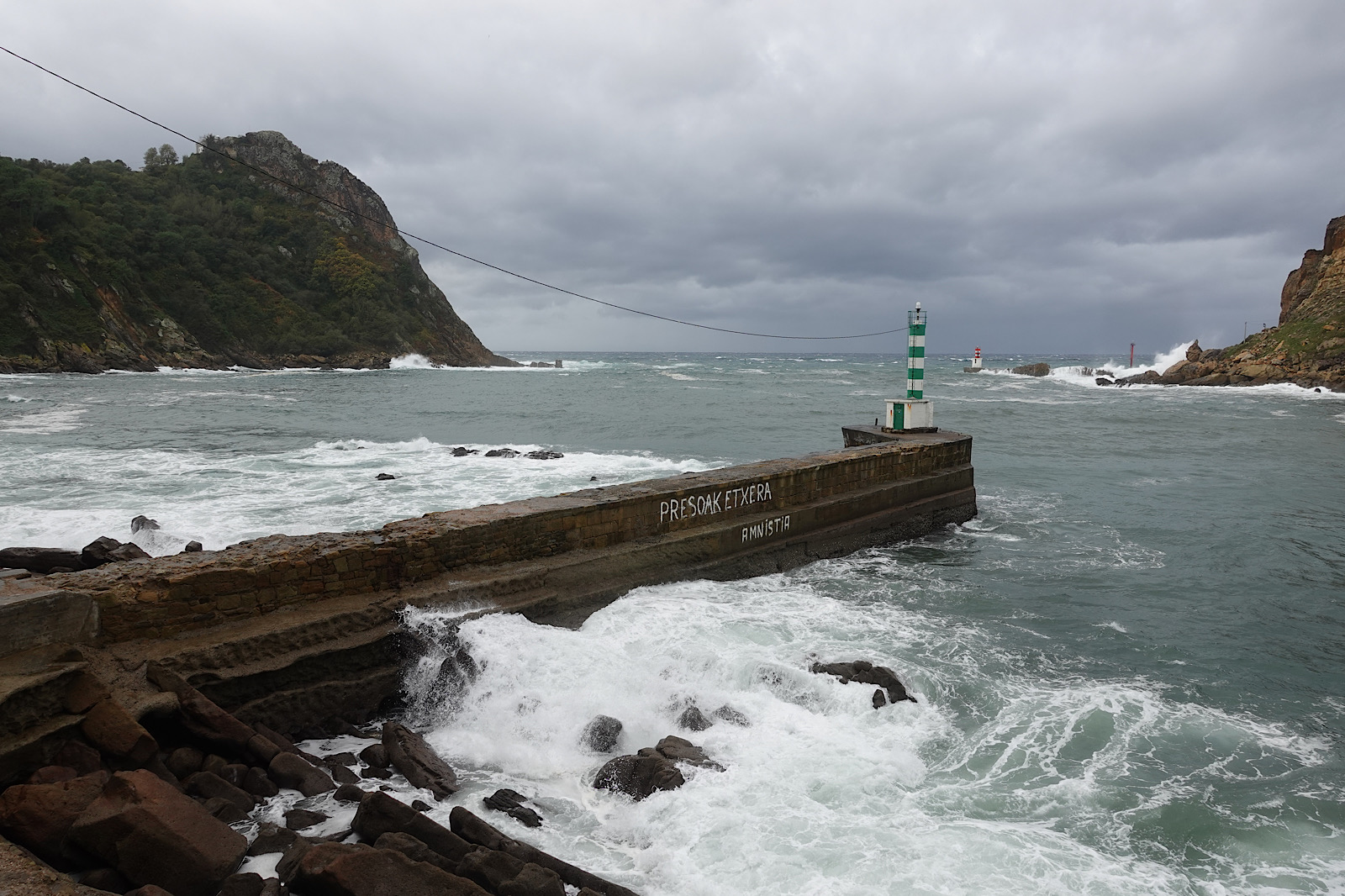
Tomorrow’s plan was to walk to San Pedro, a fishing village about ten miles to the east, but Chillida comes first so we turned around and walked to San Pedro today in order to see the Chillida installation tomorrow. It rained pretty much the whole time and the route was rather dismal but we made the best of it. We stopped at an Aldi’s to go to the bathroom and then found a restaurant in San Pedro that served us the best pulpo we’ve ever had. We shared a Bonito with smoked peppers salad and a beer. We put our soggy raincoats back on and walked further along the same side of the inlet out to a great view of the open sea (above). We took a bus back to San Sebastián and stopped at a natural food store where we bought prunes, Ramon Bilbao Organic Rioja and some yogurt.
Tomorrow’s forecast is full sun so we’ll see Chillida and then get to a bar by 2PM to watch The San Sebastián La Liga team play Mallorca.
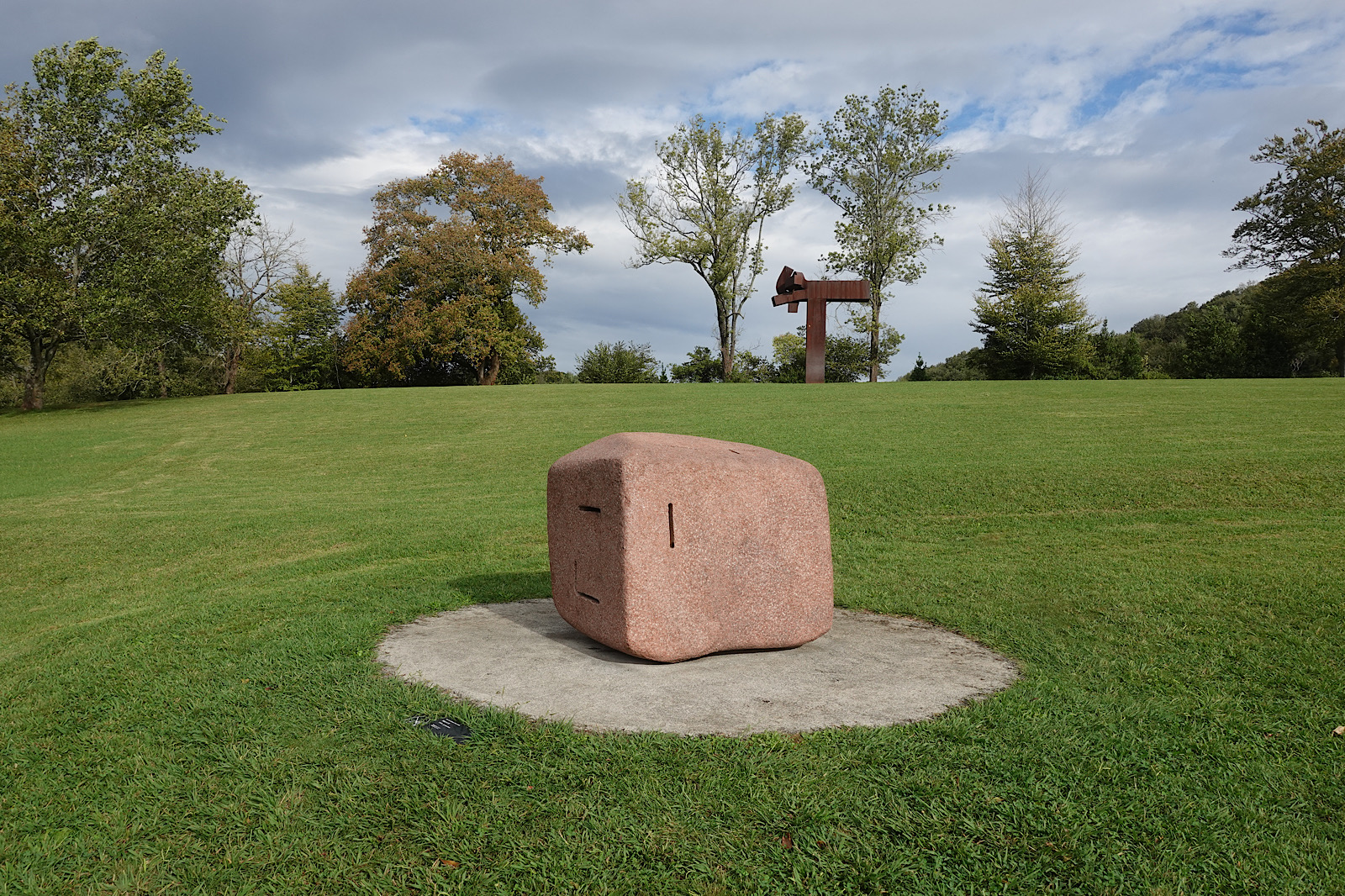
Chillida sculptures at Chillida Leku in San Sebastián
Now what? Chillida Leku was our target, the pièce de la résistance of our trip to Spain. We did not imagine it would be as good as it was. How could we have? We were in the master’s garden for most of today. Near the end of his life Chillida bought an estate on a gently rolling hillside just outside of San Sebastián. He situated his sculptures in this gorgeous, natural setting so they have a dramatic dialogue with their surroundings.
We too carried on a dialog with the pieces as we walked from one to the next. Some were thirty yards or more apart so your perspective and vantage point continually changes as you approach. And when you’re near, your instincts take over. You get close enough to touch (you are allowed to) or walk around the piece or maybe back off to find your sweet spot for dialog. It was exhilarating.
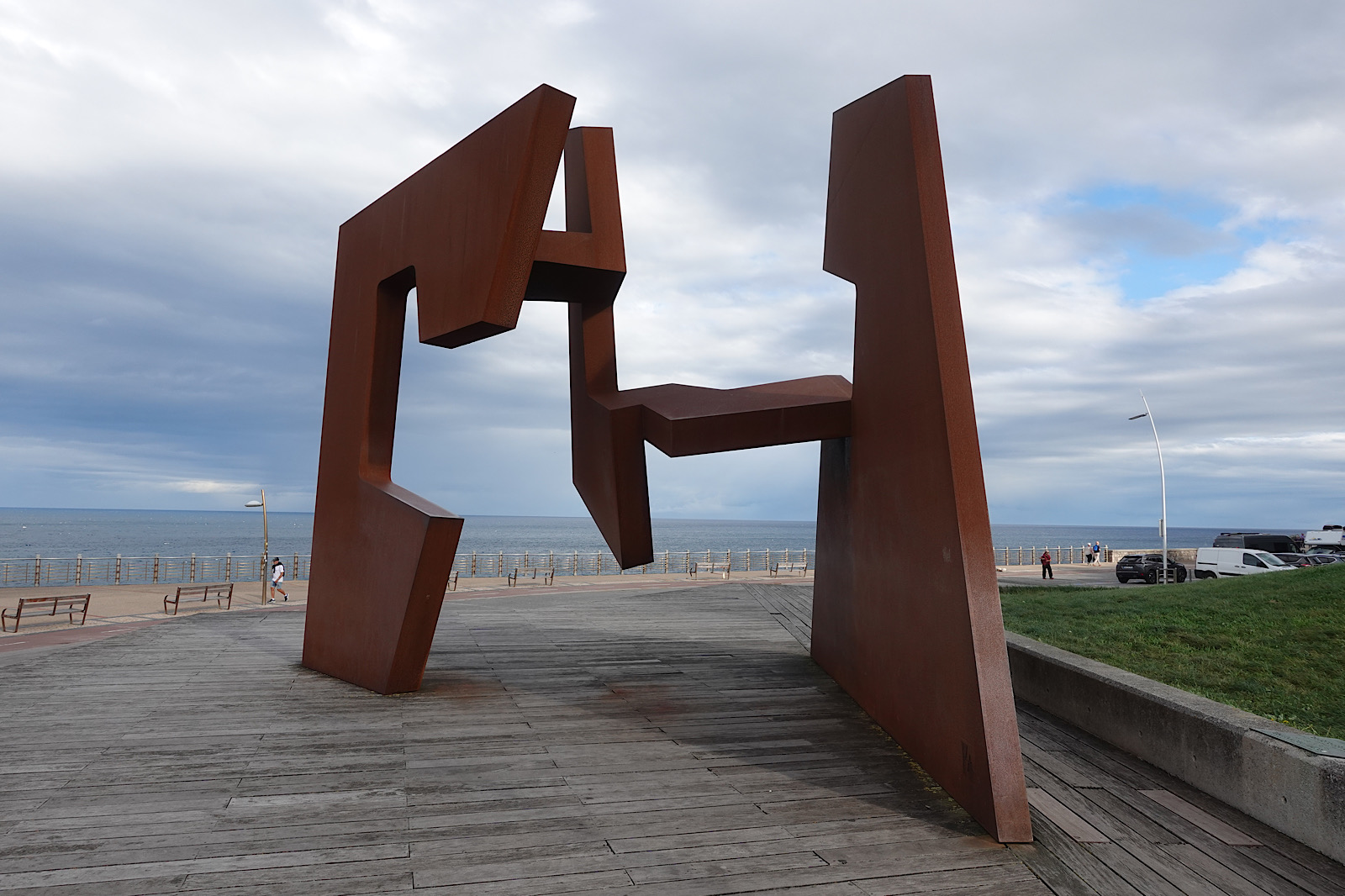
We took a train up to San Sebastián yesterday and found it warmer than Madrid for some reason. Eighty degrees Fahrenheit called for a walk along the beach. We found a Chillida sculpture overlooking the bathers and then had some calamari at an outdoor restaurant.
This morning we did some exercises in our room and had our coffee and yogurt then headed across the street to a café for more coffee. We walked to Monte Orgul, the park at the end of the peninsula that wraps around La Concha. It is a good climb with many paths to chose from and lots of steps, a cemetery and the remains of old forts.
There was a Oteiza sculpture at the base of the mount. We chatted with a couple from Vancouver and stopped for a beer at the “Secret Bar” near the summit. The park was gorgeous with plenty of stunning views of the bay, the city and the mountains beyond. We ended our hike in the old section of San Sebastián and we stopped at the first place we saw for lunch. It was so crowded we had to stand but it was fabulous. We split three tapas and had a glass of Rioja.
Just a few blocks away was the Garry Winogrand “Women Are Beautiful” show we had seen advertised at our hotel. But when we got to San Telmo Museoa they told us that show had ended in January. We went in anyway and saw their permanent collection, mostly historical in nature. I copied this passage from a wall tag, “In a Europe ever more intolerant and immersed in religious wars, the witch-hunting processes revealed the extent to which the social limelight of Basque women came up against the Official Church Rites that were pagan in nature, quarrels between neighbours, and even childhood fantasies, were interpreted as acts of the devil. The result: scores of people were either burned alive or hanged, and hundreds were jailed, exiled and humiliated. The most notorious witchcraft trials in the Basque Country took place from 1609 to 1612.” We picked up a bocadillo on the way back to our place and arrived as the sun was going down.
Years ago we saw a performance of a Lorca piece in a bookstore near Plaza Santa Ana. They closed that location during the pandemic but kept their other store on Calle de Magdelana open. We stopped in that store and learned this location would soon close as we because the owner of the building planned to turn into a disco-tech.. While in the Embajadores area of Madrid we stumbled on an exhibit at Filmoteca Espanola entitled “El siglo de Margarita Alexandre, Lola Flores y Ana Mariscal.” The three women ruled Spanish cinema in the middle part of the twentieth century. Lola Flores was a revelation!
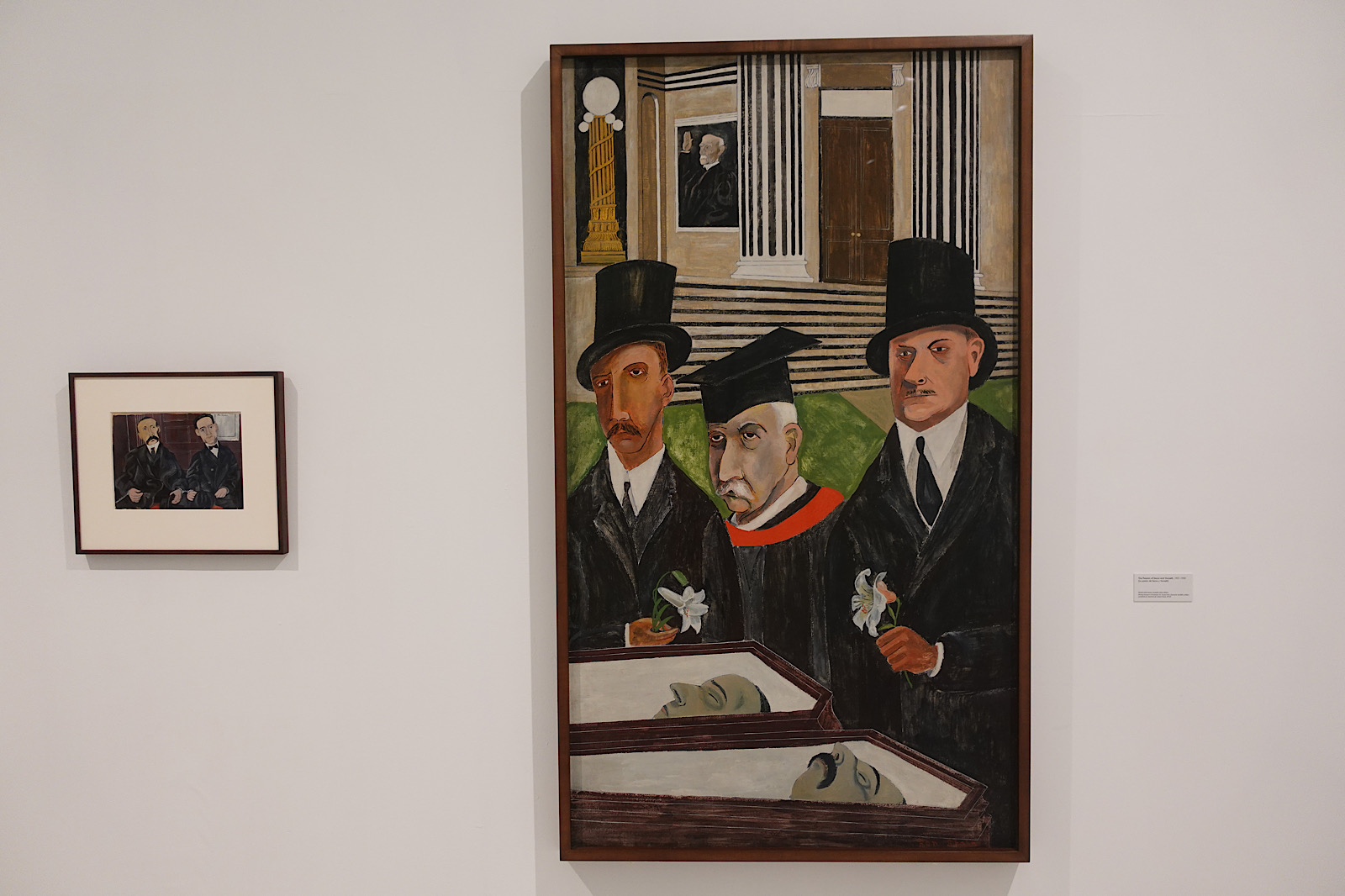
Ben Shahn’s “The Passion of Sacco and Vanzetti” 1931-32 at Museo de Reina Sofia in Madrid
We are taking in as much of Centro Madrid as possible before moving on to San Sebastián. We walk in a different direction everyday, usually with an art exhibit in mind. We stop for coffee, pop in book stores, have a midday meal somewhere and stroll some more before stopping for a cerveza.
I went home with 60 Euros and some change four years ago, our last visit, and I brought it back with me this time. The smallest cafes, the Metro and even the holy card store take Apple Pay so I’m still hanging onto most of it. Years ago we would go from one Telebanco to the next.
The United Nations secretary general, António Guterres says “Even wars have rules.” How about, don’t start one? Which brings me to “Ben Shahn: De la no conformidad“ at Museo de Riena Sofia. This is a laugh out loud show. – if you take delight in Shahn’s skewering of the opposition. Shahn’s wit is fully employed in a series of paintings, photos, posters, book covers and murals. He steered clear of art movements and stayed true to the human heart as he championed the fight for a free world.
My father would have loved this show. He made sure I had a copy of Shahn’s 1957 book, “The Shape of Content,” a credo of nonconformity which he saw as a precondition for all significant artistic production and great social change.
His watercolors of the Dreyfus Affair, two paintings from the Sacco and Vanzetti series (his mural of Sacco and Vanzetti on Syracuse University’s campus is a must see), 15 gouaches on Tom Mooney, and a scathing caricature of Father Coughlin. It’s all here. He assisted Diego Rivera on his ill-fated Rockefeller Center fresco. Shahn is America’s Diego Rivera and he might just be a better artist.