
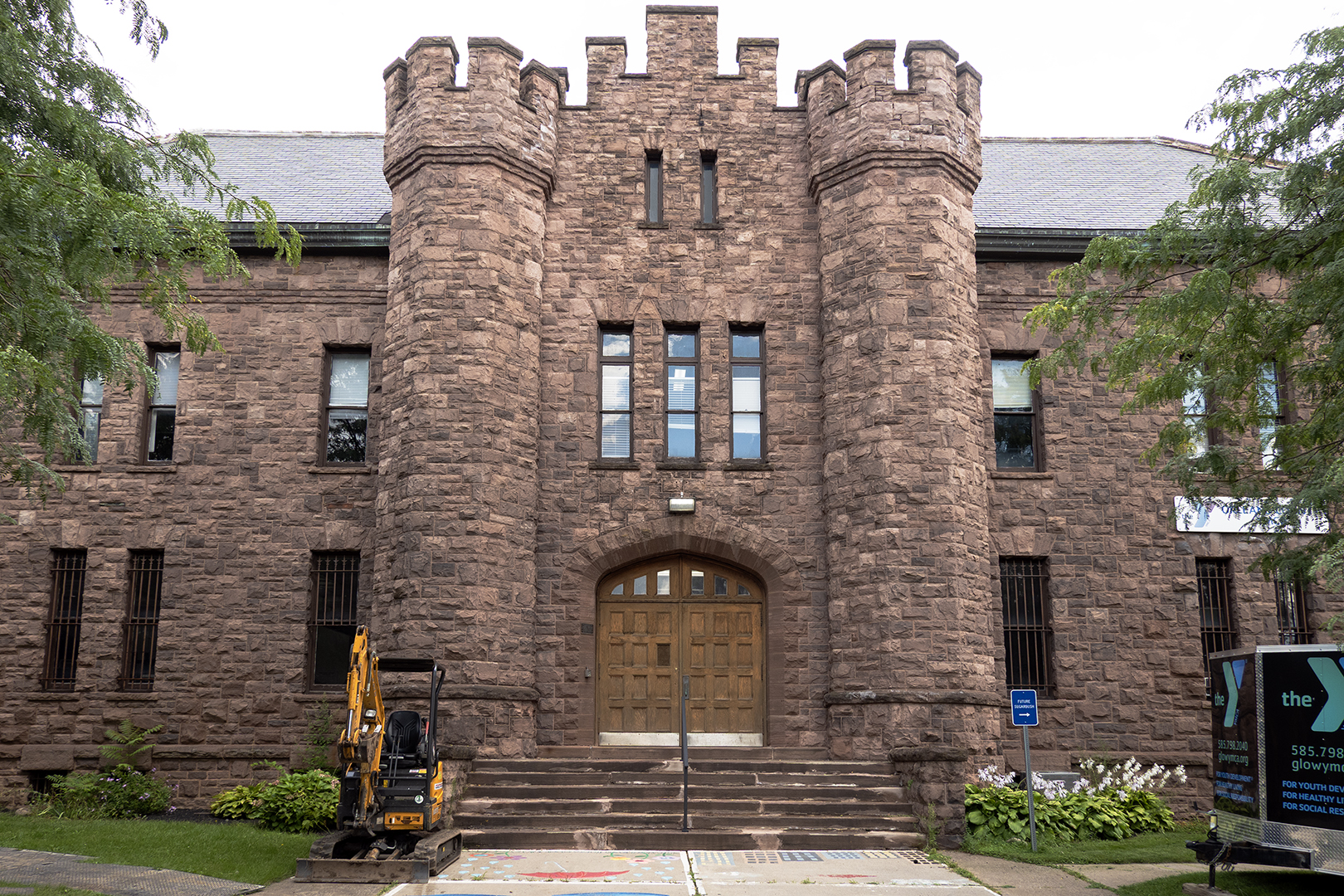
Equidistant from Buffalo and Rochester, Medina is like a dream. The yesteryear storefronts on Main Street are all occupied. Buildings as well as homes are made of the red sandstone. Slabs of it, cut to the size of sidewalk panels, line the wide streets. A few homes still have mounting blocks out front for you to step off your horse. The red rock from Medina’s quarries traveled in both directions on the Erie Canal. Three of Buffalo’s biggest churches are made of the sandstone. Don Hershey, the Rochester architect, favored the stone and built his own home wth it.
We were here for the first Medina Triennial. In the tradition of WNY’s Playground, the old high school had every room available for art installations, none of it painting. And this time there were many other works scattered across town.
Our first stop was the former Armory, now the town’s YMCA, where Maryland artist Michael Wang had Sugarbush Energy drinks available in exchange for a token. They had run out of tokens and were almost out of his drinks. “Sugarbush Energy,” 2026—carbonated water, local maple syrup, phosphoric acid, caffeine, printed aluminum cans—tasted great, but we were afraid to drink the whole thing. We had just picked up an extra cup of coffee, and this drink, we were told, had about three times the caffeine of a cup of Joe.
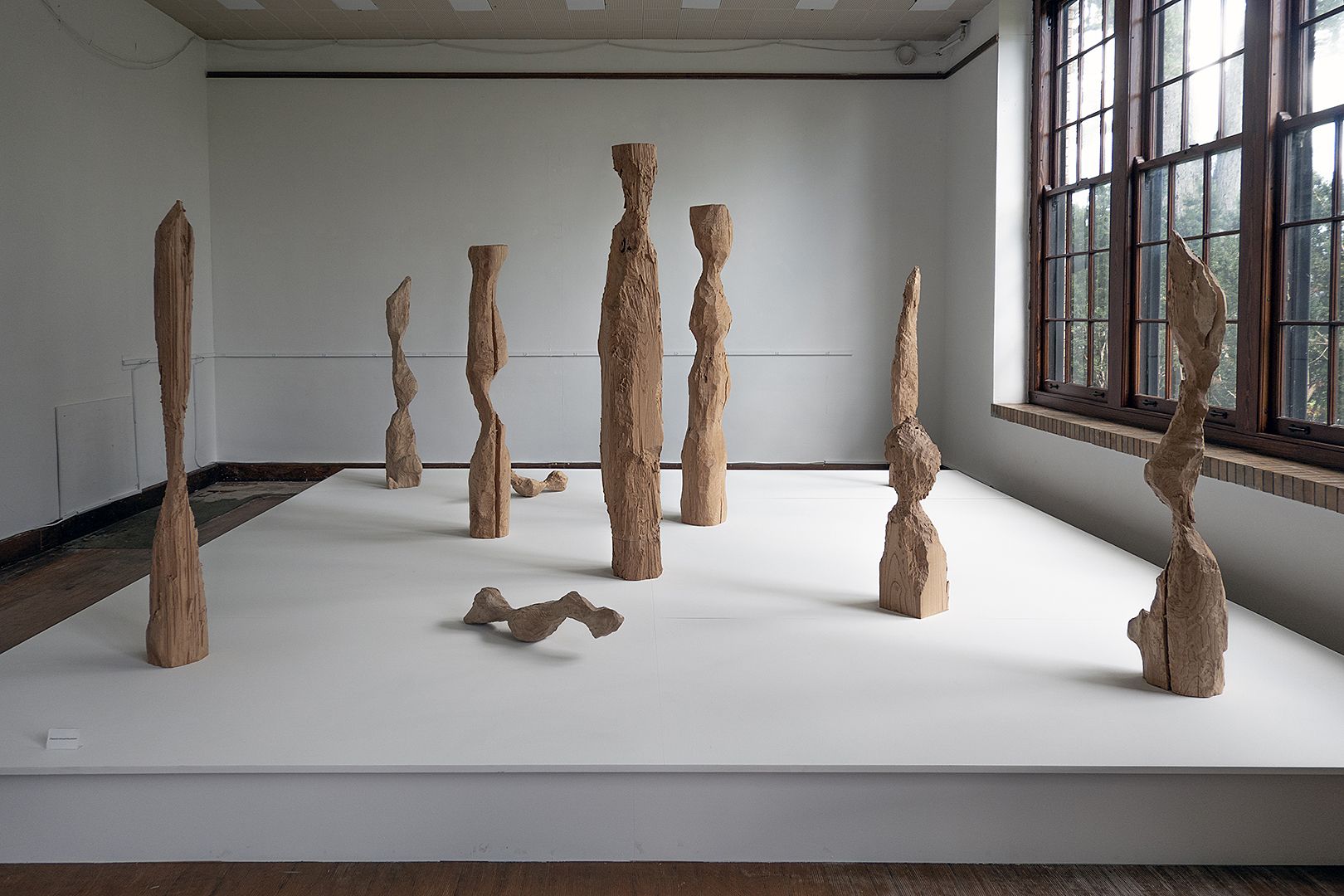
Tokyo artist Aki Inomata showed “How to Carve a Sculpture,” the sculptural vision of beavers, wood beetles, and computers, ways in which the nonhuman interacts with the anthropocentric definition of art.
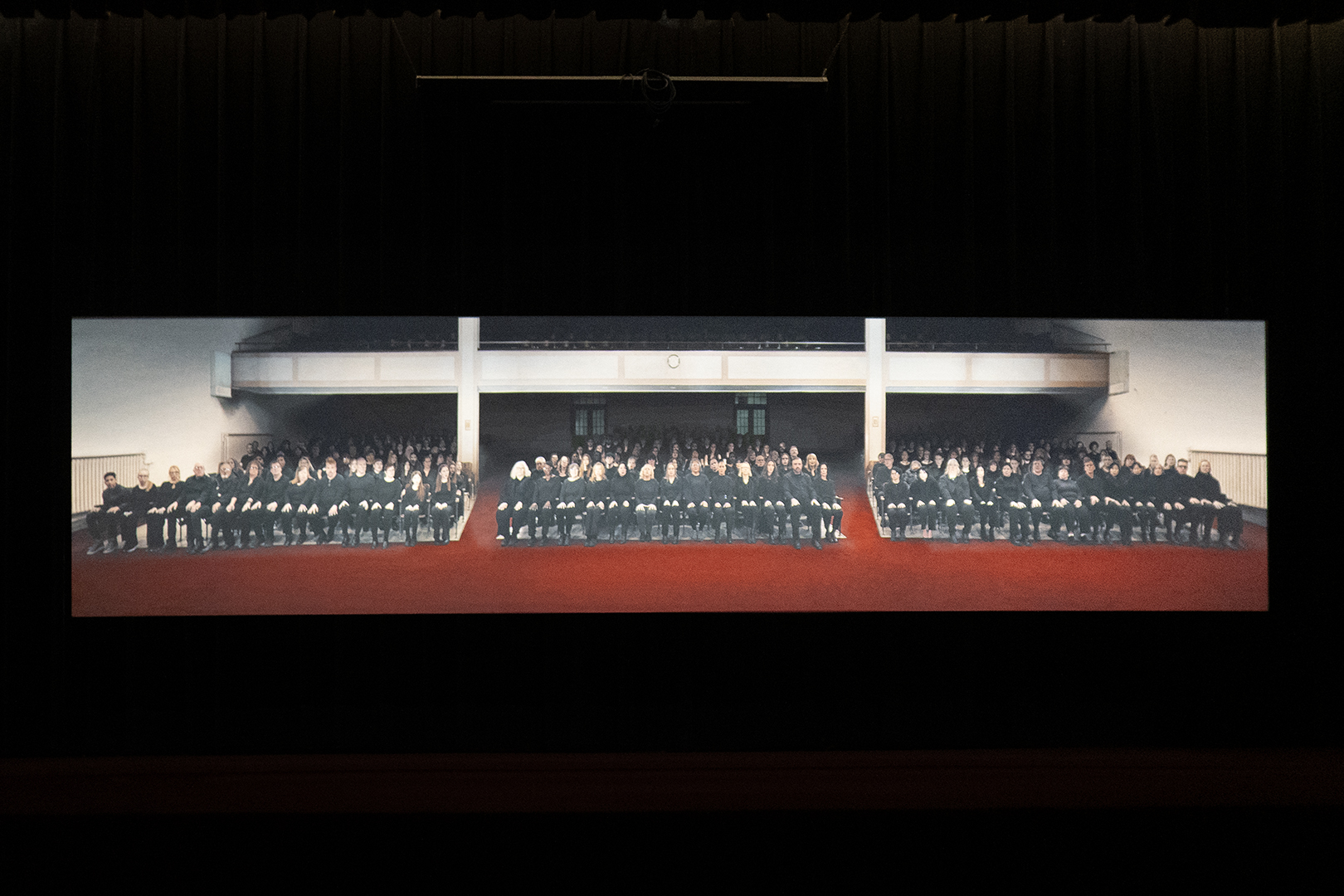
Mexico’s Tania Candiani’s piece was shown in the high school’s pitch-black auditorium, much like her video presentation. Candiani gathered community members to stage a collective performance in which participants became living embodiments of the two waters crossing in Medina. “Two Waters,” a meditation on what it means to sustain two things at once, takes one of the Erie Canal’s most remarkable features as its point of departure: the aqueduct in Medina where the canal passes directly above Oak Orchard Creek. These two bodies of water cross without touching each other.
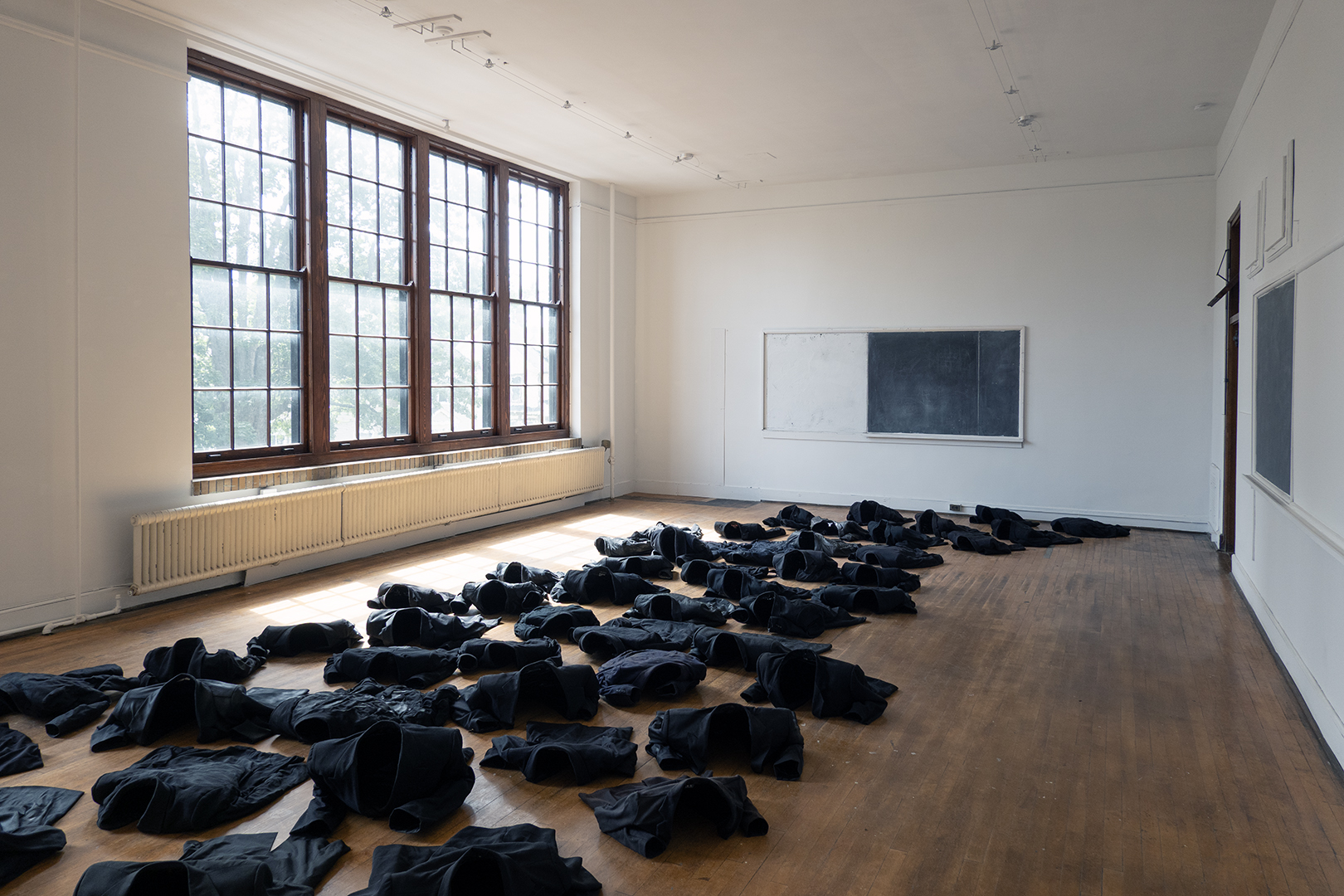
Nigeria’s Victoria-Idongesit Udondian filled this classroom with used coats and EpoxAmite resin, making visible the flows of underpaid labor that support global textile markets.
Deirdre O’Mahony’s film urged Irish farmers to practice their craft in a more sustainable fashion. With captions on screen and the words being sung, it felt a bit like karaoke with an Incredible String Band song.
“After the revolution, who’s going to pick up the garbage on Monday morning?” Mierle Laderman Ukeles’ Manifesto for Maintenance Art challenges the cultural separation between high art and the invisible, devalued labor of daily upkeep and care. “I do a hell of a lot of washing, cleaning, cooking, renewing, supporting, preserving, etc. Also… I ‘do’ Art. Now I will simply do these everyday things, and flush them up to consciousness, exhibit them, as Art.”
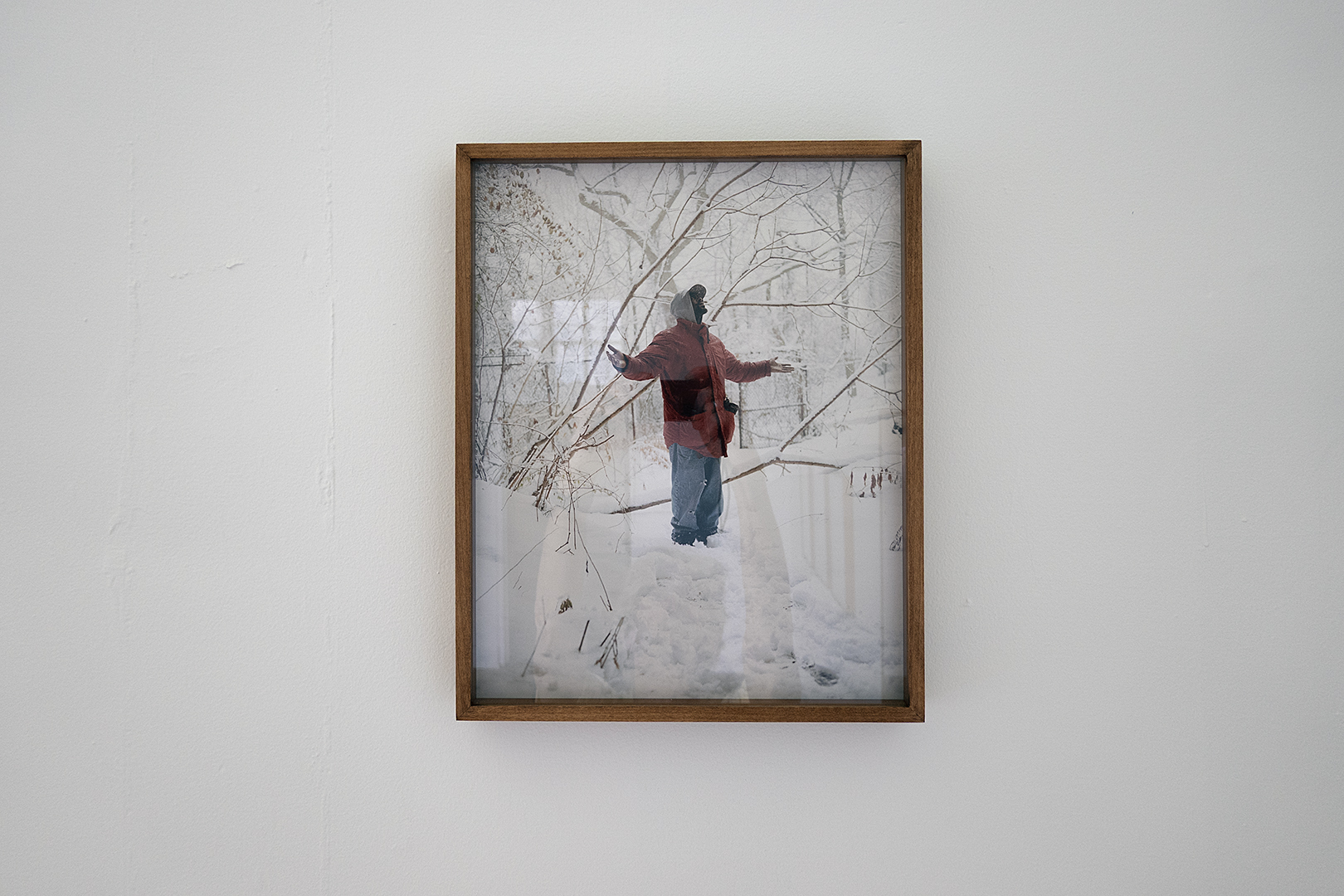
Gregory Halpern is a photographer based in Rochester whose artworks chronicle an effervescent notion of Americanness by poetically capturing a kind of mundanity and strangeness. In his video, “In 19 winters / 7 springs,” a white deer becomes a viewer’s guide through the streets of Buffalo and all the life they contain. Halpern draws you in, never lingers on a shot and draws you in again. This was my favorite piece in the show.
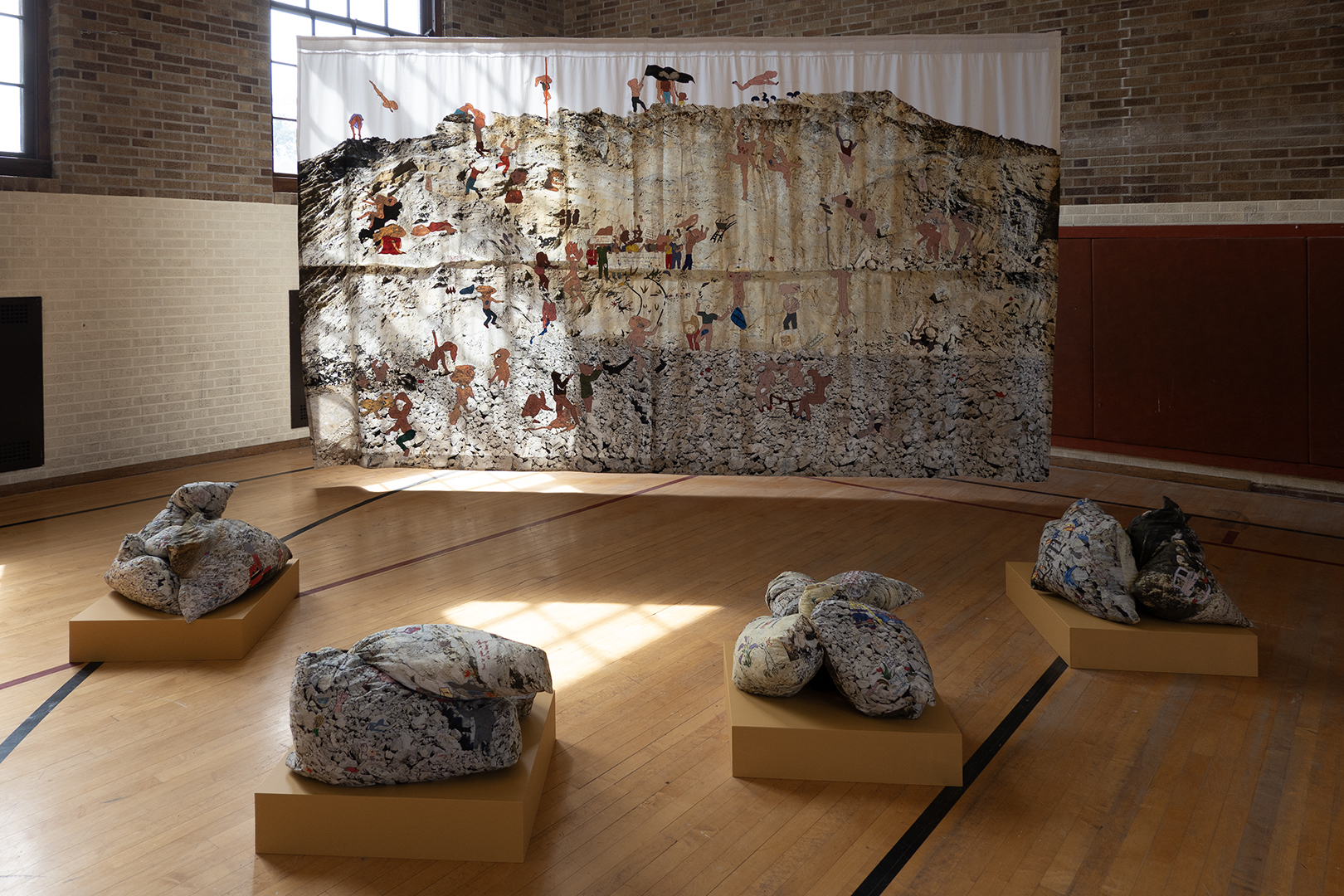
Gözde İlkin’s piece from Türkiye ruled the school’s gymnasium. “The Majority of Accent,” 2018–24, included a beautiful hand-painted textile, embroidery, and seeds. Each of these four bags had voices coming from it, each in a different language.
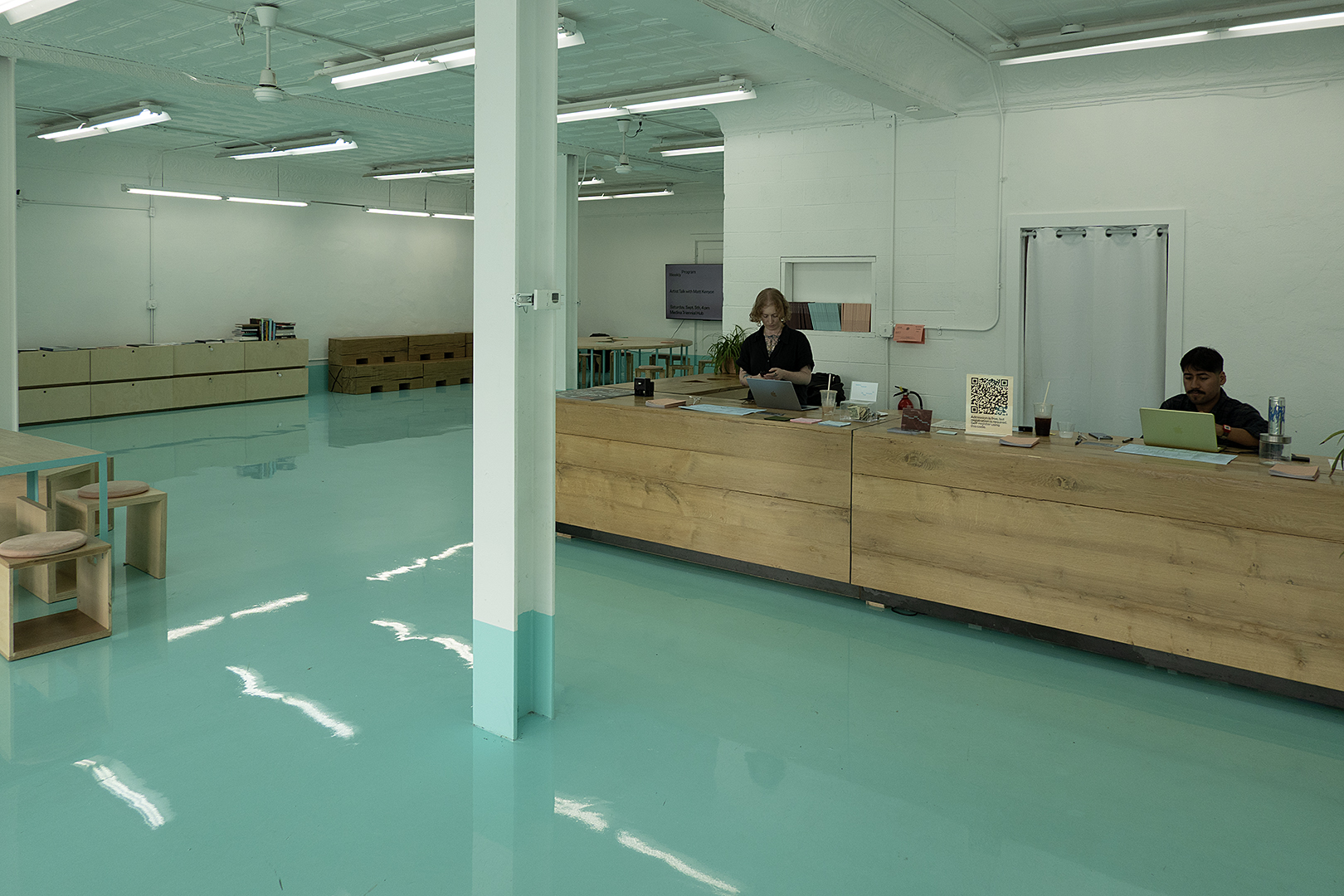
We did the whole show backwards and checked in at the registration desk on the way out of town. It was painted like a swimming pool. We had a late lunch and a Buffalo beer across the street on the rooftop of Zambistro’s.
Leave a comment