It must have have beat least twenty years since we were last in The Frick. It was before I started keeping track of things here because I found nothing in the search. The Frick rounded up other versions of two of their sensational El Greco’s and hosted a mini blockbuster with the variations. We made a special trip to see that.
El Greco’s Purification of the Temple and his Saint Jerome still steal the spotlight in the newly refurbished Fifth Avenue mansion. Other Spanish masters – Goya with his workers, The Forge, Velazquez’s his hapless King Philip IV and Murillo’s self portrait – are well represented. Vermeer’s lighting is a knockout. Bellini’s Saint Francis receiving the stigmata is a wonder. Hans Holbein the Younger appears to have actually preserved the real the Thomas Moore in his canvas.
“Pieta with Donor” Ca. 1450 Frick
Two versions of the Pieta, the Virgin cradling the dead Christ after the Crucifixion, both by unknown artists from the 15th century, were hung together in an upstairs room. They knocked me out. One obviously copied the other and both probably copied someone else. I love the idea of a rich diner hiring an artist to put him at the scene.
Duane wore his orange hat on Sunday and it is a good thing he did. We spent some time at the Frick and then thought we would walk through the park. Fifth Avenue was closed off for the Greek parade, celebrating their indolence from Turkey more than a century ago. We were swallowed up by parade goers and paraders,, all in blue and white. We followed the hat. Duane pointed to this rock in front of the Metropolitan and I took a photo of it.
Paving stone on table in front of Metropolitan Museum of ArtLeave a comment
Philip Guston “Blue Cover” 1977 at Hauser Wirth Chelsea
It didn’t matter that it was raining and especially cold as we headed up to Chelsea. We found an oasis called Rosemary’s on Greenwich Avenue where we had smoked salmon, beet salad with pistachios and coffee. It didn’t matter that so many of the galleries in Chelsea were closed for installation of new shows. Hauser Wirth on 18th was showing “Life With P. Philip Guston : Paintings and Drawings 1964-1976.” The show was mounted in conjunction with the release of “Life With P.: Journals, 1966-1976,” poet Musa McKim Guston’s book collection of her journals.
Philip Guston 8 small panels 1977 at Hauser Wirth Chelsea
Many of the paintings, drawings and prints are from the collection of Guston’s daughter, Musa, and many are illustrations of Musa McKim Guston’s poetry. We got real comfortable here. Five short films with Guston play in a continuous loop in a side gallery. And when you dizzy from Guston immersion the Hauser Wirth book collection merits a few hours of browsing. Rather than packing the book around town we will order online.
Precious Okoyomon’s 2026 Whitney Biennial installation,” Everything wants to kill you and you should be afraid”
One whole floor of the Whitney’s 2026 Biennial features Precious Okoyomon’s installation of suspended figures, stuffed bunny suits with 1930s/40s blackface doll heads, taxidermy feathers, wings, and teeth. It’s titled “Everything wants to kill you and you should be afraid.” We were not.
Aki Onda presents Ugnayan (1974), music for twenty radios composed by José Maceda at 2026 Whitney Biennial
Aki Onda presents Ugnayan (1974), music for twenty radios composed by José Maceda. Maceda wrote a fifty-one-page score, created separate reel-to-reel recordings of singers and musicians playing gongs and Filipino bamboo instruments, and worked with radio stations across Manila to play the tracks simultaneously. Blanketing the city in sound waves, Maceda’s composition returned music from the concert hall to everyday life. The piece is adapted here for boom boxes, each playing there own part.
We walked through the gift store on the way out and found an eight dollar Warhol banana sticker that looked like it would fit on my bare Velvet Underground & Nico album.
A few erratic warm days and spring goes into high gear. The yellow comes first—witch hazel, winter aconite, forsythia, daffodils, cornus mas—then the cherry blossoms and magnolias, all of it already waning. It is all the more glorious after a long winter. But the winters aren’t long anymore. They fly by. When someone—anyone—starts going on about the winter, I cut them off. I don’t want to hear it anymore.
We have a patch of mâche in our garden that wintered over. We’ve been eating it for a month or so, but after that 80-degree day it just shot up—grew all stalky, with almost an inch between leaves. We’ll let it go to seed and sow some new seeds right on top. It is our favorite of all greens.
Turtle on tree in Trott Lake
We walked through the arboretum and then the fruticetum in the park and down one of those paths to Durand Lake. We turned toward Trott Lake and saw trees newly stripped by beavers. We heard a splash and thought surely it was a beaver, but it turned out to be turtles sunning themselves.
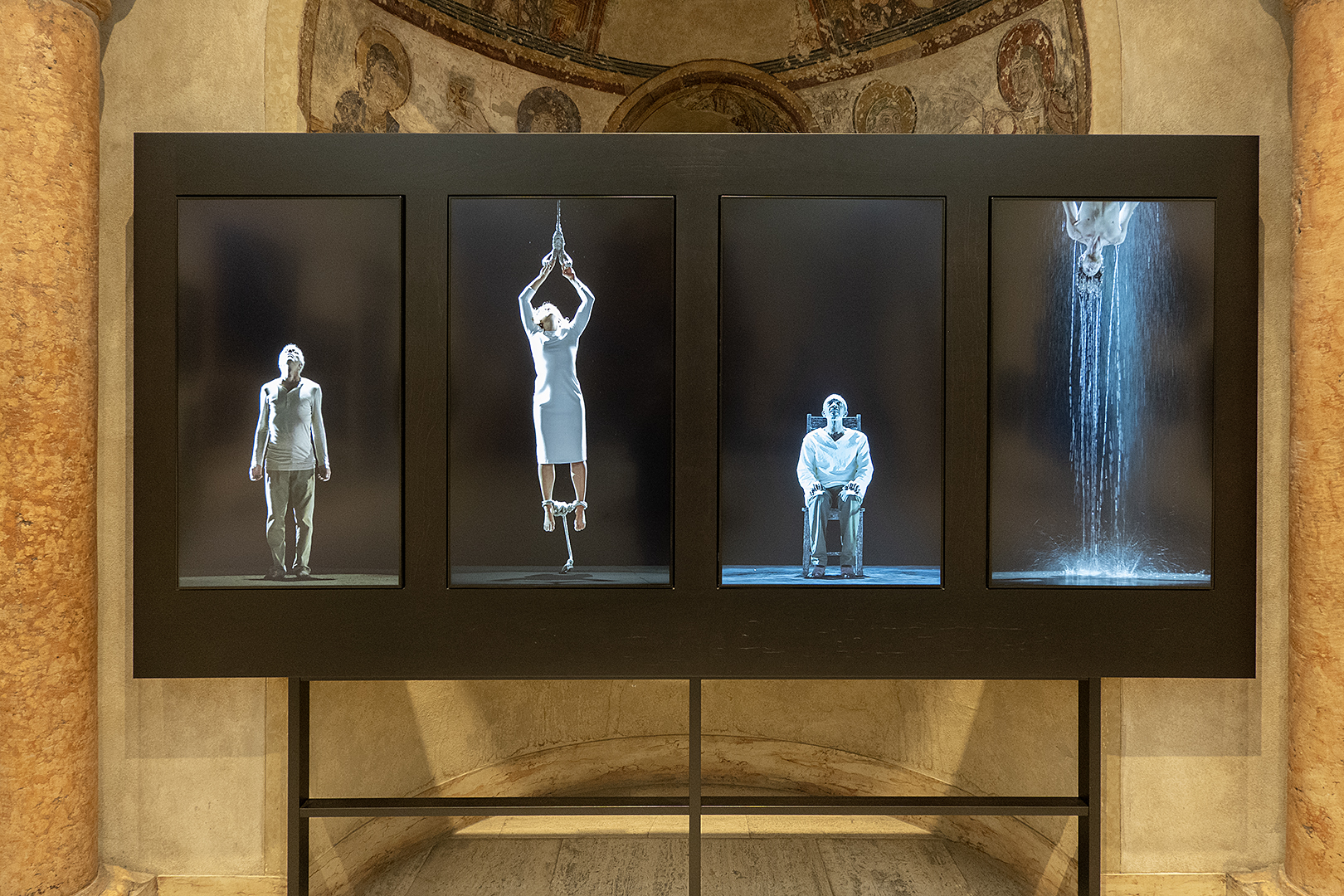
Bill Viola “Earth, Air, Fire and Water Martyrs” at MAG
The passage near where this Bill Viola piece is mounted reads: “The Greek word for martyr originally meant ‘witness.’ In today’s world, the mass media turns us all into witnesses to the suffering of others. The martyrs’ past lives of action can help illuminate our modern lives of inaction. They also exemplify the human capacity to bear pain, hardship, and even death in order to remain faithful to their values, beliefs, and principles. This piece represents ideas of action, fortitude, perseverance, endurance, and sacrifice.”
The special shows at the Memorial Art Gallery are usually the draw, but the collection itself is often better than the shows—especially under the direction of the last two directors. The place has come to life with exciting new acquisitions, adventurous pairings, and the rotation of works on paper from the collection—works like the Claes Oldenburg prints that can only handle a limited amount of light. It is the perfect place to feed your head.
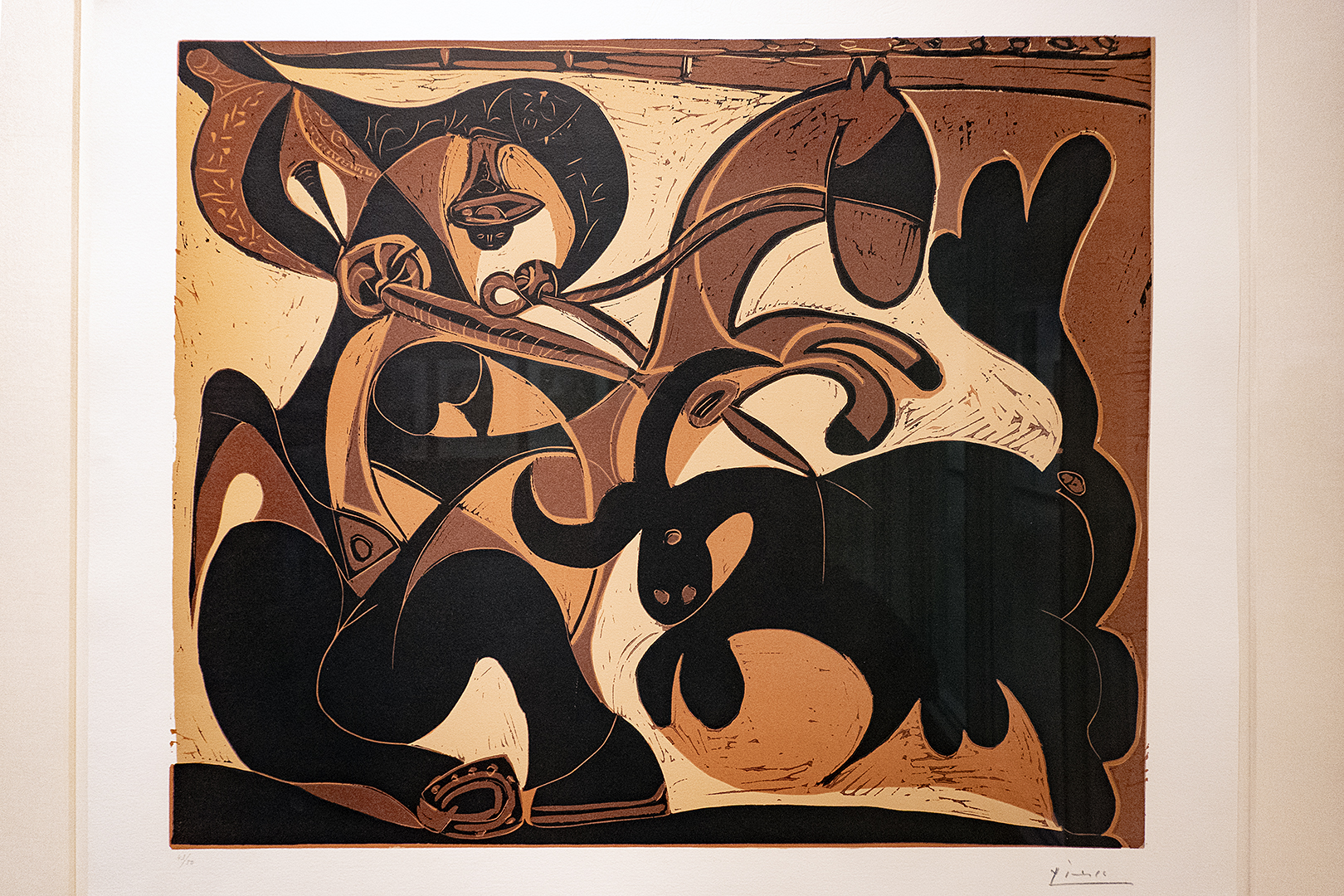
linocut from “PIcasso and the Progressive Print” at MAG
Picasso made about 200 linocut prints during the last fifteen years of his life, and there is a fascinating show of the working and final stages of three in the Lockhart Gallery now. “Picasso and the Progressive Print” shows the artist having fun with his Spanish heritage and mythology.
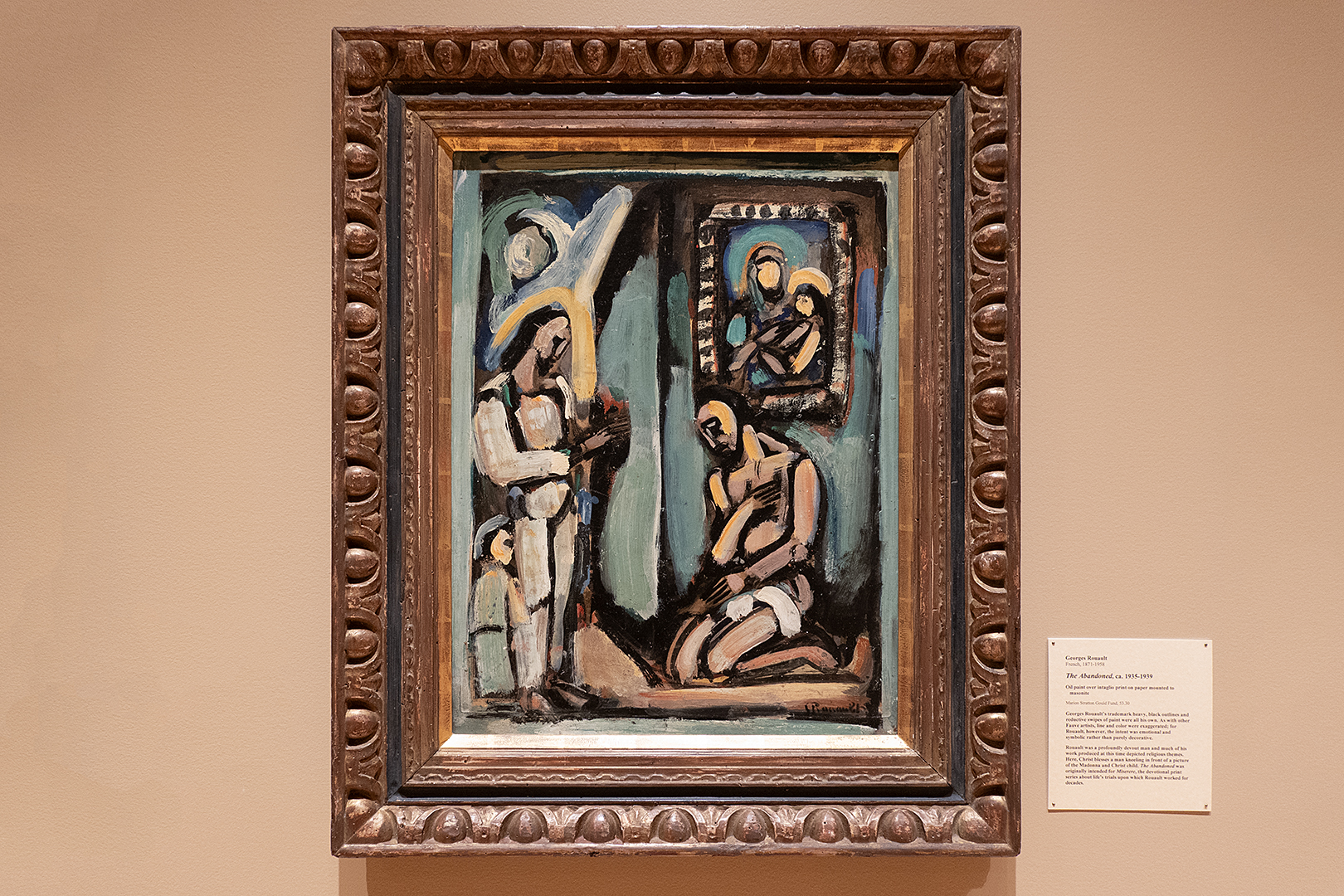
Georges Rouault “The Abondoned” at MAG in Rochester, New York
“The Abandoned” by Georges Rouault is one of my favorite pieces in the collection. It’s oil paint over an intaglio print on paper mounted to Masonite, and the theme is part of his Miserere series. My father had four Rouault pieces hanging over the couch in our living room when I was growing up—plates he had cut out of a Rouault book. The way they were painted, the religious subject matter—I found them so mysterious.
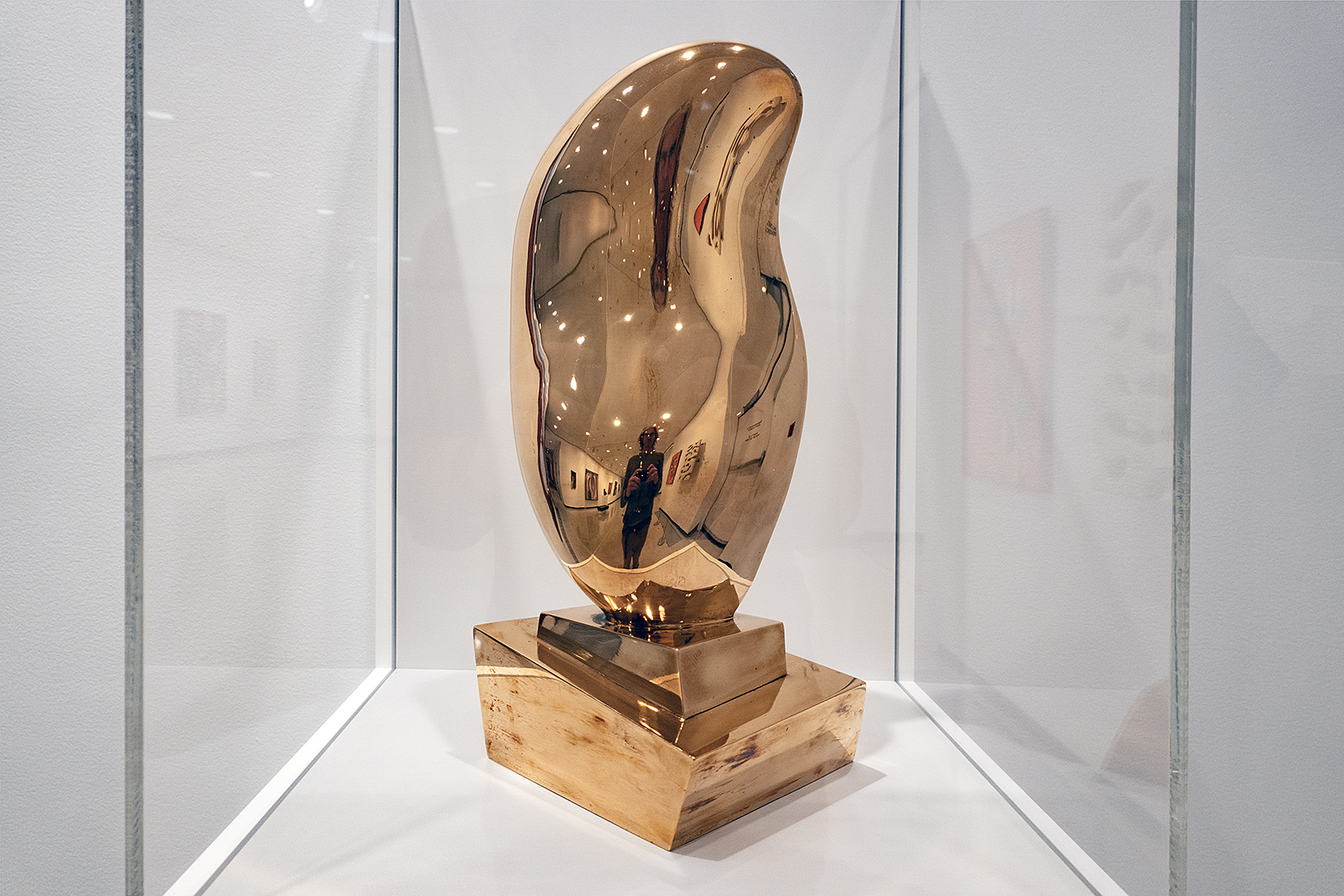
Jean Arp Leaf on Crystal (Feuille sur Cristal) Bronze MAG Rochester
Since the inception of the Media Arts Watch Gallery at the MAG, they have had one sensational installation after another. Rashid Johnson, one of Hauser & Wirth’s artists, has a video installation called “The Hikers” there now. And just outside that gallery is this beautiful Jean Arp bronze.
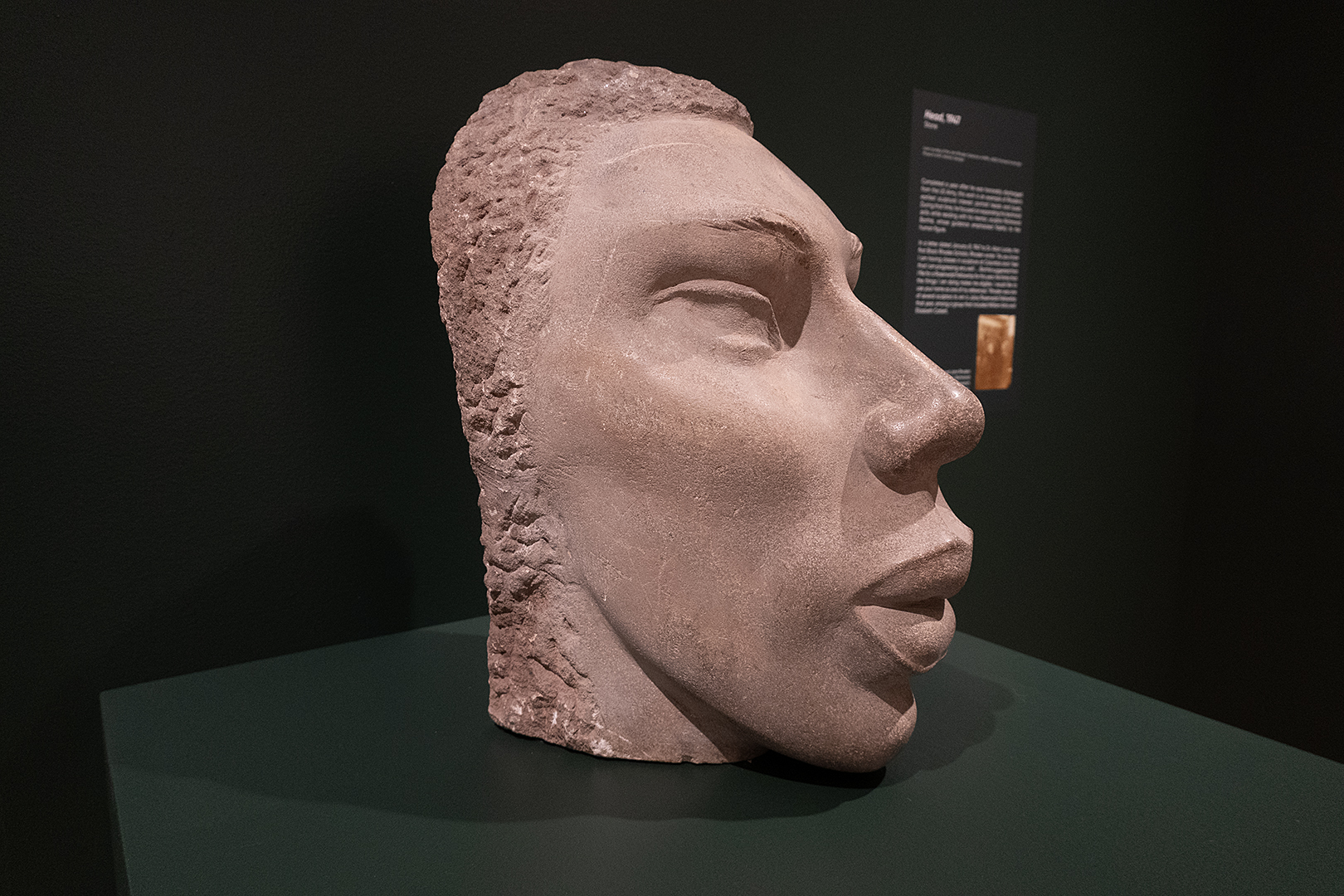
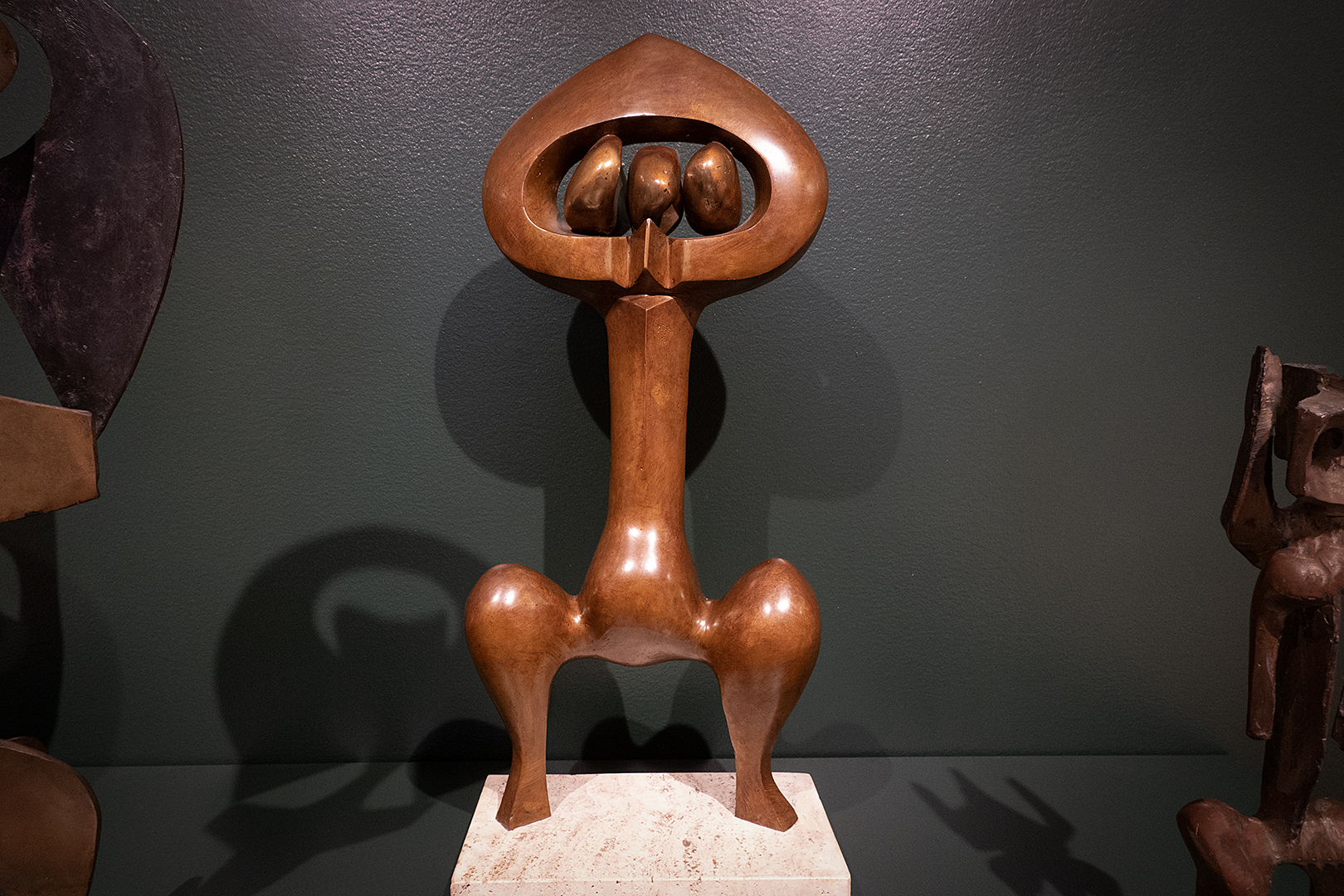
John Rhoden sculpture at MAG show “Determined to Be: The Sculpture of John Rhoden”
The last time we saw Shawn Dunwoody in person he was spinning records at the Bop Shop. Of course we see his work everywhere in the city. Shawn is a dynamo, and we got a chance to hear him talk about his projects at the Memorial Art Gallery yesterday. The auditorium was full. Shawn has a lot of fans.
Creating murals on buildings, walls, and roads is so much more involved than just painting. Shawn brings life to some of the most run-down parts of our city. He can secure large quantities of paint from Sherwin-Williams, and convince companies or the City of Rochester to allow him to transform the cityscape. His projects involve and lift up the communities there. There is real power in his art.
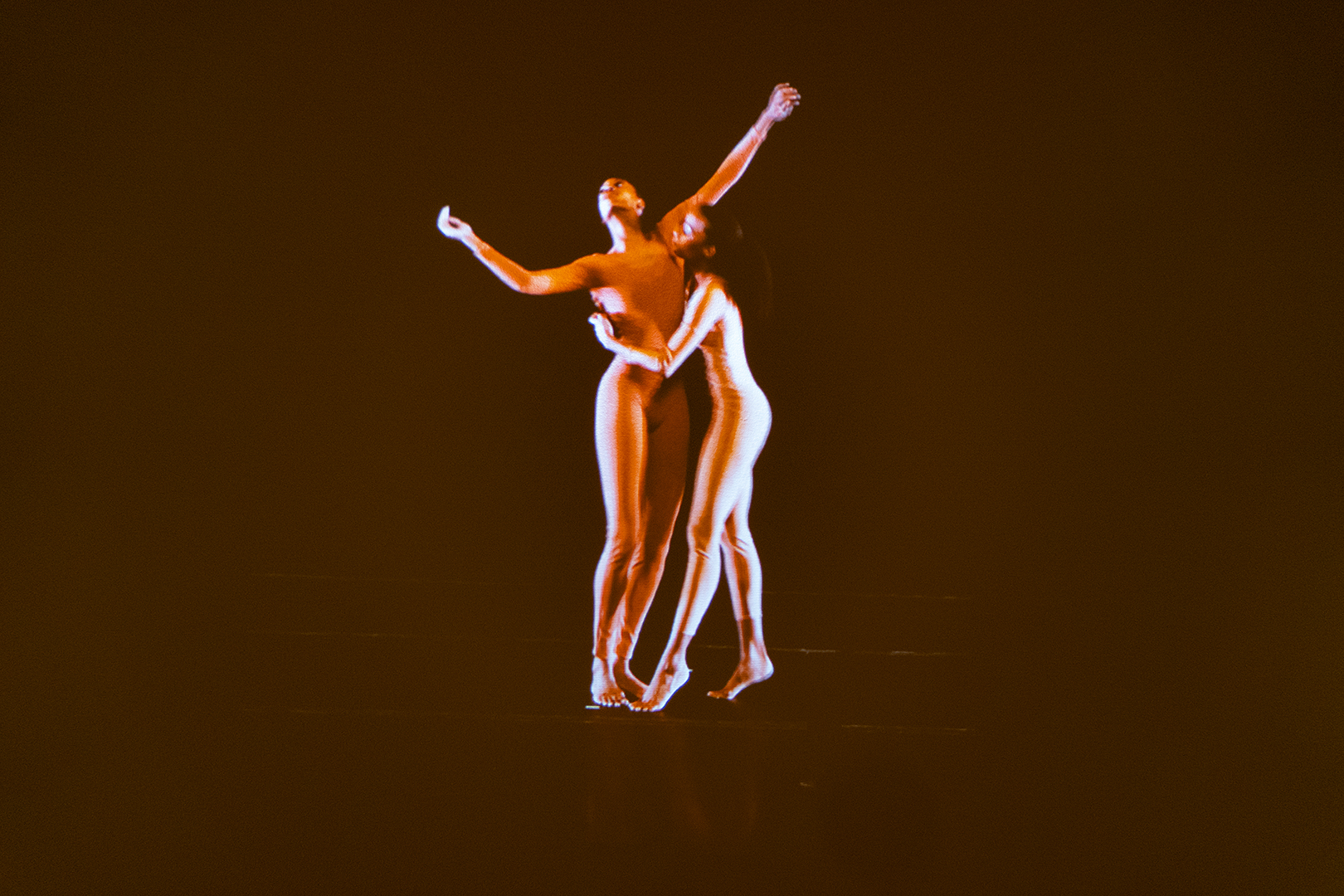
Garth Fagan dancers video at MAG show “Determined to Be: The Sculpture of John Rhoden”
When Shawn’s talk finished we took in the MAG’s new show, “Determined to Be: The Sculpture of John Rhoden.” According to the notes, “music was a fixture in John Rhoden’s creative and personal life—his studio space was outfitted with a concert grand Steinway piano that Richanda, his wife, would play as he worked.” The MAG’s Spotify setlist of the music that inspired Rhoden includes plenty of Thelonious Monk.
The MAG partnered with Garth Fagan Dance to explore the rhythmic qualities of Rhoden’s work and commissioned choreographer PJ Pennewell to create a series of short, original movements inspired by five sculptures in the exhibition. These performances are screened on the dark walls of the galleries and are as captivating as the sculpture.
John Rhoden sculpture at MAG show “Determined to Be: The Sculpture of John Rhoden”Leave a comment
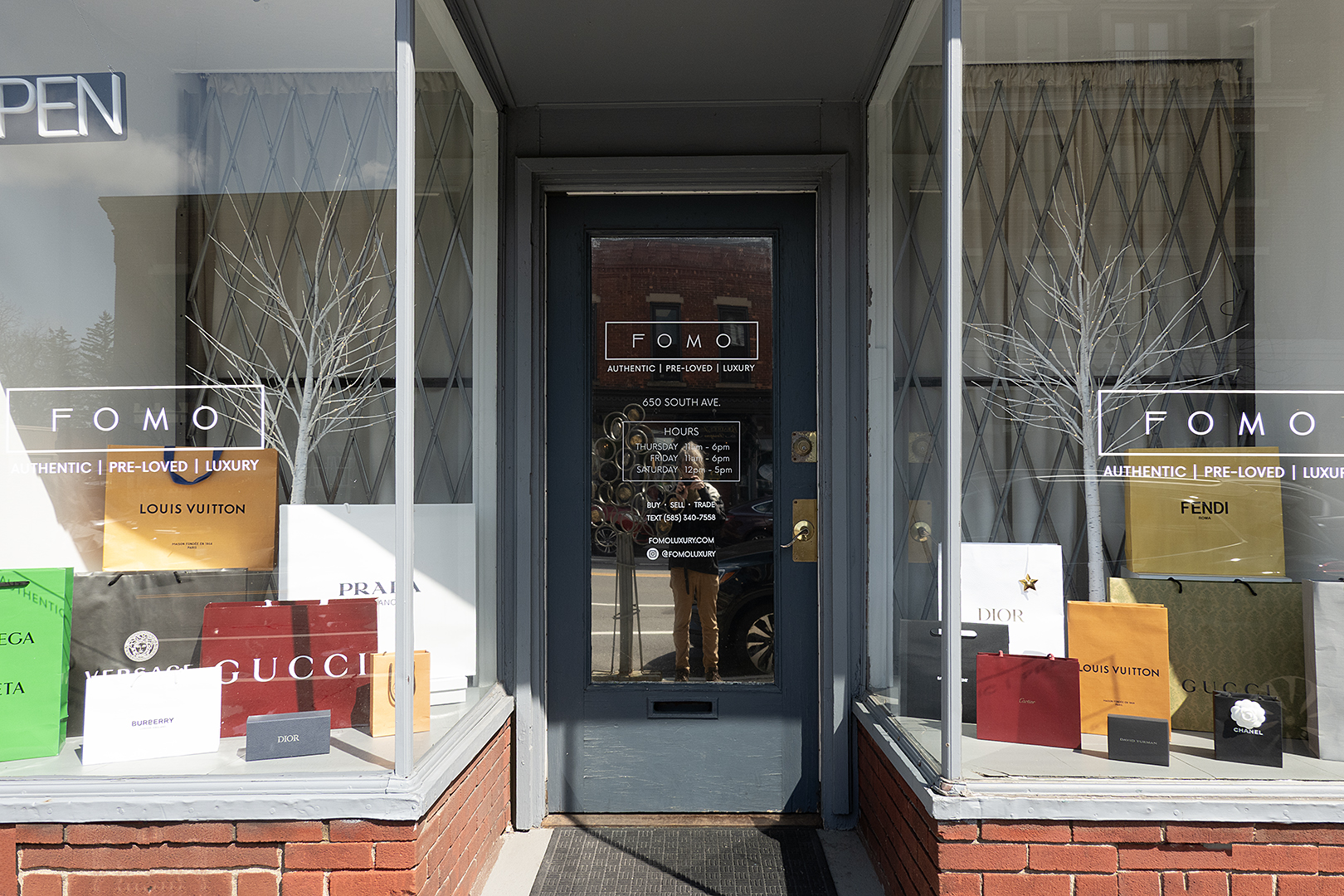
The South Wedge is really coming up. Despite how many times we have heard that over the past fifty years there is some evidence – like this second hand luxury goods store, FOMO, and now, two fine chocolate stores and new coffee shop. We left our car and walked up to visit our friend, Pete, on the seventh floor of Highland. Pete probably rehabbed more homes in the South Wedge than anyone else when he ran Monacelli Construction. I guess the Wedge would really be coming up if there was an authentic luxury brand store there but I don’t think anyone would like that.
Peggi still knows all the words to “Duke of Earl.” And Gene Vincent’s “Be-Bop-A-Lula” is still as fresh as the day I first heard it. It’s Sunday afternoon so we must be listening to WAYO’s “Up On The Roof,” all-45s show. Jason is just launching his “Fantastic Voyage” show with a Sun Ra track as I write this.
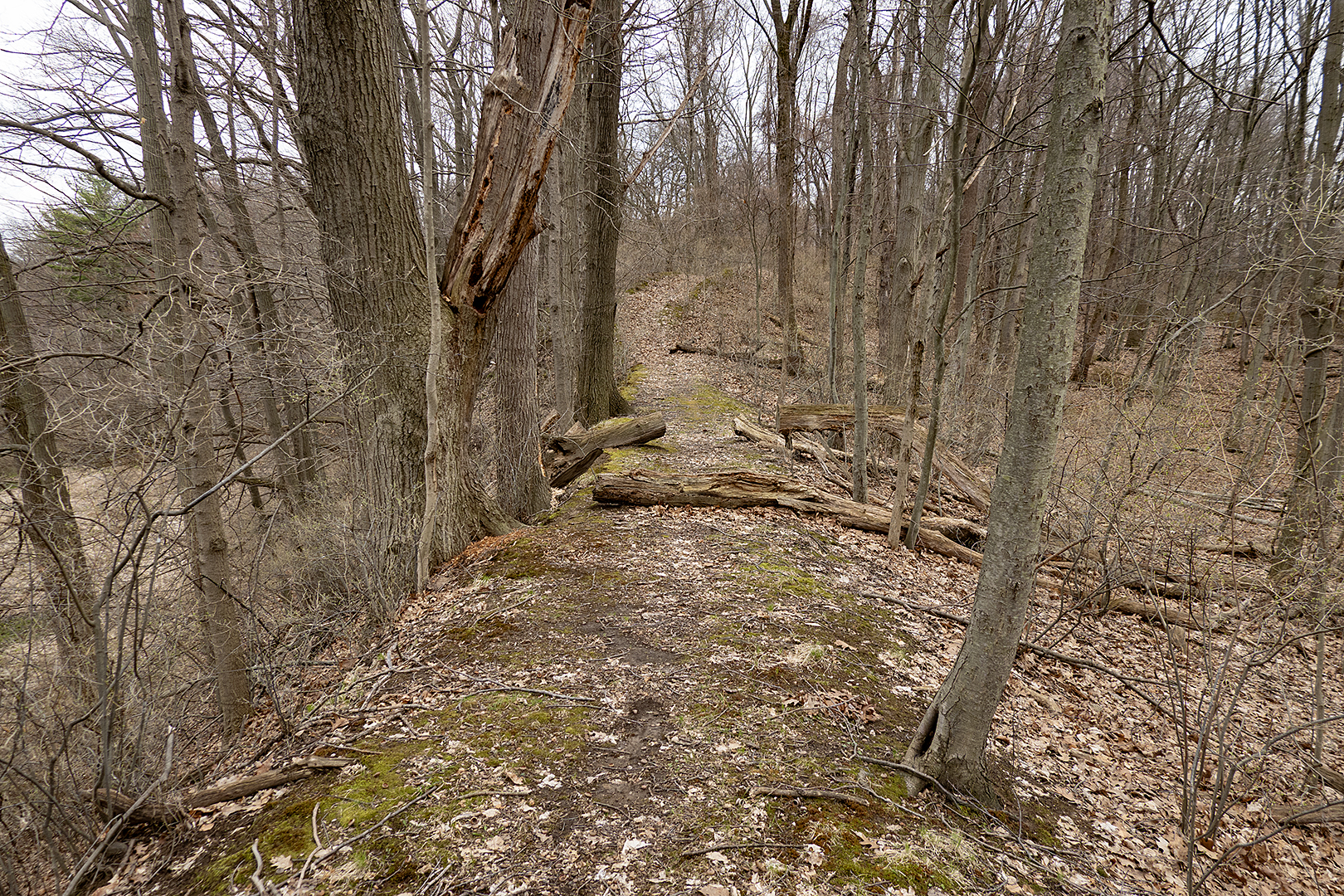
We used to take this trail all the time back when we lacked tick-awareness. It was one of our favorite walks. The park workers took a mostly hands-off approach to the old horse trails that run through the undeveloped part of the park. There was evidence of them having cleared a tree that fell across the path, but that was it. Now, blow-downs just lie there. In the past twenty years the invasive garlic mustard and then the black swallow-wort has gotten out of control. It chokes the paths. You would need a machete to get through it. With the temperature below where the ticks come out and before the green returns we thought we’d be able to work our way through.
We worked our way up the ridge overlooking the marsh and turned down the hill that takes us up to the big long ridge but found barberry bushes—another invasive, but this one with thorns—had completely swallowed up the trail. We tried a few detours but had to admit we had been defeated.
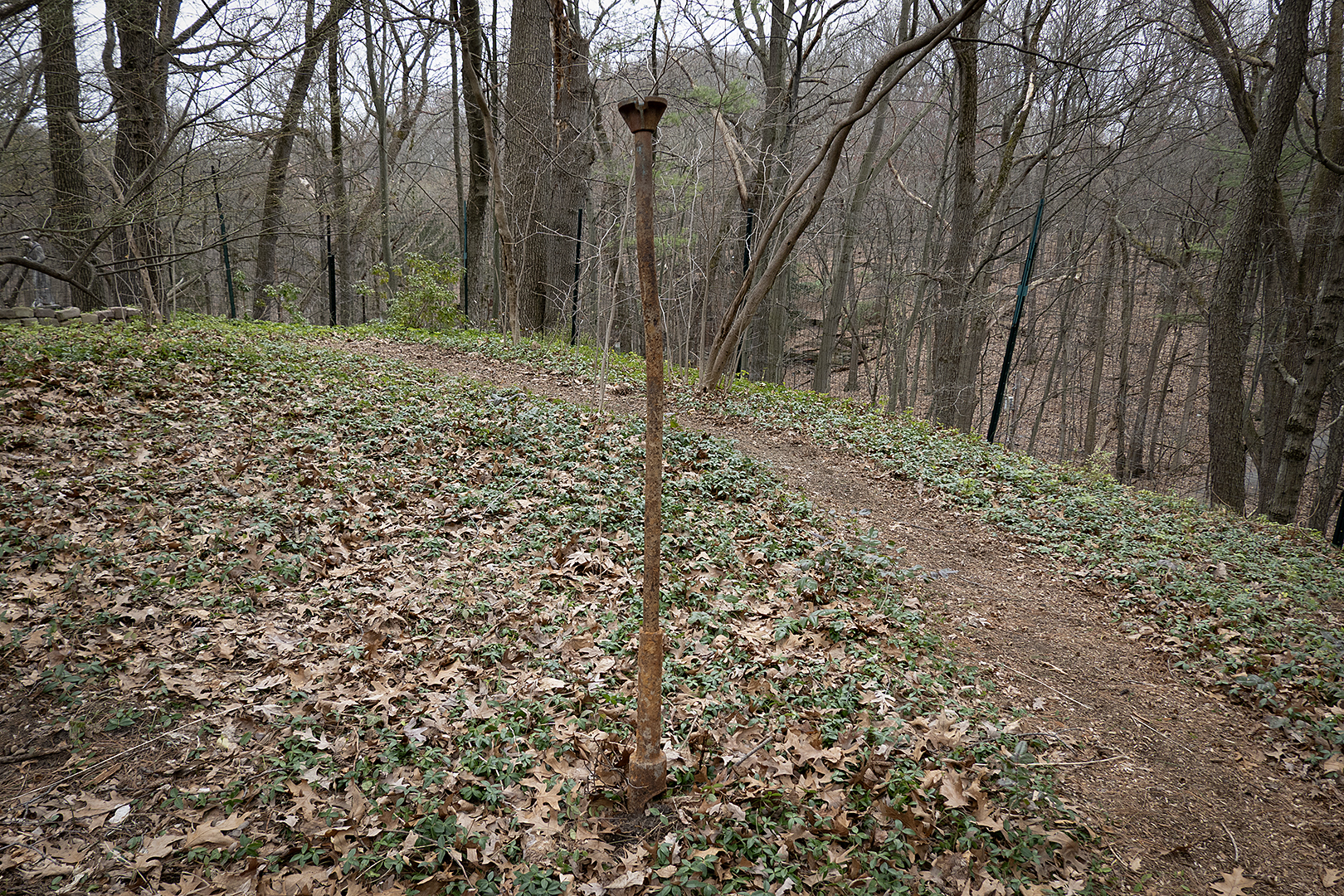
When Duane was up here last year he told us we needed a Noguchi-like sculpture in this spot. I had been keeping my eye out.
We walked by this pipe yesterday on our way to the park. It was in front of a house where the yard had been recently dug up for some sort of infrastructure problem. We were out in the park when I suggested we turn around and take this thing home with us. I had my iPad with me and we were listening to CalZone’s latest “Record Geek” show. Peggi took the iPad and held it in a way we could both listen while put this elegant fixture over my shoulder. I drove stake into the ground in our backyard planted the readymade on top.
Found spring as backyard sculpture
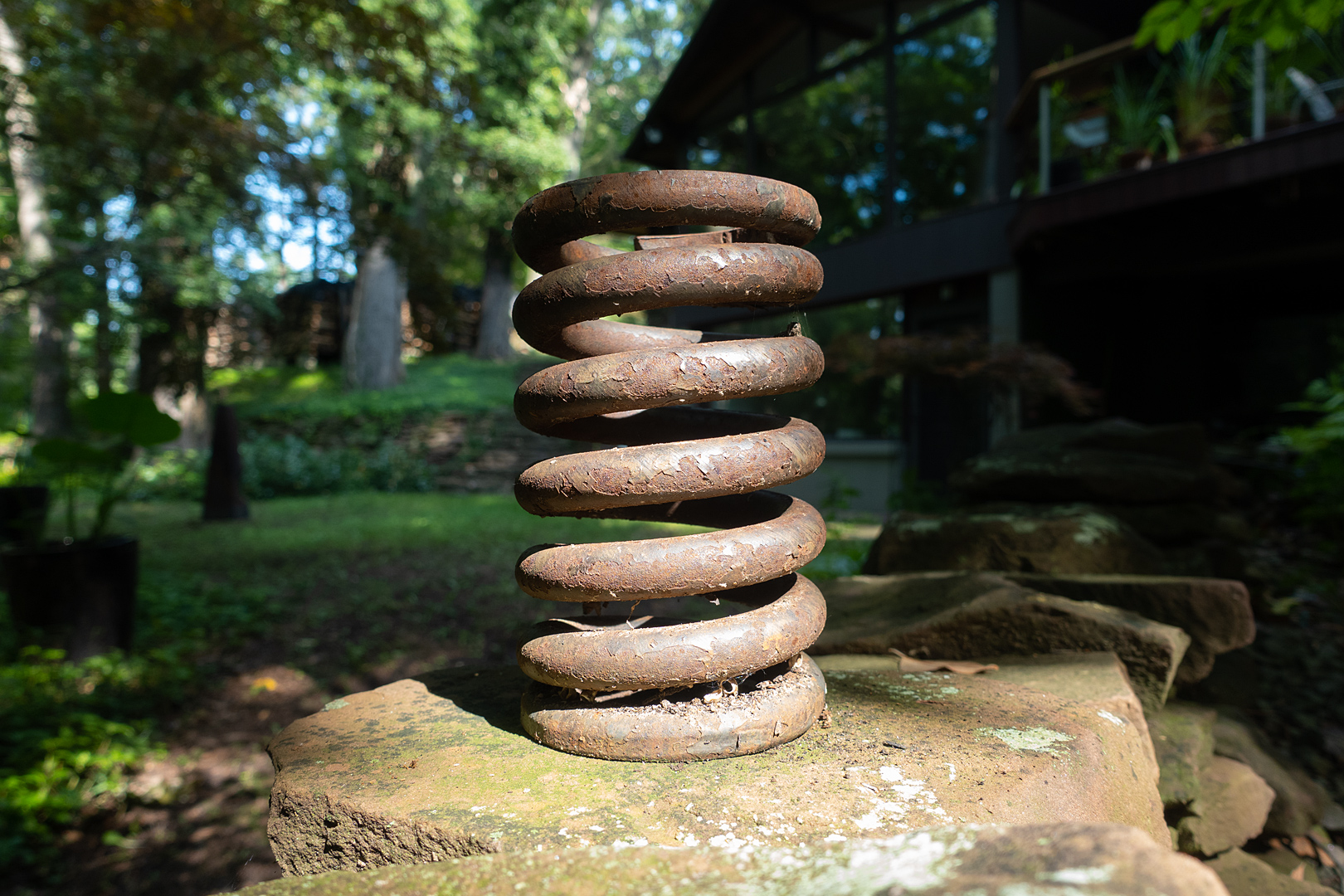
It is right at home with our other backyard pieces.
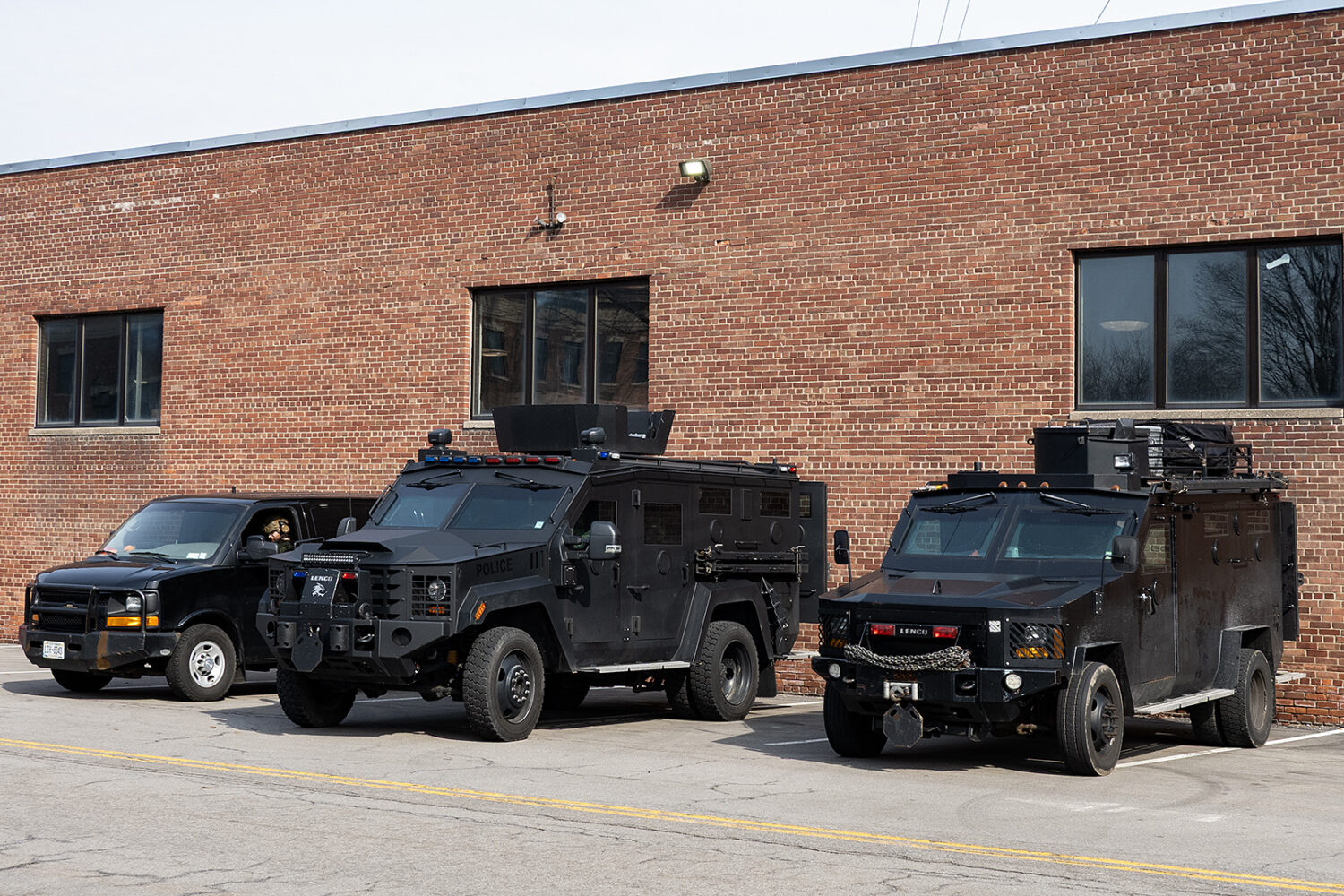
Our city is a Sanctuary City. We have a city street address but we live in a town which does not have guidelines that prohibit law enforcement from assisting in ICE maneuvers. So a group of citizens has been meeting at the library and preparing to take our concerns to the town board. The board appoints the police chief, establishes their budget and is ultimately responsible for establishing police guidelines.
We were standing outside the library this morning, waiting for it to open, when we spotted these three back military vehicles. I saw someone sitting in the smaller of the three vehicles and I walked over to ask what was going on. I asked if they were part of the town police and he told me they were from the city of Rochester and they were working with the town police on some sort of operation. I was ready to push for more information but I was distracted by the assault rifle in this guy’s lap. Its trajectory, in the that casual position, would have pierced the door and entered my lower half. At that moment the tinted window in the vehicle to my right rolled down and I said hi to another armed soldier. I muttered something like, “I didn’t know the city had such serious equipment” and I walked back to our group.
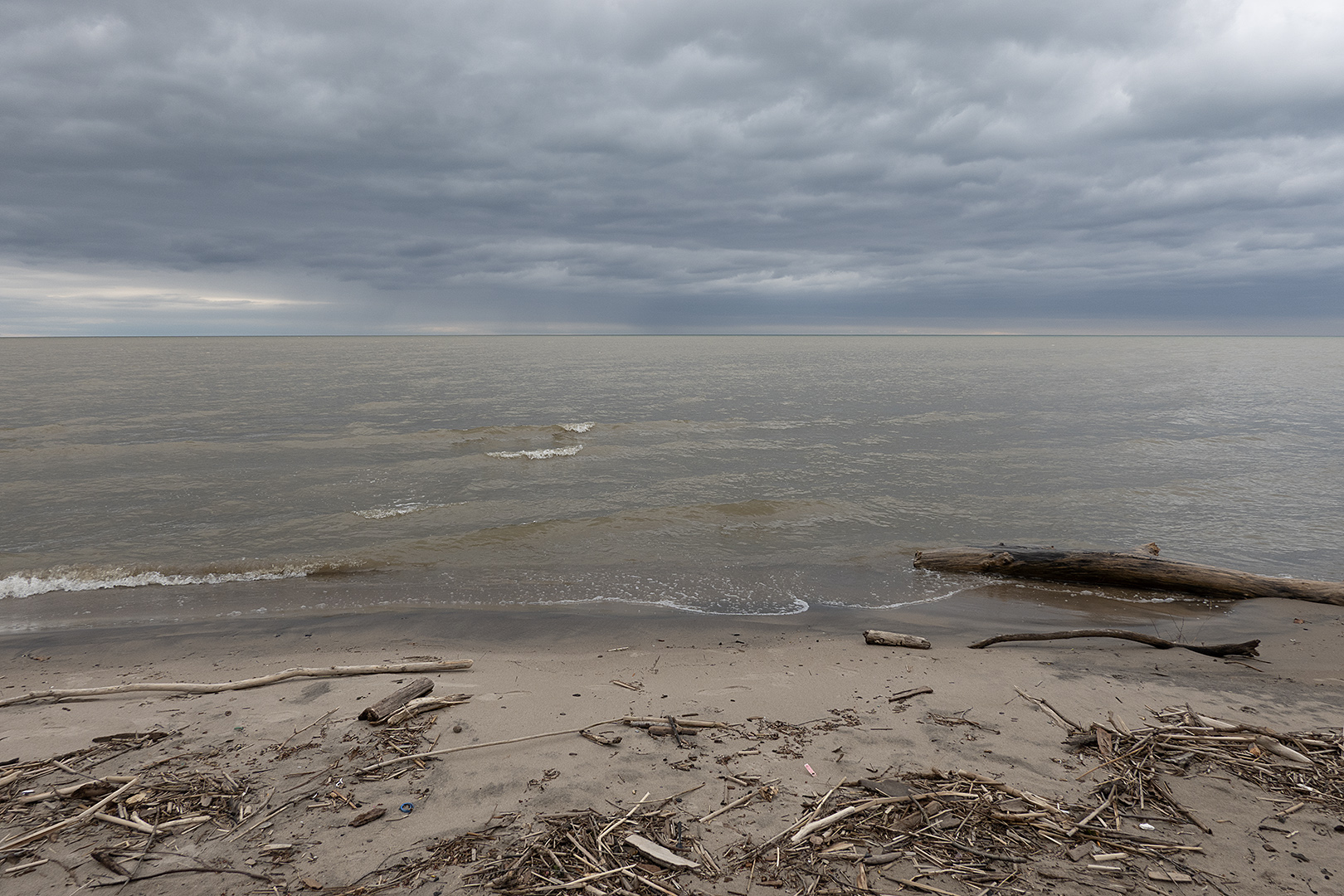
Lake Ontario in early April with lots of natural debris
This happens just a couple of times every year and usually in the early Spring. Big rains wash all sorts of debris, mostly natural, down the river and it gets dispersed along the shoreline at Durand. I brought home an armful and I’m letting it dry in the garage. This was my source for “Los Inmigrantes” a few years back.
We have five rows in now, down at the garden, and we potted up our pimientos de padron, jalapeños, tomatoes, kale, collards and some basil. They are in the widow. And when the Daffodils have finished we’ll plant the root vegetables, the beets and carrots.
We planted a row each of lettuce, arugula, spinach and cilantro this afternoon and I got these news alerts on my watch while we were down there. I was trying to digest the first one – the Musketeer demanding the biggest firms on Wall Street to use his AI platform, one deliberately tweaked to generate racist, antisemitic and violent content. And then thinking about the war and Pete Hegseth uses biblical justifications, describing “the fight against Iran”Epic Fury” as a struggle for “Christian Nation” values. He prays for “maximum lethality” against the enemy, implying there is something like minimum lethality.
I looked up a few of Hegseth’s recent chestnuts: “Blessed be the lord, my rock, who trains my hands for war and my fingers for battle.” “Let every round find its mark against the enemies of righteousness and our great nation.” “Give them…overwhelming violence of action against those who deserve no mercy.” “Break the teeth of the ungodly.”
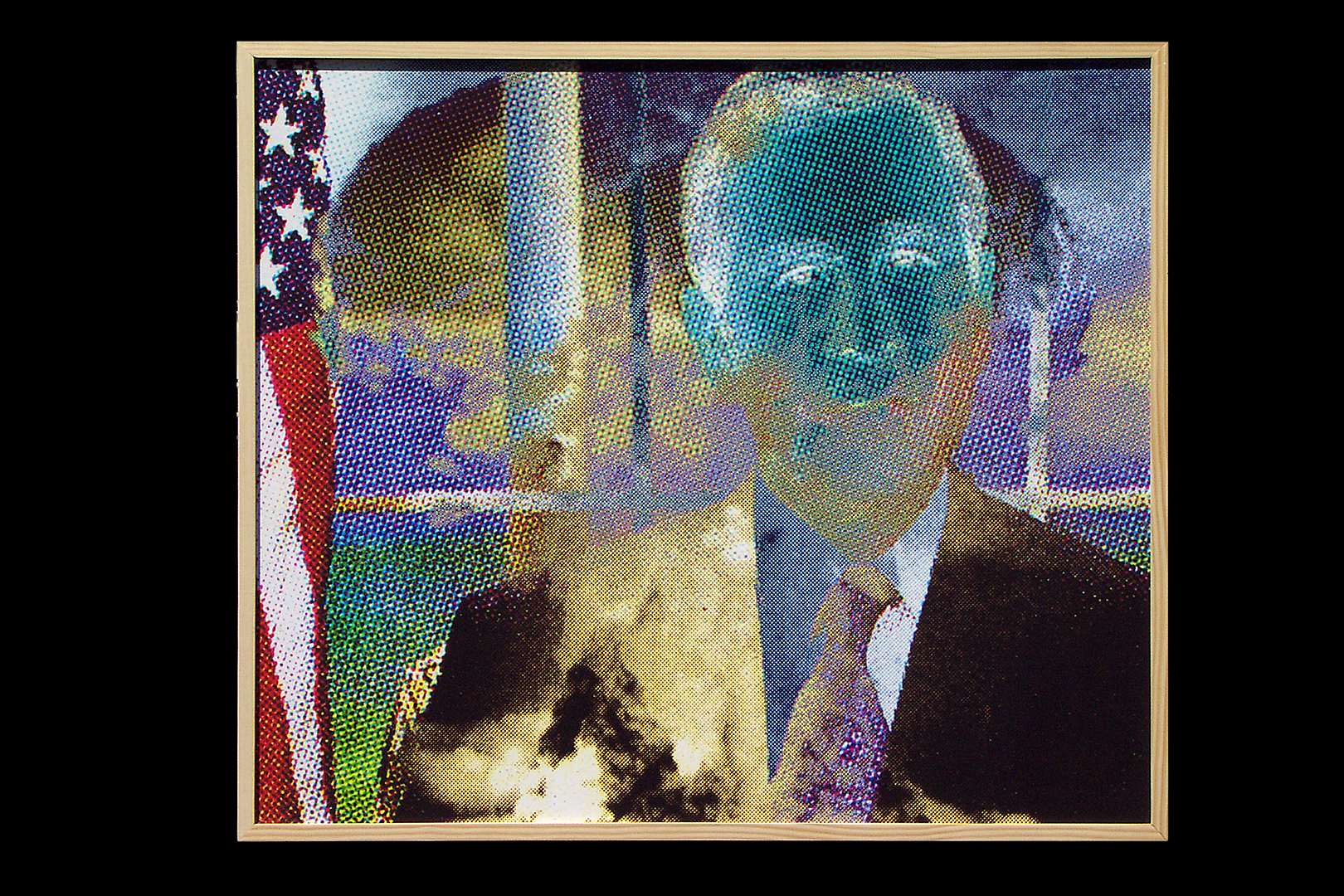
“Atomic Jihad,” digital collage, glassine print by Paul Dodd, 40″w x 30″h 2002
It seems like yesterday when W launched his “GWOT” (Global War on Terror” with “Shock and Awe.” In response I did the piece above for a Pyramid Art show. Tom Burke bought it and I had almost forgotten about it but here we go again.
Christ died for our sins or so the story goes. He died on this day, Good Friday, between noon and three o’clock. I remember sitting on our front steps with my brother and sister on day as beautiful as this one, a day off from school too, while we attempted to stay quiet for those three hours. It was my mom’s idea. We could only go so long without laughing at the situation. I don’t think we crossed the hour mark. We had already given up candy for Lent and we had just two more days before we could gorge ourselves on chocolate.
It is hard to find any humor in all this. I miss Charlie Rangle.
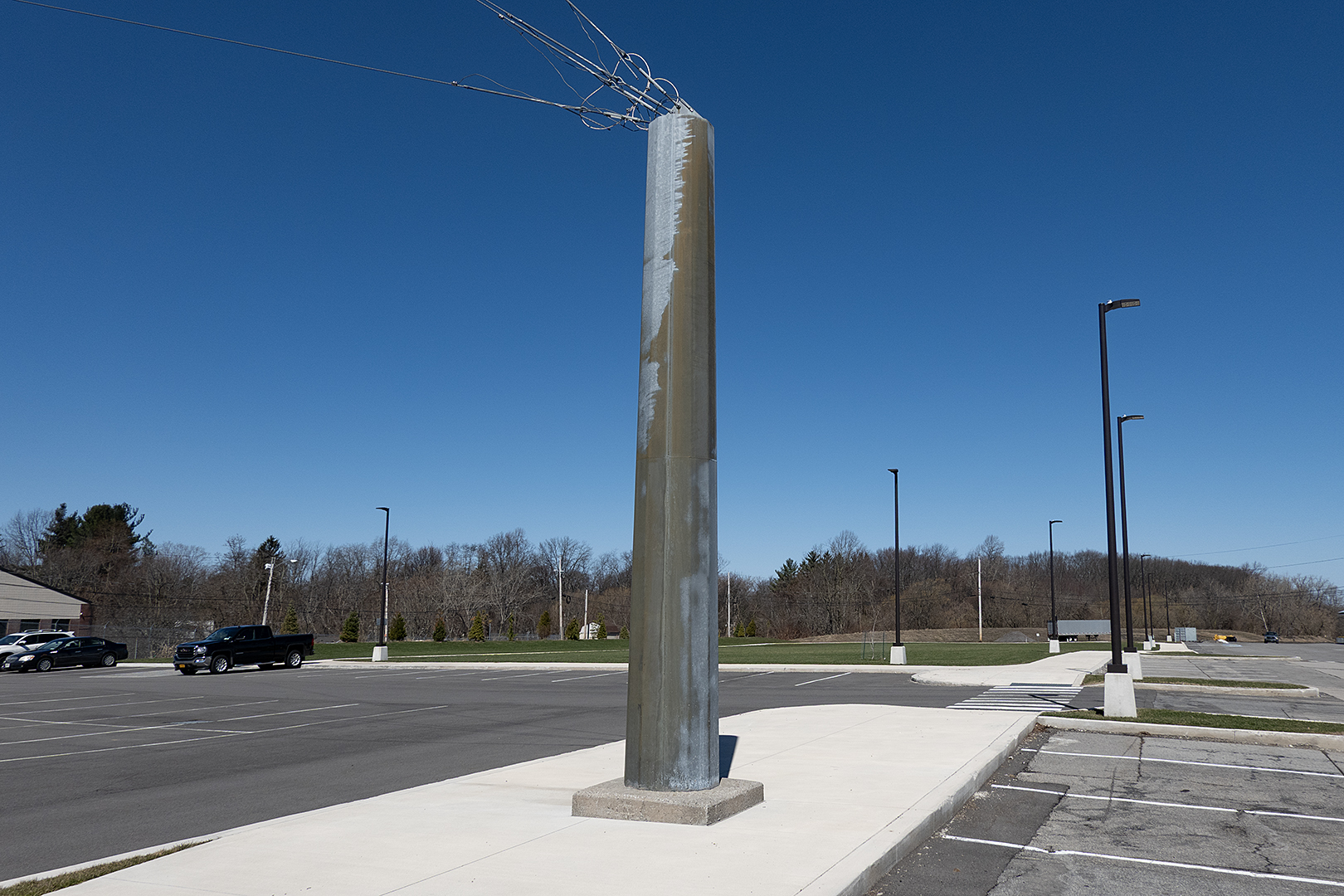
This monolith is in the parking lot of the town hall. It is just one of the supports for the giant cell tower that sits near the police station. I took this photo last week when the sky was impossibly blue. The last few days have been gray and chilly but perfect weather for working outside.
We’ve been cleaning up the debris out back and cutting log-length chunks off the three fallen trees. We roll those down the hill and up a board and into our car, and then drive them around the block to our woodpile. Because the trees all fell downhill, the trunks get bigger as we work our way up, and at some point my chainsaw will not be able to cut through the center, so we plan on calling Paul—another Paul—who burns wood exclusively. He has been here before with a giant saw.
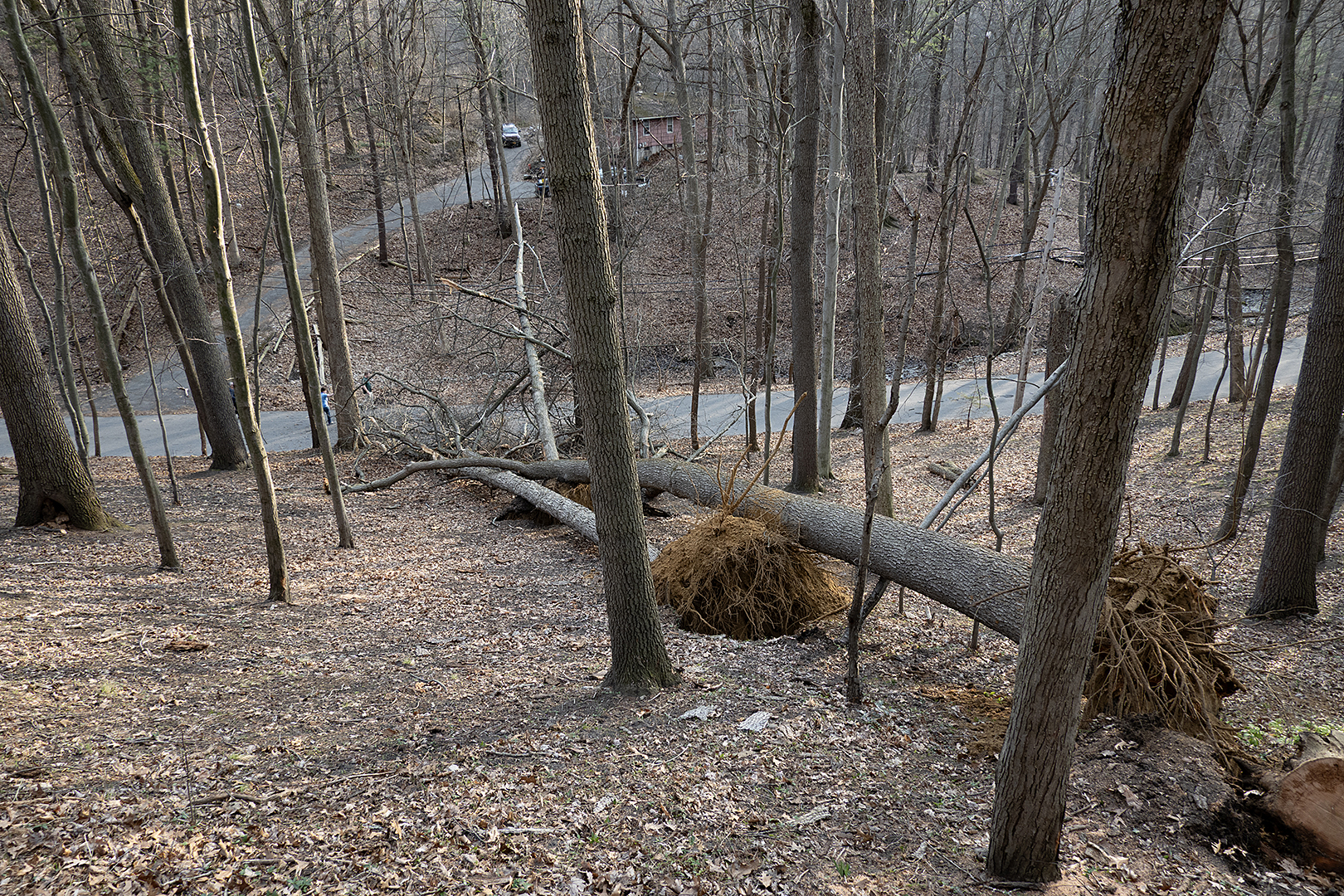
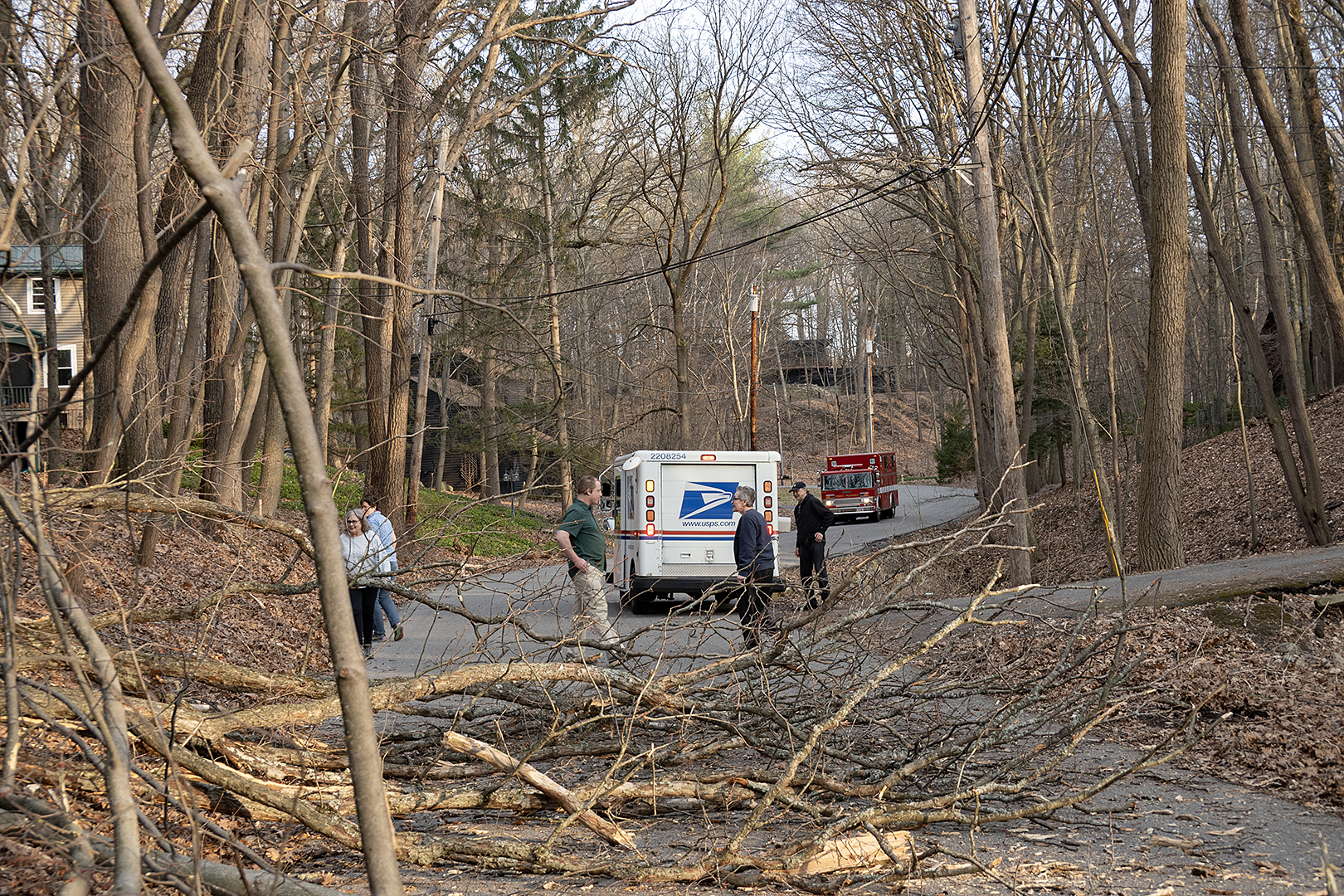
We heard the crackle of limbs breaking. We were eating dinner, and when we looked toward the window we saw a big oak slowly lean down the hill and then came the crash. It took two other trees down with it like dominoes. Before you know it two of our neighbors were looking at the mess in the middle of the road. We scurried down the hill and picked up enough debris to let the mailman through. Someone had already called the firefighters, and they hopped out of the truck with chainsaws, cleared the road, and left the rest for us.
Neighbors, mailman and fire truck with fallen treesLeave a comment
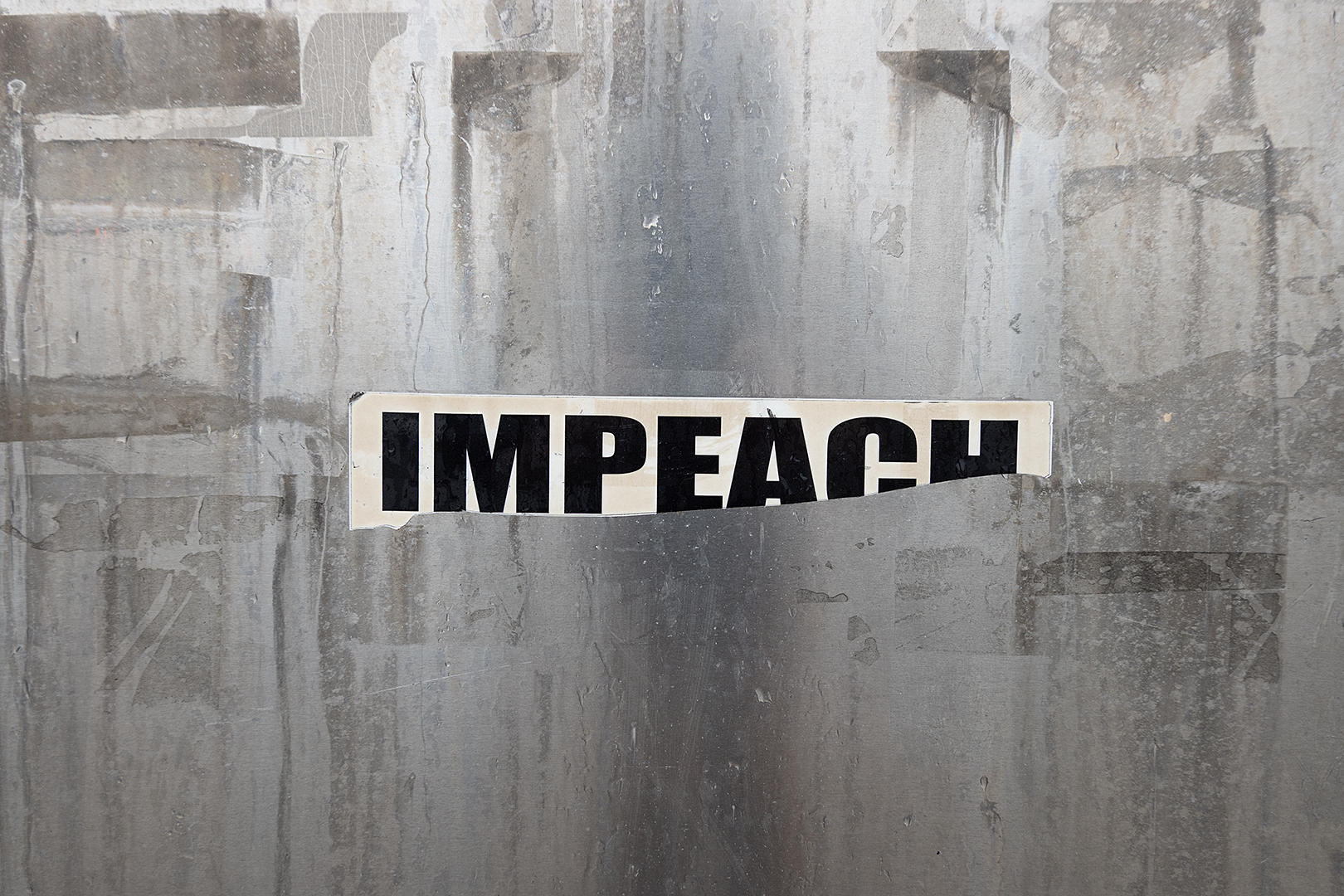
Impeach sticker on utility box at the corner of Goodman and East Ridge
This sticker has been on the unfitly box at the corner of Goodman and Ridge for so long I can’t be sure which president it was intended for. It was cold and blustery but sunny day for the No Kings Rally and the local turnout was impressive. So many smiles in such dark times. If Congress can let the president go to war without approval or even a coherent explanation this sticker will read like a foreign lanquage.
I think we were headed up to the Portuguese restaurant, Adega on Elm Street in Toronto, when we spotted this sign. The red and yellow of the Spanish flag with a jack-like graphic in black in place of the coat of arms just screamed out to us. Too slick to be graffiti, I assumed Chaos was a club or a line of clothing but I couldn’t find anything via Google. The way the sign is framed by glue from what came before, the “ski” tag that just about matches the yellow above, even the green/blue figure interacting with the animated jack add interest. but I could quibble that the angle of the cross piece in the letter “h” doesn’t match the “c” and “a” but I like the graphic typography and word it serves is “Chaos.” The sign would work bette here in the states that it does up there.
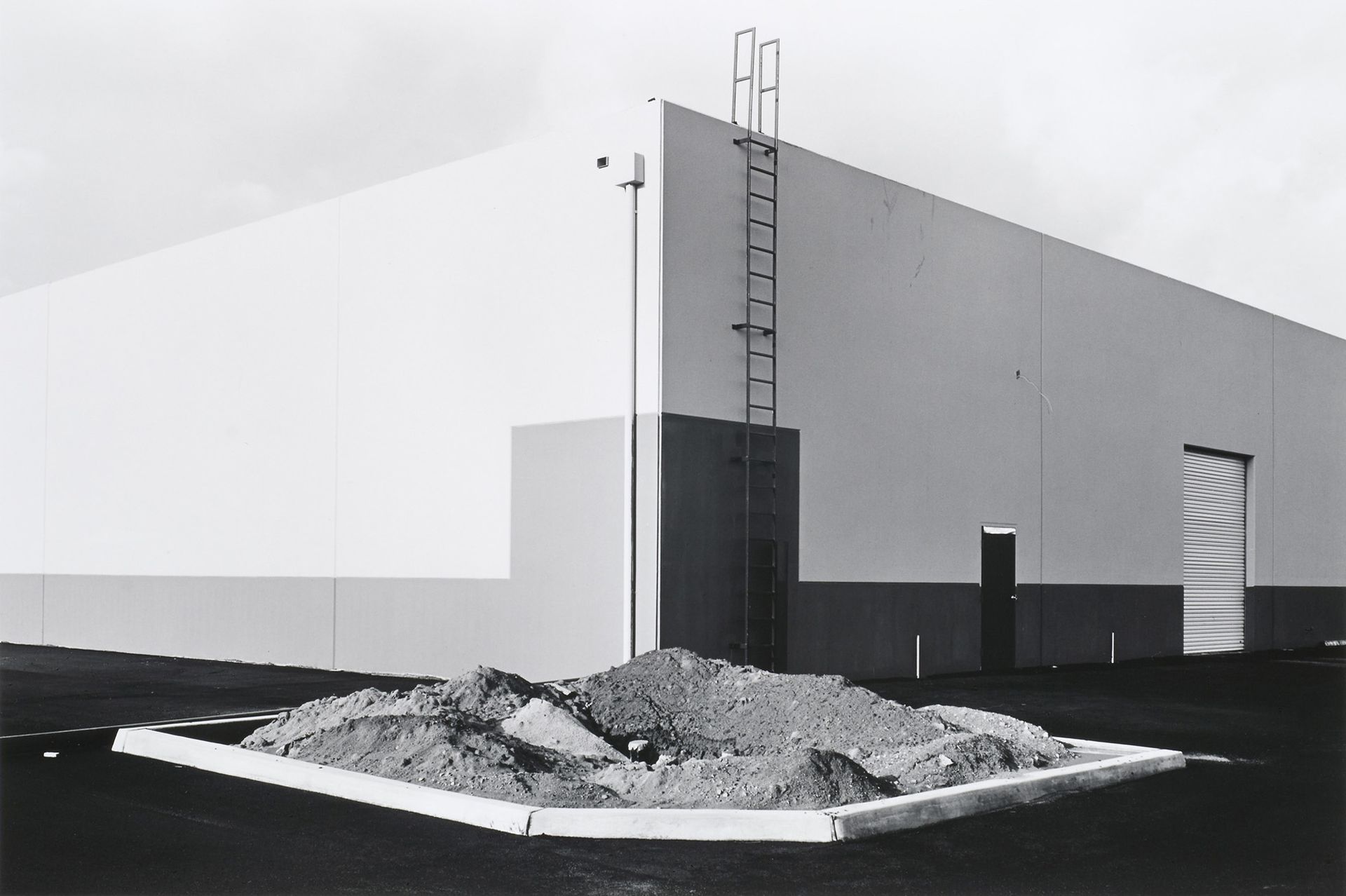
“South Corner, Riccar America Company, 3184 Pullman, Costa Mesa” (1974) by the American photographer Lewis Baltz from “New Topographics: Photographs of a Man-Altered Landscape” Eastman Museum 1975
I picked up the recent Cornelia Magazine at Rochester Contemporary. The yellow and black publication is a visual arts review for Western New York and Southern Ontario, and I turned to it hoping we hadn’t missed a great show during the four days we spent in Toronto. We did—Annie McDowell’s work at two seven two.
Issue #20 includes a fascinating article by Alexa Kanarowski about “New Topographics: Photographs of a Man-Altered Landscape,” the pivotal 1975 exhibition at the George Eastman House. It is the second most-cited photography exhibition in history, a turning point in photography, a radical shift away from traditional depictions of landscape. Yet, at the time, the show looked more ordinary than radical—ordinary, as in “Ansel Adams photographed landscapes, and you photographed this for the walls of the Eastman?”
The Eastman’s website entry on this show says: “The question persists as to why this unassuming exhibition came to be so widely known and understood as the seminal event in which photography’s landscape paradigm shifted away from the sublime, ushering in a new era of theoretical approaches. Of those who did see the exhibition, few seem to have thought themselves in the presence of a turning point; paradigm shifts are rarely recognized except in retrospect.”
William Jenkins studied at Visual Studies Workshop and was the Curator of Twentieth-Century Photography at the Eastman in 1975. He selected ten then-young American photographers—Robert Adams, Lewis Baltz, Bernd and Hilla Becher, Joe Deal, Frank Gohlke, Nicholas Nixon, John Schott, Stephen Shore, and Henry Wessel—for his show “New Topographics.” The Baltz photo above could be an Ed Ruscha painting. Photography in the seventies found a seat at the Modern Art table.
I was an art major at IU but only lasted a couple of years. When I moved back here I took a job as a graphic artist with the Rochester Police Department, a one-year position paid for by a grant, and one of the benefits was they would pay for a college class. So, in that one year I took Photo 1 and Photo 2 at the U of R. Bill Jenkins was my teacher. I remember him liking the Stones’ “Exile on Main Street.” He took us through the darkroom techniques directly into art. I eventually finished with a BA in Studio Arts from Empire State College, and those photo classes were the best classes I took.
In Cornelia, Alexa Kanarowski writes, “for all its economic fatigue, Western New York offers a fertile ground for reimagining approaches to topography and photography. Our stagnation is not purely decay but a pause, a long exposure in which the latent image continues to develop. A New New Topographics could foreground our entanglement with the climate, data, and capital systems we’ve built.”
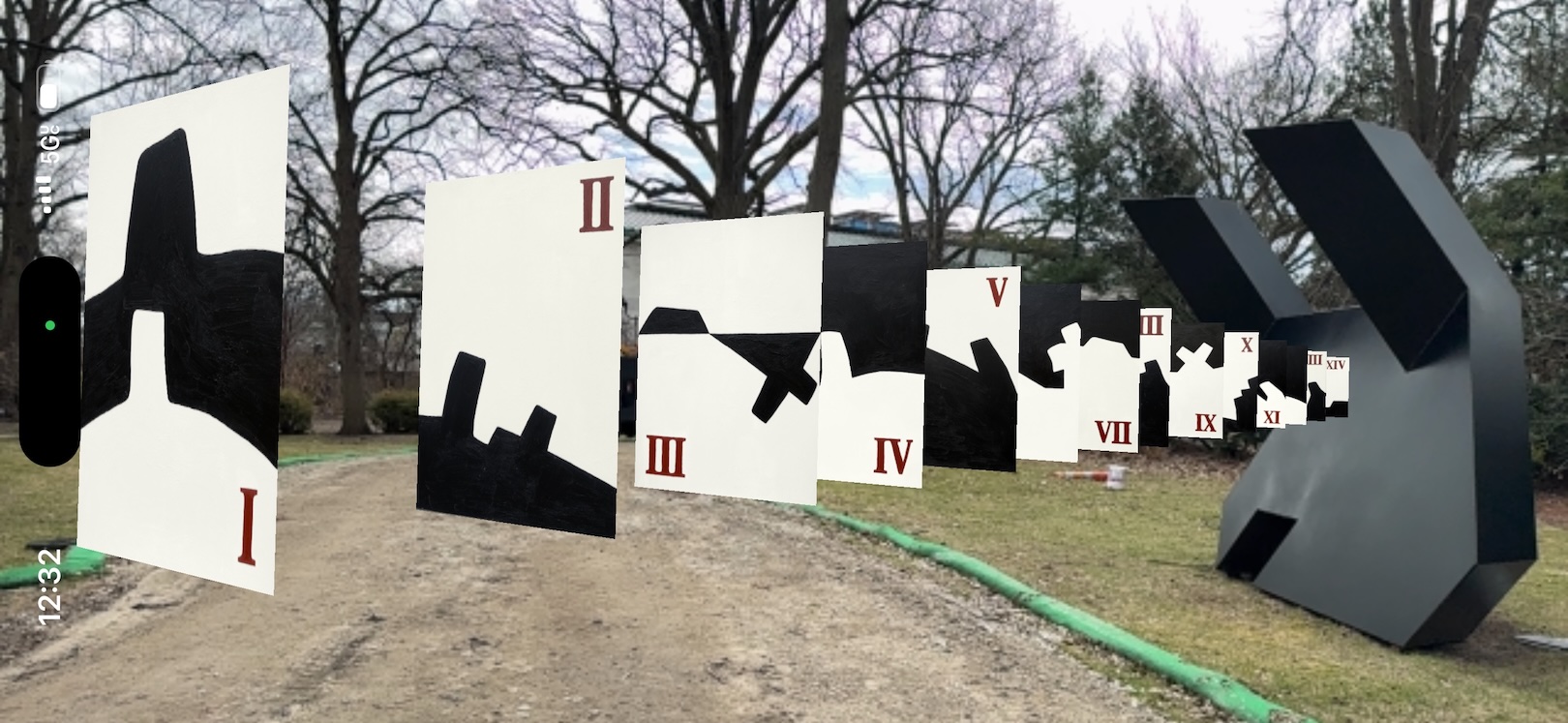
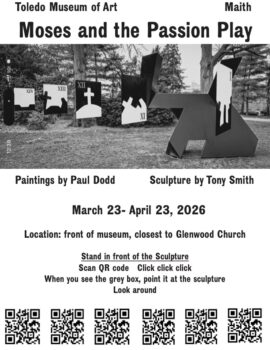
Stephen Black screenshot of “Passion Play” 2020 in Augmented Reality space with Tony Smith sculpture, “Moses,” at Toledo Museum of Art
While Peggi and I were cleaning up a fifty-foot fallen oak tree out back, Steve Black was putting my Stations of the Cross in AR space with Tony Smith’s 1968 sculpture, Moses. Just in time for Holy Week. This is so exciting. Steve says, “spatial computing is about using the space in a way that acknowledges the absence of gravity….”
Here, in old-fashioned reality, gravity brought the dead oak down. It fell in the upward direction of the hill behind our house, and some of its roots were still embedded in the earth. I started at the top and cut log-length chunks that rolled down the hill, crashing into other trees and either ricocheting off or becoming lodged.
Peggi stood at the bottom of the hill, as crazy as that sounds, in case any of them rolled into the road. I looked both ways before rolling, and Peggi hid behind the big oak. Peggi rolled five or six out of the road. Three went zipping right across the road and landed in the creek across the street, and the others were scattered. We rounded them up and will roll them into the car tomorrow and drive them up to our woodpile.
If you are in Toledo in the next month, scan the bar code below, point your camera at Tony Smith’s sculpture and look around.
“Moses snd the Passion Play” flyer, an AR installation at the Toledo Museum of Art by Stephen Black
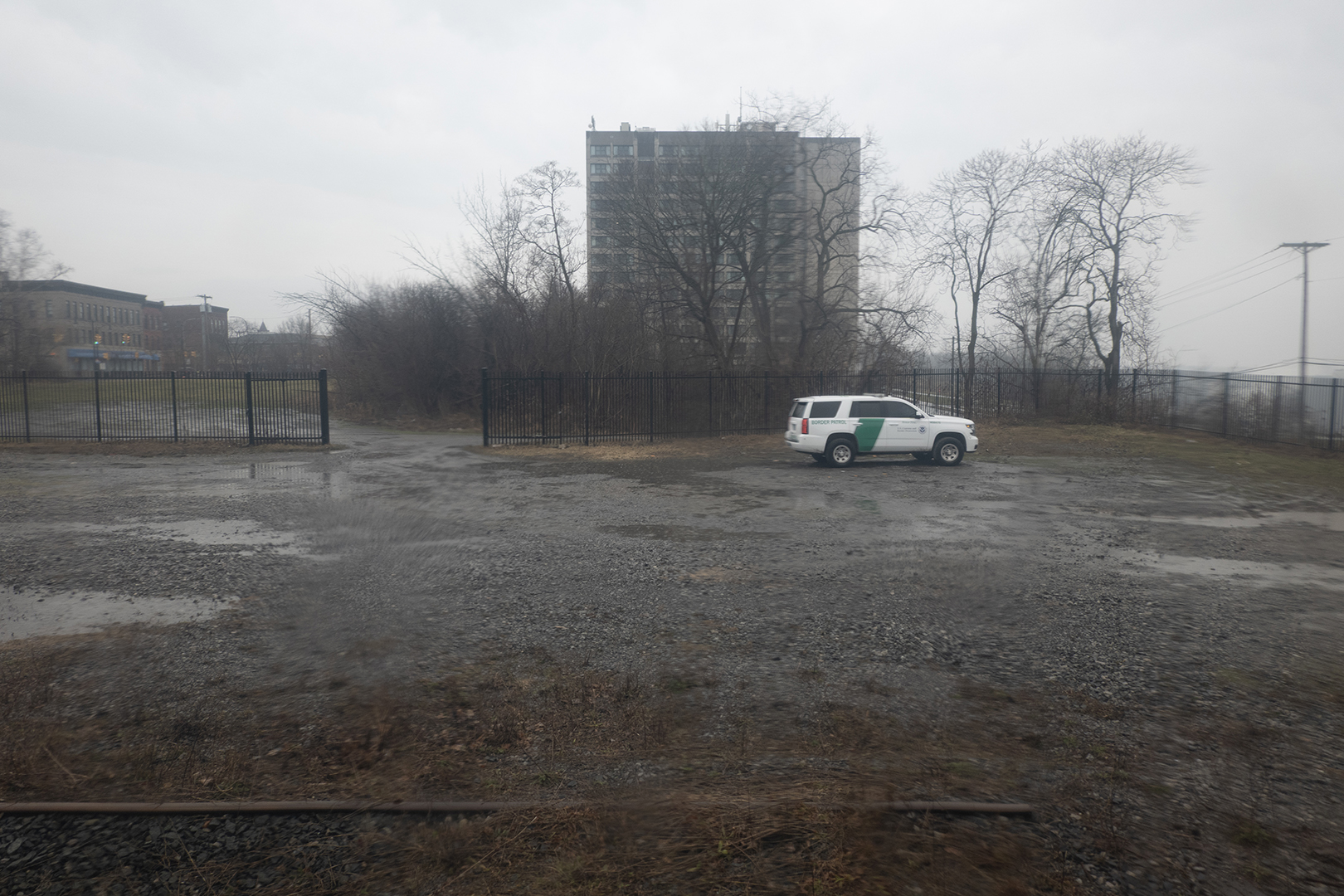
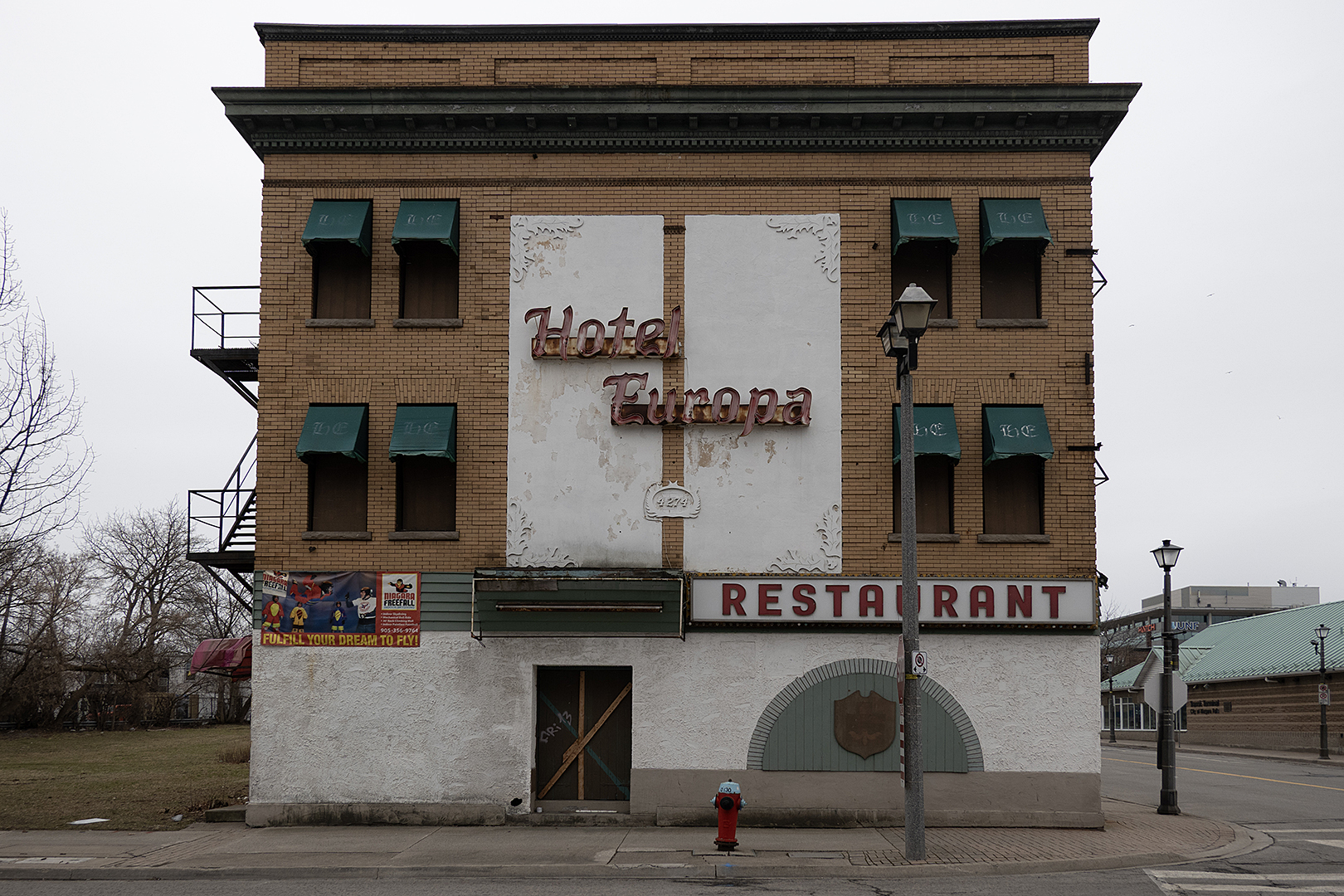
These two photos were taken in two different countries, both from the train as we crossed the border after spending four days in Toronto. We had cold but beautiful weather there and rain on the way back, so these pictures reflect the dreariness. The Niagara River cuts a deep gorge and natural border between the two countries, and the view from the train was dramatic.
Hotel Europa Niagara Falls Canada
My cousin lives about a half mile from the Amtrak station on the US side. We called her to say hello on the way over (her dad, my uncle, was the world’s biggest train enthusiast). She arranged to have coffee and sandwiches from Di Camillo’s waiting for us on the way back. There is an hour of downtime while Homeland Security does its thing, and it flew by as we got caught up.